Orchids have a reputation for being fussy, but once you understand how they grow in nature, they’re surprisingly easy to care for. With the right light, watering routine, and a little patience, your orchid can bloom beautifully year after year.
Whether you picked one up at the grocery store or were gifted a stunning plant, this guide will walk you through exactly how to care for orchids indoors.
Understanding Your Orchid
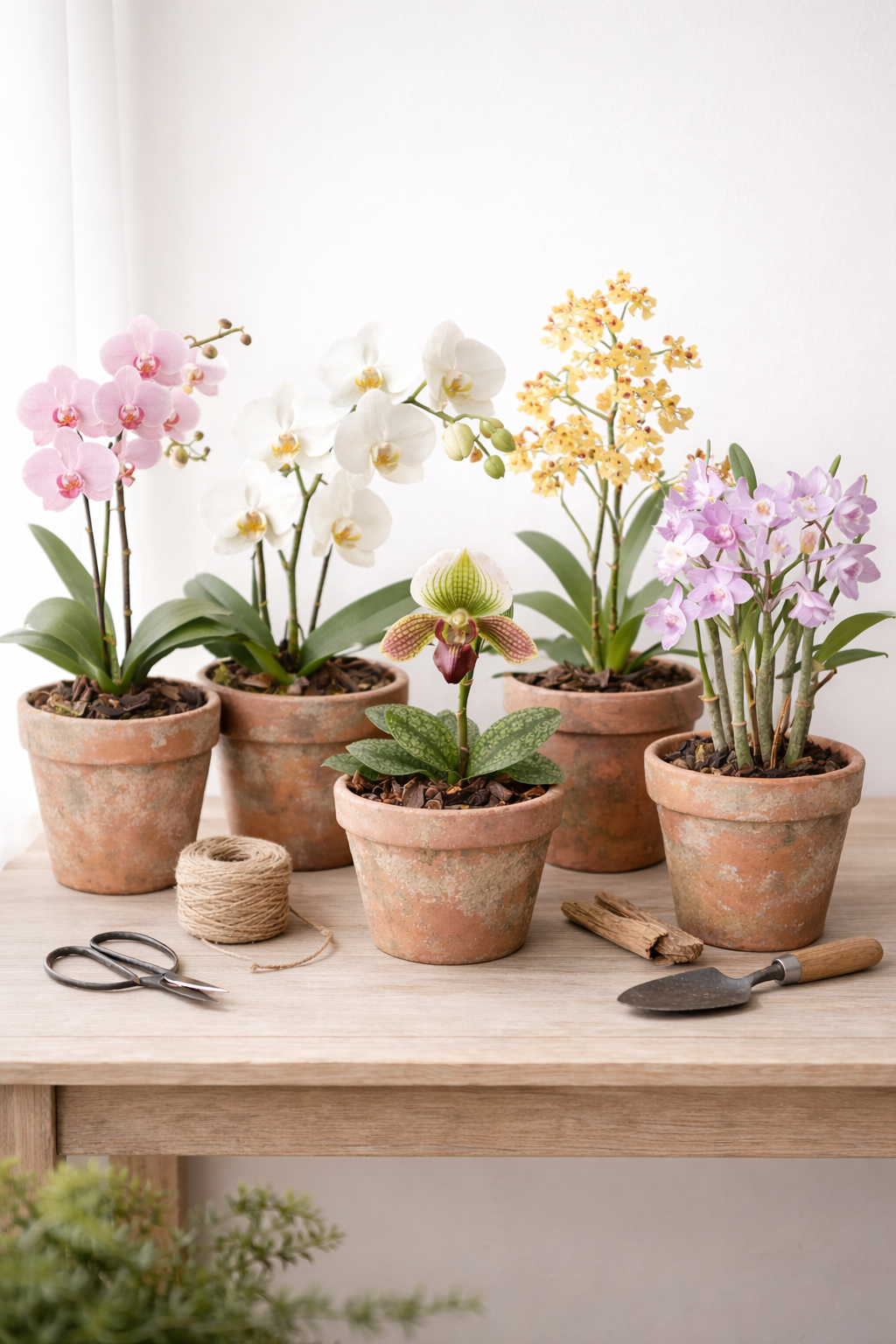
Most store-bought orchids are Phalaenopsis, also called moth orchids. These are epiphytic plants, meaning they grow on trees in the wild — not in regular soil.
That’s why you’ll notice:
- Thick, fleshy roots
- Bark instead of soil
- Sometimes a clear plastic pot
Once you understand this one thing, orchid care becomes much simpler.
Light: Bright but Indirect
Orchids love bright, indirect light.
Best location:
- Near an east-facing window
- Or a south/west window with sheer curtains
If the leaves are:
- Dark green → Not enough light
- Yellowish → Too much light
- Bright medium green → Just right
Avoid direct afternoon sun, which can scorch the leaves.
How to Water Orchids (The #1 Mistake to Avoid)
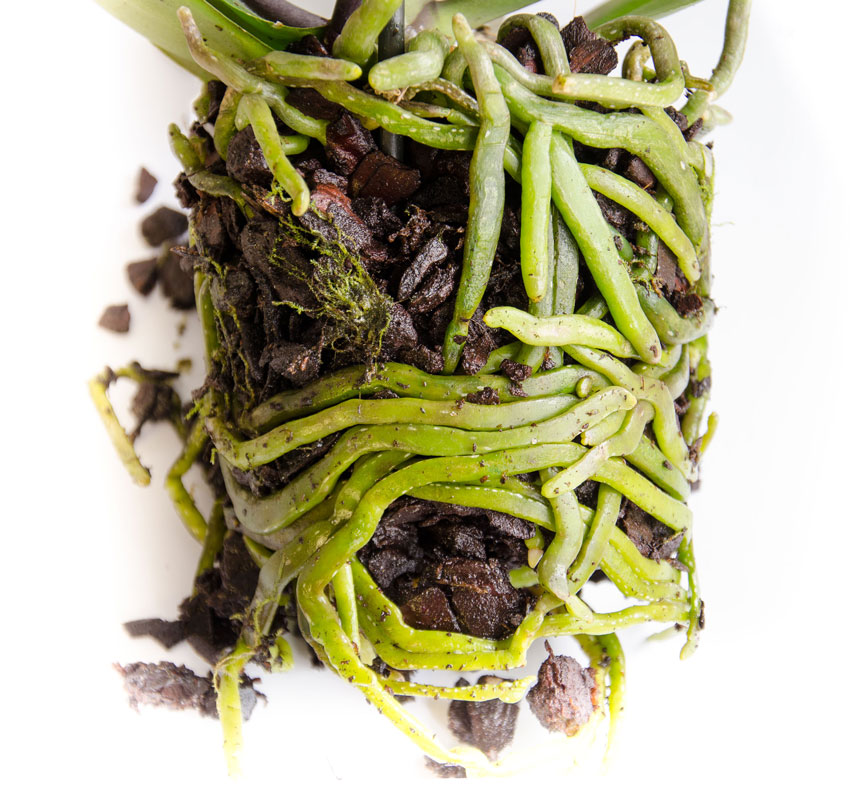
Overwatering kills more orchids than anything else.
Instead of watering on a schedule, check the roots:
- Silvery gray roots → Time to water
- Green roots → Still hydrated
How to water properly:
- Take the orchid to the sink.
- Run room-temperature water through the pot for 15–30 seconds.
- Let it drain completely.
- Return it to its decorative pot.
Never let it sit in standing water.
In most homes, watering every 7–10 days works well.
🌡️ Temperature & Humidity
Orchids prefer:
- 65–75°F during the day
- Slightly cooler at night
They also enjoy humidity. If your home is dry:
- Place the pot on a pebble tray with water (roots should not sit in water).
- Group plants together.
- Use a small humidifier.
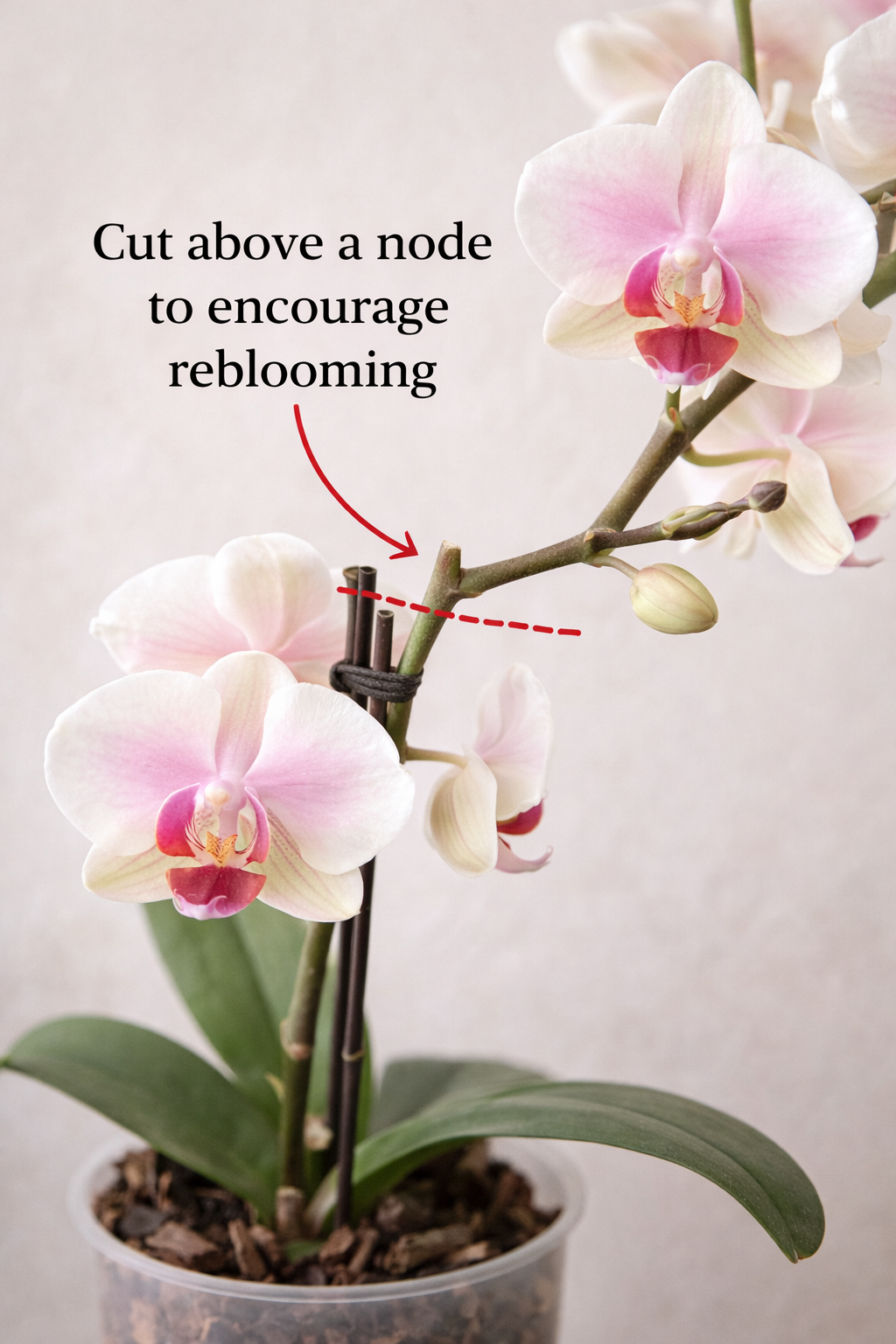
How to Get Orchids to Rebloom
Once the flowers fade, don’t throw the plant away.
After blooms drop:
- Cut the flower spike just above a node (small bump on the stem).
- Continue normal watering and light.
- Feed lightly with orchid fertilizer once a month.
Many orchids need a slight nighttime temperature drop (about 10 degrees cooler) in fall to trigger new blooms.
With proper care, they can rebloom every year — sometimes twice!
🪴 Repotting Orchids (Every 1–2 Years)
Repot when:
- Bark breaks down and looks soggy
- Roots outgrow the pot
- Plant becomes unstable
Use:
- Orchid bark mix (not potting soil)
- A pot with drainage holes
Trim dead, mushy roots before repotting.
🚫 Common Orchid Care Mistakes
- Planting in regular soil
- Letting roots sit in water
- Keeping in low light
- Overfertilizing
- Ignoring drainage
Orchids thrive on consistency and proper drainage.
🌿 Quick Orchid Care Checklist
- Bright, indirect light
- Water when roots turn silvery
- Drain completely
- Moderate humidity
- Repot every 1–2 years
- Fertilize lightly
Final Thoughts
Orchids aren’t difficult — they’re just different.
Once you adjust how you think about watering and light, you’ll find they’re one of the most rewarding houseplants you can grow. Their blooms can last for months, and with a little care, they’ll keep coming back year after year.