Climbing peas are one of the easiest and most rewarding crops you can grow—especially if you’re itching to get a head start into the garden early. They thrive in cool weather, seedlings are entirely edible, grow fast, and take up very little ground space thanks to their vertical habit. Even better? Fresh peas picked straight from the vine taste worlds better than anything from the grocery store.
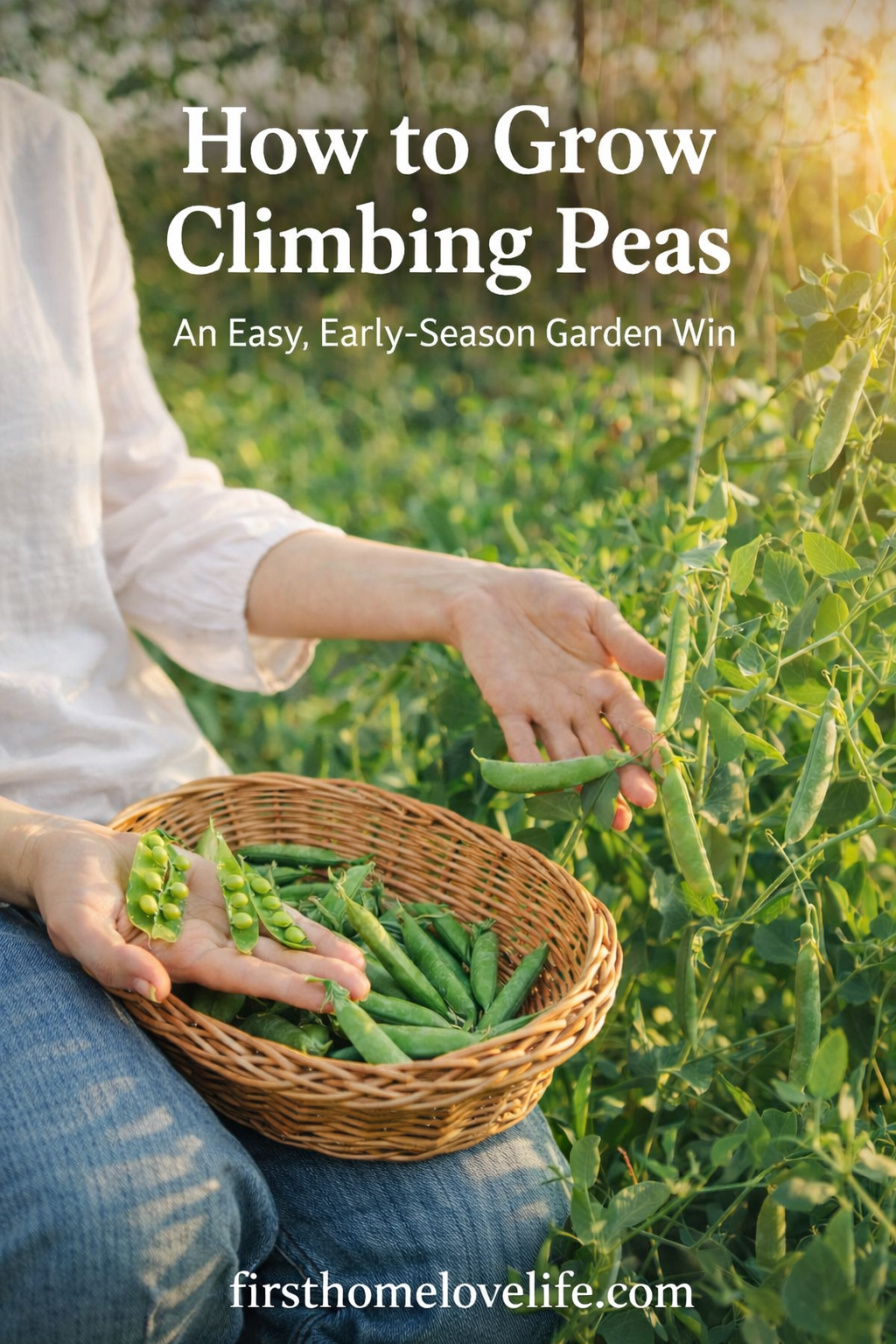
Here’s everything you need to know to grow climbing peas successfully from seed to harvest. The entire plant is edible, and young pea plants are delicious tossed into salads.
Shelling Peas (English Peas)
These peas are grown for the sweet peas inside the pod. The pods are removed and composted, and only the peas are eaten.
Best for: Fresh eating, freezing, soups
Popular climbing varieties:
- Little Marvel
- Lincoln
- Green Arrow
✔ Very sweet and productive
✔ Excellent for preserving
🟢 Snow Peas
Snow peas have flat, tender pods that are eaten whole before the peas inside fully develop.
Best for: Stir-fries, salads, fresh eating
Popular climbing varieties:
- Oregon Sugar Pod ii
- Dwarf Grey Sugar (can climb with support)
✔ Early harvest
✔ Crisp texture
🟢 Sugar Snap Peas
Sugar snap peas combine the best of both worlds—the pod is sweet and edible, and the peas inside are plump and flavorful. Stringless pods are preferred if you want to eat them whole.
Best for: Snacking, roasting, freezing
Popular climbing varieties:
- Sugar Snap
- Sugar Ann (shorter vines)
- Super Sugar Snap
✔ Heavy producers, edible pods
✔ Great fresh or preserved, known for their sweetness
🌱 Choosing the Right Pea for Your Garden
- For maximum yield: Sugar snap peas
- For early harvest: Snow peas
- For freezing: Shelling peas
- For small spaces: Look for “climbing” or “tall” varieties (5–7 ft vines)
No matter the type, climbing peas thrive when given vertical support and cool weather.
Why Grow Climbing Peas?
- Early harvest: One of the first vegetables ready in spring
- Vertical growth: Perfect for small gardens and raised beds
- Low maintenance: Minimal care once established
- Soil booster: Peas naturally fix nitrogen in the soil (THIS IS HUGE FOR CROP ROTATION!)
When to Plant Climbing Peas
Climbing peas love cool weather and can handle light frosts.
- Planting time: As soon as soil can be worked in early spring
- Soil temperature: Ideally 40–75°F
- Fall planting: Possible in cooler climates for a late harvest
If summer’s heat up quickly where you live, plant as early as possible so peas mature before hot weather hits. As long as I can work the soil a little bit, I’ll sow seeds when there is still snow on the ground. They can handle frost, and the pea shoots are super sweet if they get a little frost.
Choosing the Right Spot
- Sun: Full sun to partial shade (6+ hours is ideal)
- Soil: Loose, well-draining soil rich in organic matter
- Airflow: Good circulation helps prevent mildew
Avoid planting peas where other legumes grew recently to reduce disease pressure.
How to Plant Climbing Peas
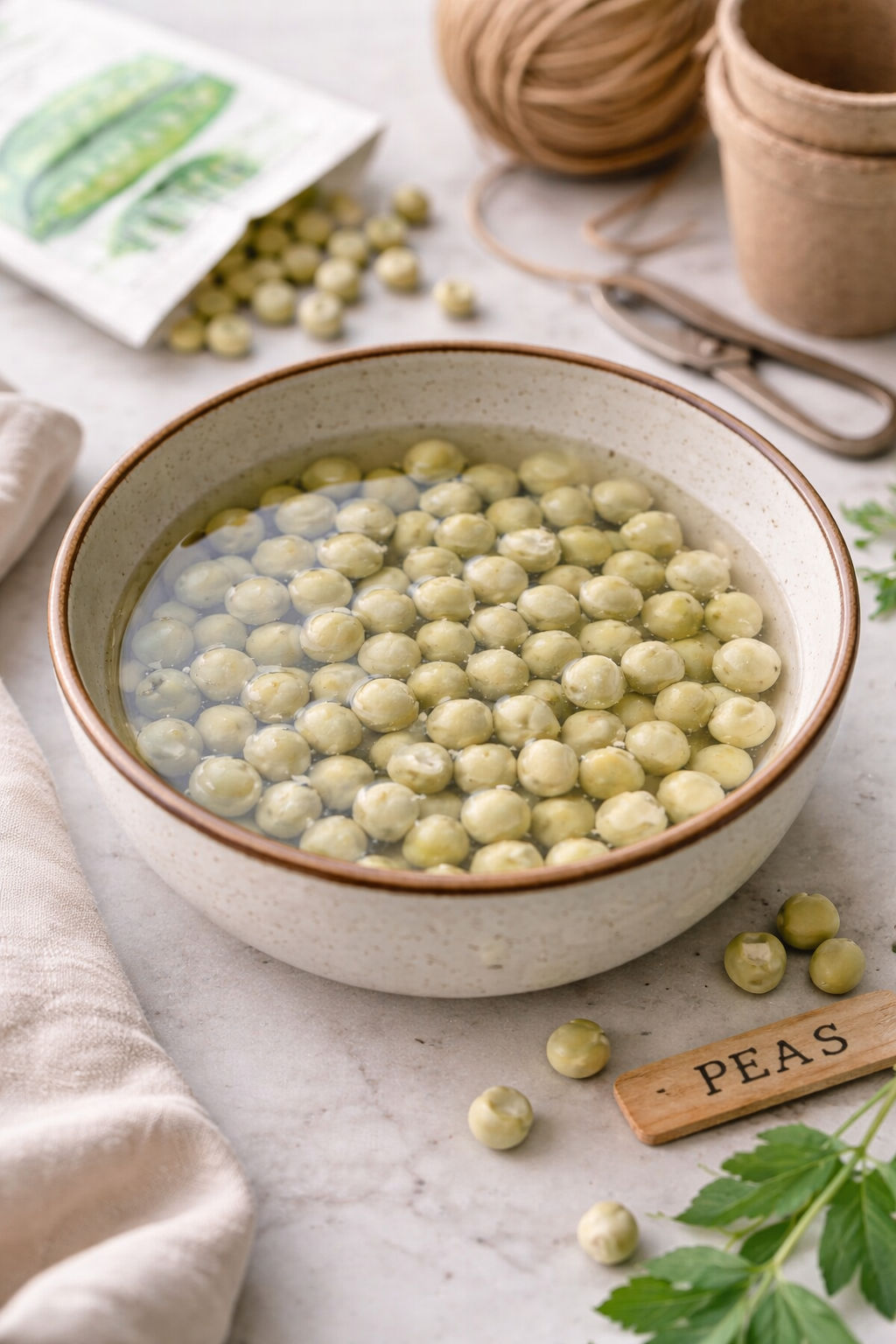
- Soak pea seeds (optional): Soak for 8–12 hours to speed germination
- Plant depth: 1–1½ inches deep
- Spacing:
- 2 inches apart for dense rows
- 4–6 inches apart for larger pea vines
- Row spacing: About 18 inches apart
Water gently after planting.
Supporting Climbing Peas
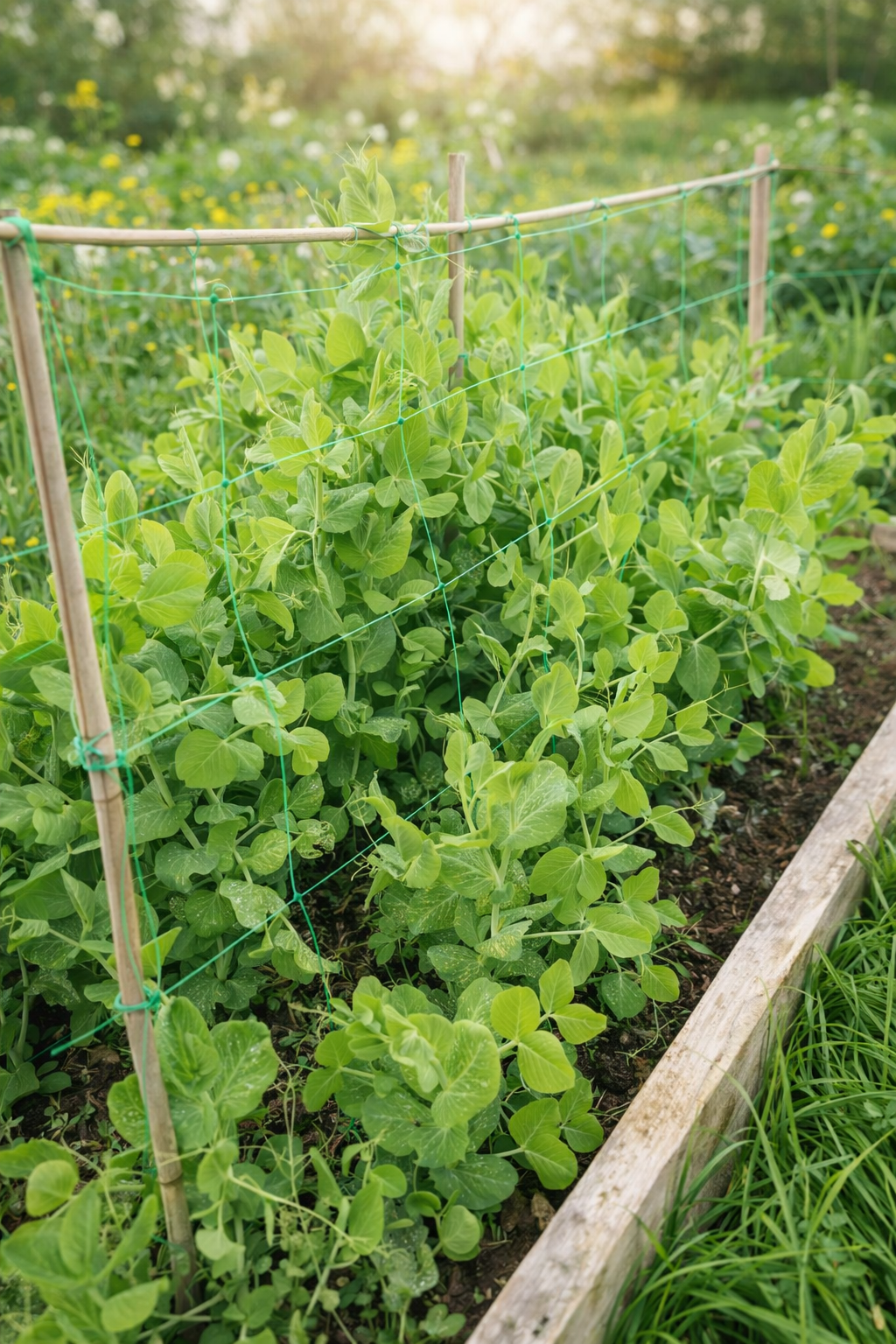
Climbing peas need support right from the start.
Great support options include:
- Garden netting
- A-frame trellises
- Cattle panels
- Bamboo teepees
- String trellises
Install supports before or at planting time to avoid disturbing roots later.
Watering & Feeding
- Water: Keep soil consistently moist but not soggy
- Mulch: Helps retain moisture and keep roots cool
- Fertilizer: Usually unnecessary—too much nitrogen causes leafy growth with fewer peas
If soil is poor, add compost before planting rather than fertilizing during growth.
Caring for Pea Plants
- Weeding: Keep weeds down early while plants are small
- Training vines: Gently guide young tendrils onto supports
- Watch for pests: Aphids are most common—spray off with water if needed
Peas are generally low-problem plants, especially in cool weather.
Harvesting Climbing Peas
- Harvest time: 55–70 days after planting (variety dependent)
- Pick often: Regular harvesting encourages more pods
- Best flavor: Harvest when pods are plump but still tender
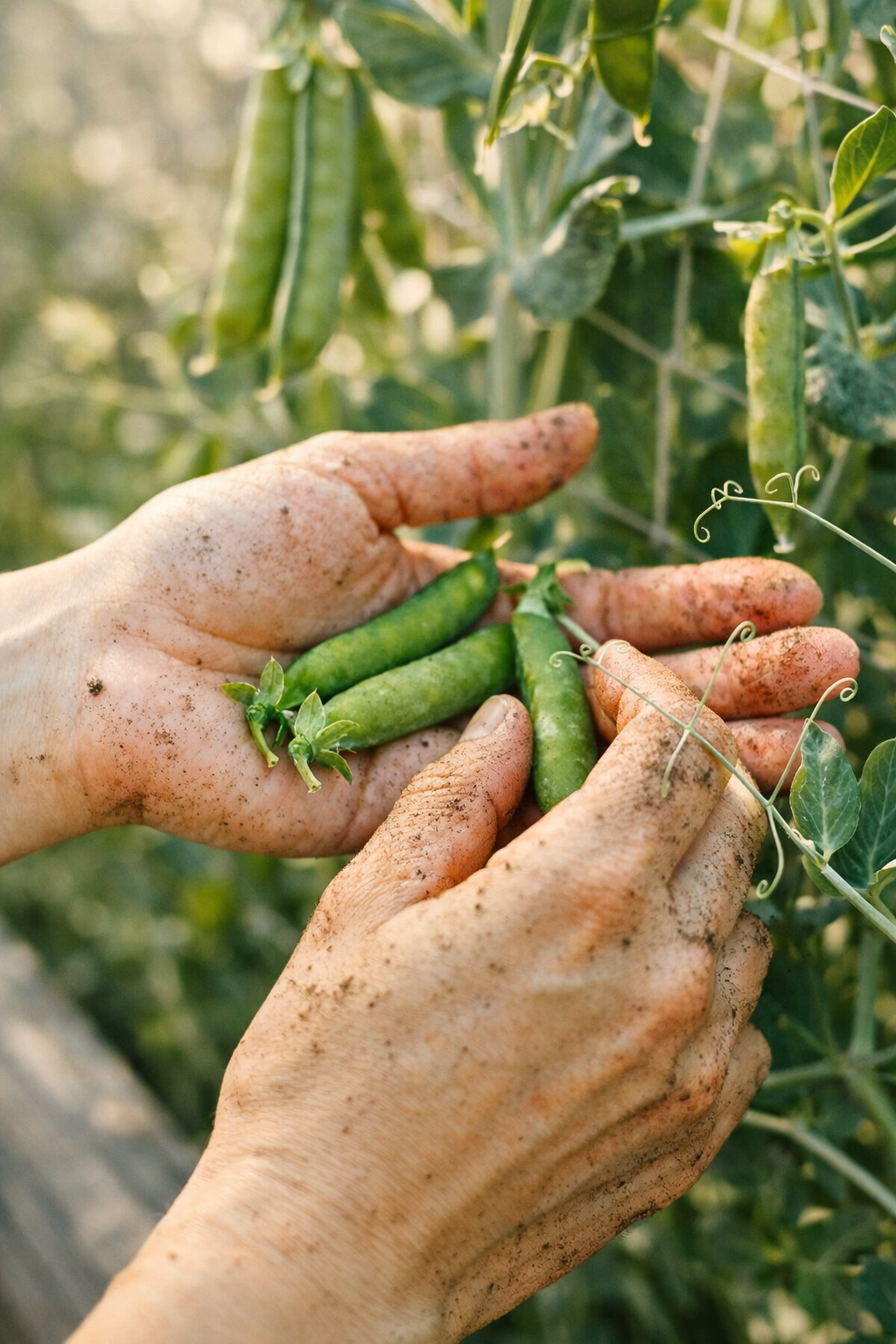
Use two hands when picking—hold the vine with one and pull the pod with the other to avoid damaging plants.
Good Companion Plants for Peas
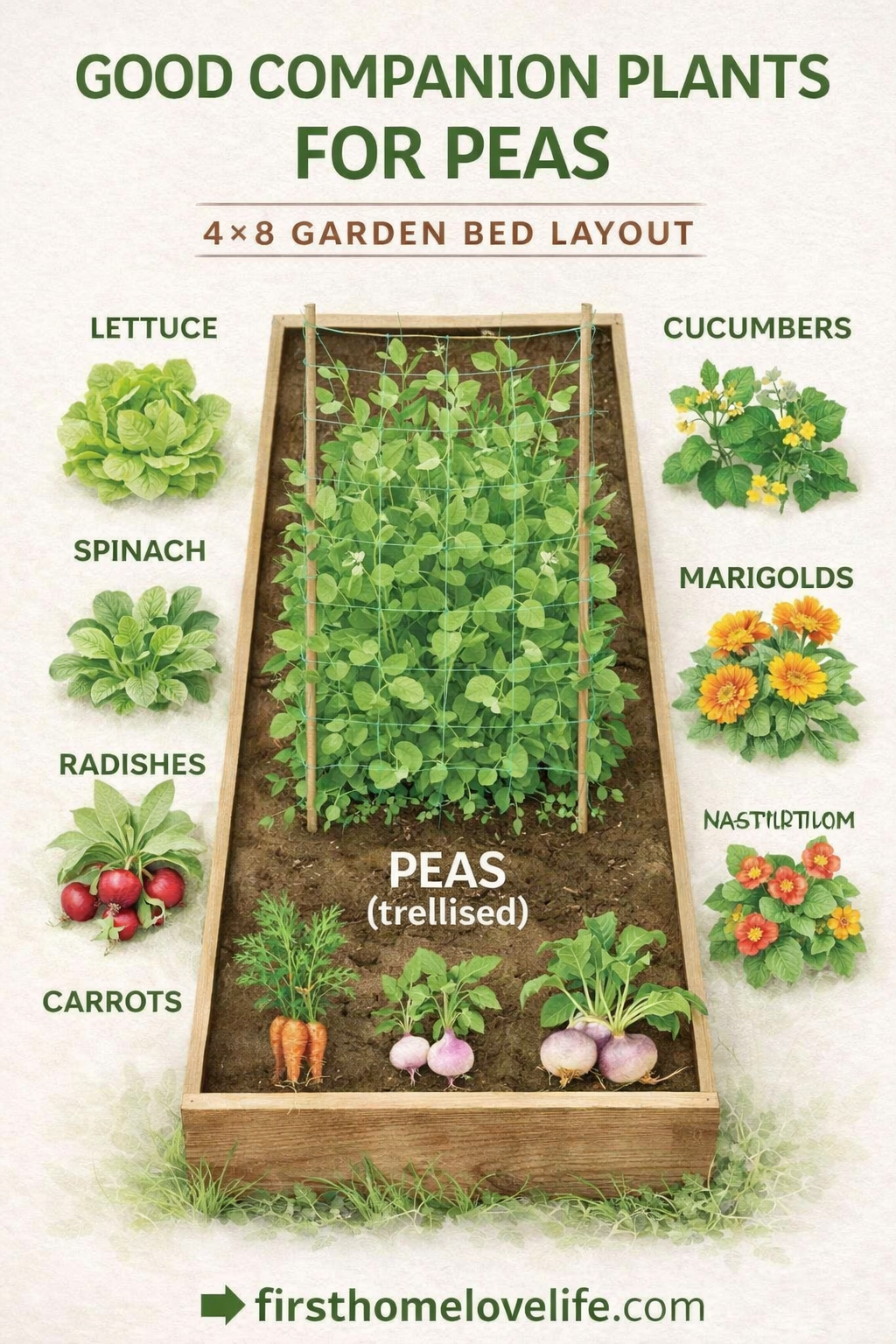
Planting the right companions alongside peas can improve growth, boost yields, and help keep pests in check. Because peas are nitrogen-fixers, they naturally improve the soil for nearby plants—making them an excellent addition to many garden beds.
🌱 Best Companion Plants for Peas
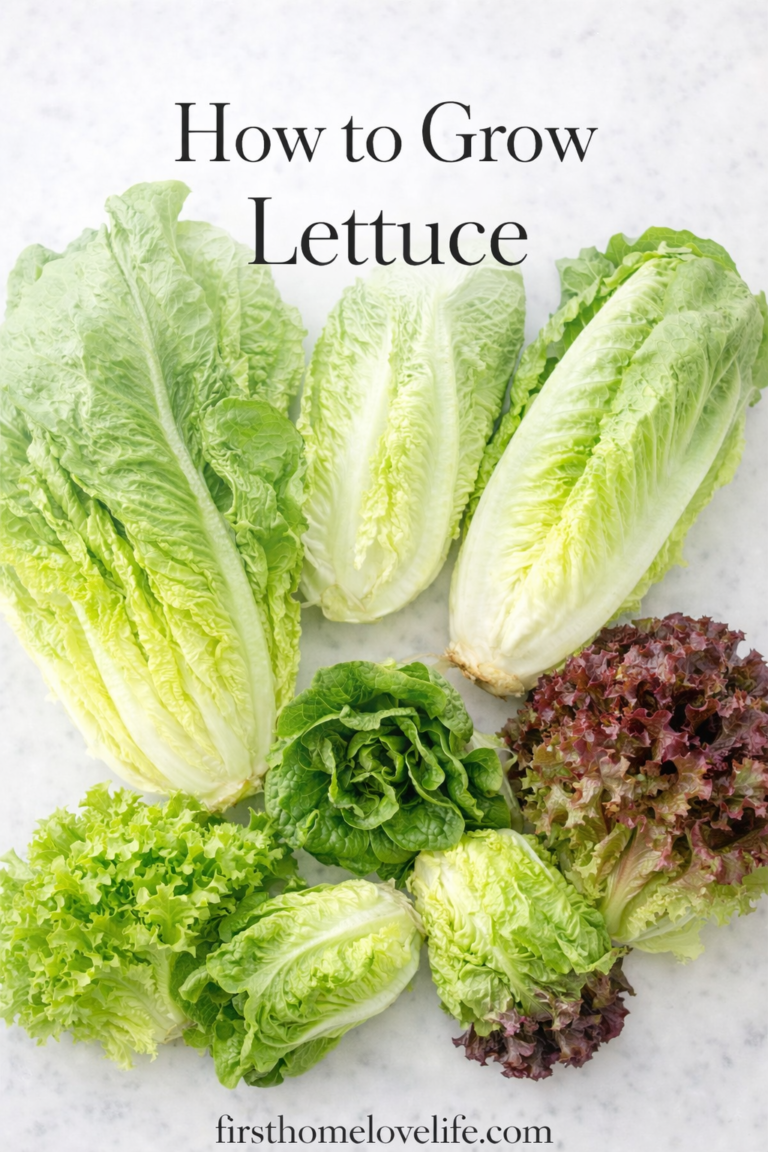
Lettuce
Lettuce thrives in the cool conditions peas love. Its shallow roots don’t compete, and it benefits from the nitrogen peas add to the soil.
Spinach
Another cool-season favorite, spinach grows quickly beneath pea trellises and enjoys the partial shade created as peas climb.
Radishes
Radishes mature fast and help loosen soil, making it easier for pea roots to grow. They’re a great space-saving companion early in the season.
Carrots
Carrots and peas grow well together because they occupy different soil levels—peas above, carrots below—without competing for nutrients.
Cucumbers
Once peas are finishing up, cucumbers can take over the trellis. Peas help condition the soil early for strong cucumber growth later.
Turnips
Turnips benefit from nitrogen-rich soil and grow well during the same cool weather window as peas.
🌼 Flowers That Grow Well with Peas
Marigolds
Help deter aphids and other pests that can target pea plants.
Nasturtiums
Act as a trap crop for aphids while attracting pollinators to the garden.
🚫 Plants to Avoid Planting Near Peas
Some plants don’t play well with peas and can inhibit growth:
- Onions
- Garlic
- Leeks
- Chives
These alliums release compounds that can stunt pea growth.
How to Preserve Your Harvest (So Nothing Goes to Waste)
After all the work that goes into growing your garden, preserving your harvest lets you enjoy it long after the season ends. Harvest peas as soon as they’re ready and preserve them quickly so they keep their sugar quality. Whether you’re harvesting peas, leafy greens, or other vegetables, there’s a preservation method for every lifestyle and skill level.
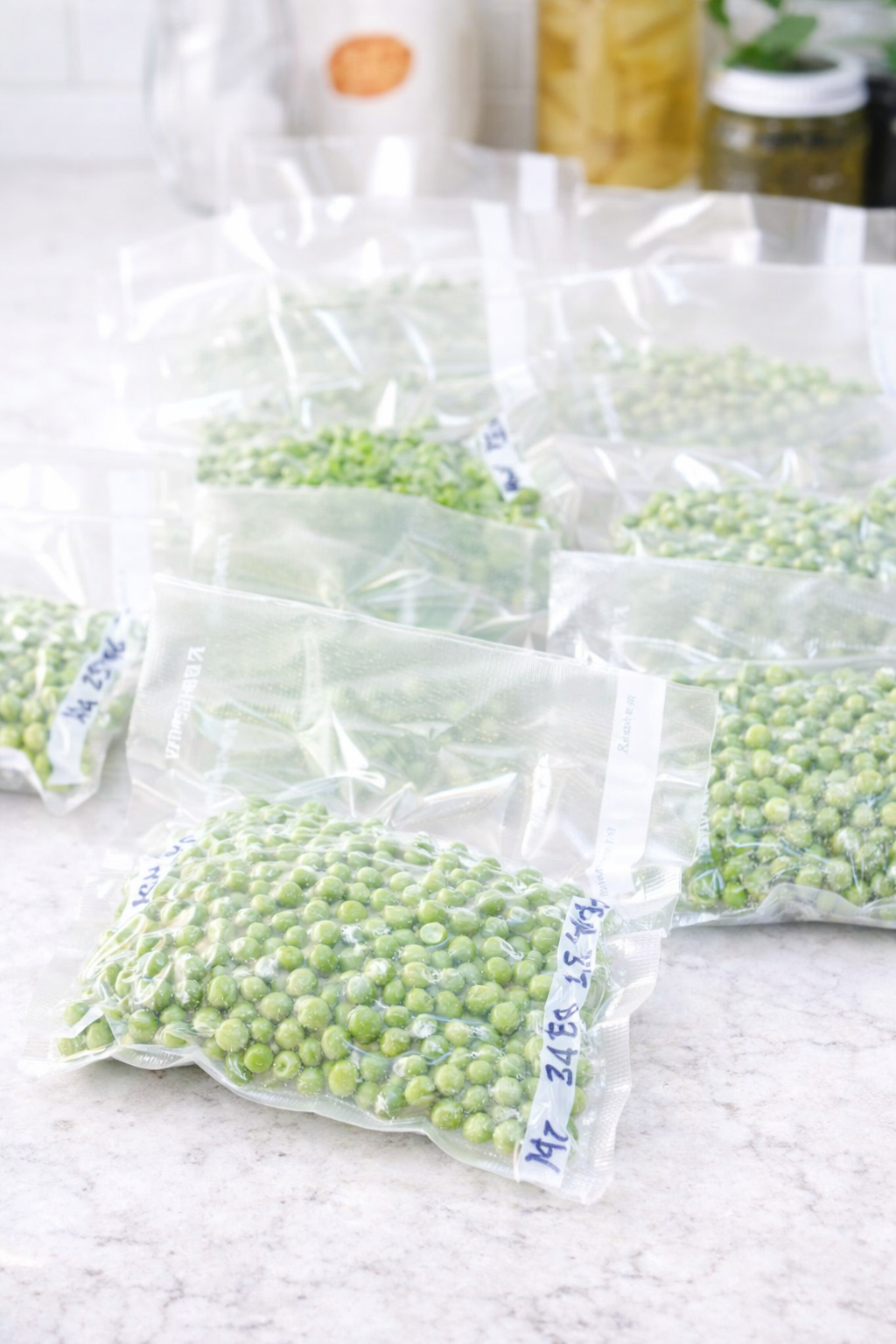
🥶 Freezing (Best for Peas and How I Choose to Preserve Them)
Freezing is the easiest and most popular way to preserve peas—and it keeps their fresh flavor and color.
How to freeze peas:
- Shell peas and rinse well
- Blanch in boiling water for 1½–2 minutes
- Transfer immediately to an ice bath
- Drain thoroughly
- Freeze in airtight bags {preferably an air vacuum sealer} or containers
✔ Best for: peas, green beans, corn
✔ Shelf life: 8–12 months
🫙 Canning (Long-Term Storage)
Canning is ideal if you want shelf-stable food that doesn’t require freezer space.
- Pressure canning: Required for plain vegetables like peas
- Water bath canning: Used for acidified recipes (pickled vegetables, relishes)
✔ Best for: peas in soups, mixed vegetables, sauces
✔ Shelf life: 1–2 years
⚠️ Always follow tested, safe canning recipes.
🌬️ Dehydrating (Space-Saving Option)
Dehydrating removes moisture so vegetables store compactly and last longer.
Ways to use dehydrated peas:
- Add to soups and stews
- Grind into pea flour
- Snack on roasted, dehydrated peas
✔ Best for: peas, herbs, onions
✔ Shelf life: up to 1 year when stored airtight
🧊 Refrigerating (Short-Term Fresh Storage)
If you plan to use your harvest quickly:
- Store peas unwashed in breathable bags
- Keep in the crisper drawer
✔ Shelf life: 5–7 days
End of Season Tip
Once plants finish producing:
- Cut vines off at soil level
- Leave roots in the ground to release nitrogen
- Add vines to compost in place my chop and dropping or adding to your compost pile
This improves soil health for future crops.
Final Thoughts
Climbing peas are a must-grow crop for any spring garden. They’re one of the easiest plants, productive, and a great way to maximize space while improving your soil at the same time. Whether you’re growing them in raised beds, along fences, or in a small backyard plot, peas reward you quickly—and deliciously.