Fiddle leaf figs (Ficus lyrata) are one of the most sought-after houseplants thanks to their large, dramatic leaves and sculptural presence. But they can be a bit fussy if you don’t understand their needs. With a few key care tips, you can help your plant thrive — not just survive.
Whether you’re a beginner or have struggled with this plant in the past, this guide will walk you through the essential care steps to keep your fiddle leaf fig looking its best.
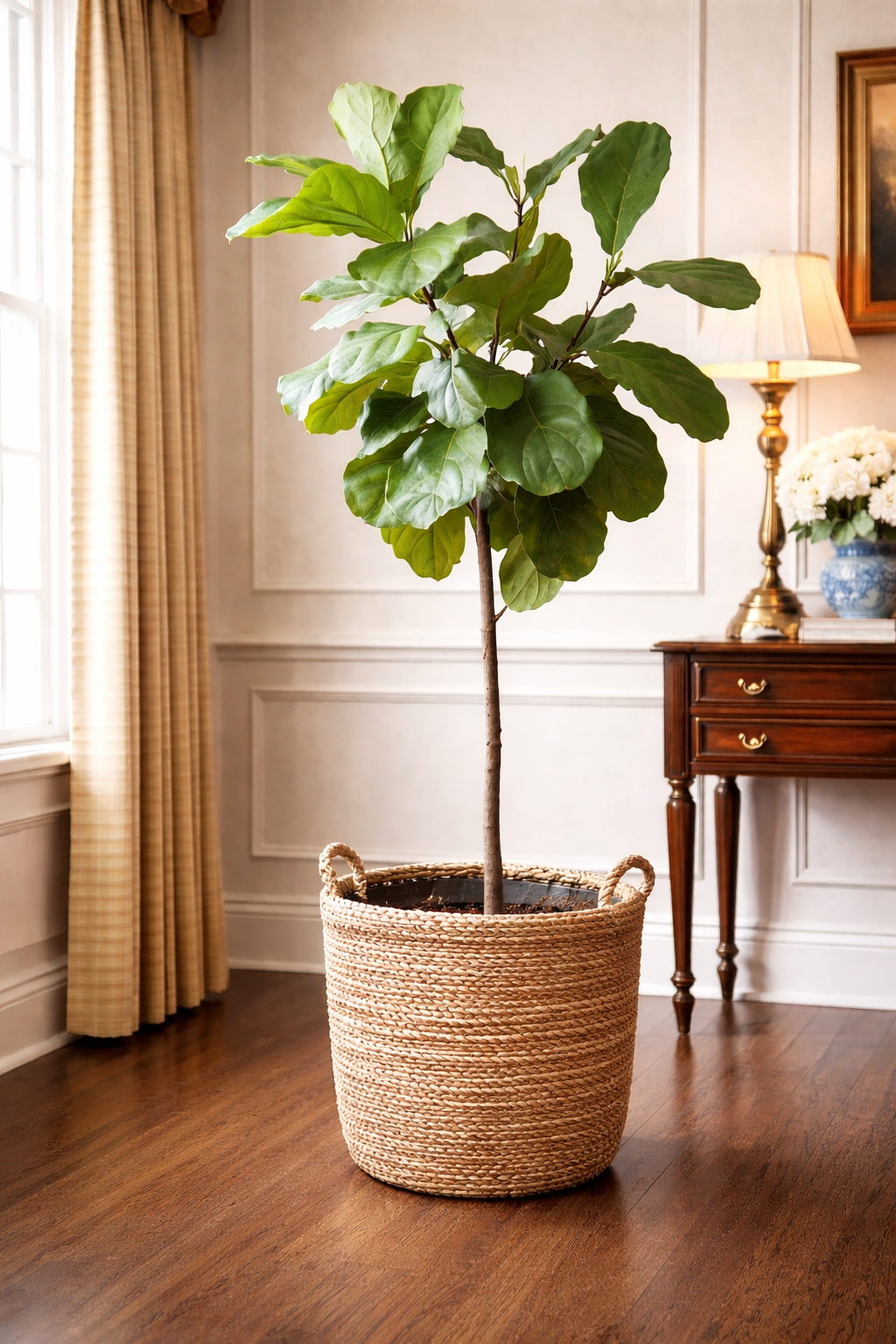
🌞 1. Give It the Right Light
Fiddle leaf figs love bright, indirect light, which helps them produce energy without burning their sensitive leaves. Place your plant near a large window that gets plenty of daylight — but avoid intense direct sun that can scorch the foliage.
Tips:
East- or west-facing windows tend to work well.
If light is limited, a grow light can supplement natural light.
💧 2. Water Correctly — Not Too Much, Not Too Little
Watering is one of the most common sources of problems with fiddle leaf figs. These plants prefer even moisture but not soggy soil. Overwatering leads to root rot, while underwatering can cause curled or dropping leaves.
How to water properly:
Check soil moisture by sticking your finger about 1–2 inches into the soil
Water only when the top layer feels dry.
Let excess water drain completely from the pot.
Seasonal watering note: Fiddle leaf figs may want more water in spring and summer and less in winter.
🪴 3. Provide Well-Draining Soil & Potting Mix
Use a well-draining indoor plant or potting mix that allows air to reach the roots and avoids waterlogging. Layers of perlite, bark, or coarse material help prevent soggy soil conditions that can lead to root rot.
Pot selection tip:
Make sure your pot has good drainage holes.
🍃 4. Clean the Leaves
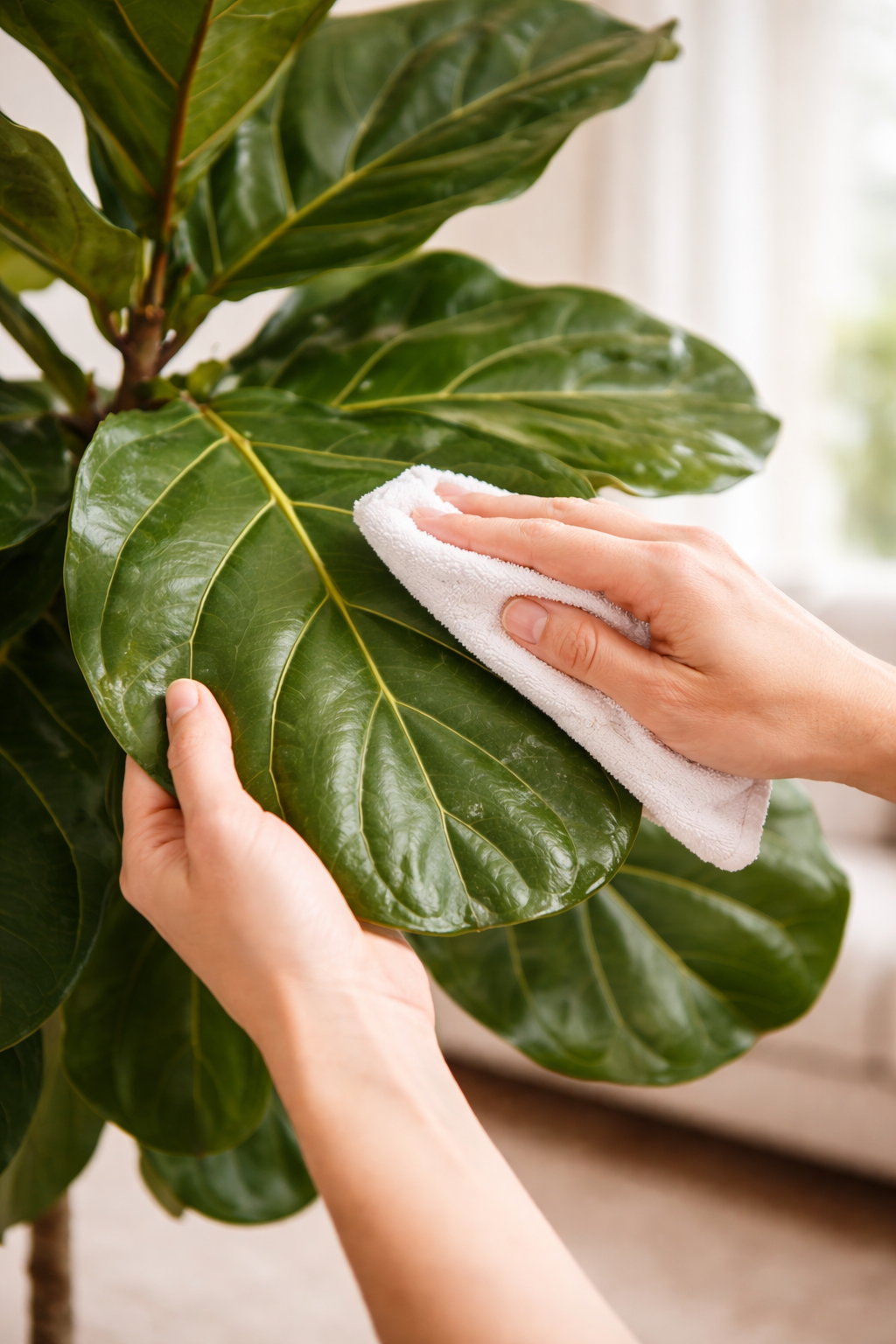
One unique maintenance step for fiddle leaf figs is leaf cleaning. Dust buildup can block light absorption and hinder photosynthesis.
How to clean:
Gently wipe leaves with a soft, damp cloth once every 1–2 weeks.
Avoid using chemical sprays that can damage the leaves.
🌡 5. Manage Temperature & Humidity
Fiddle leaf figs thrive in a warm, stable environment similar to their native tropical climate.
Best conditions:
Temperatures between 65–75°F
Avoid cold drafts or sudden temperature swings
If air is very dry, consider using a humidifier or pebble tray to increase humidity
🌱 6. Fertilize During the Growing Season
While not always strictly necessary, adding a balanced houseplant fertilizer during spring and summer helps support lush growth. Choose a gentle, water-soluble fertilizer and follow package instructions.
✂️ 7. Prune & Repot as Needed
Fiddle leaf figs can grow tall indoors. Pruning can help control size and shape while encouraging fuller growth.
Repot when:
Roots begin to circle the pot
Soil becomes compacted
Plant becomes top-heavy
Choose a pot slightly larger than the current one and fresh, well-draining soil.
🚩 Common Problems & Solutions
Here are a few issues you may run into — and how to fix them:
Brown leaf edges:
Often caused by inconsistent watering or low humidity. Adjust your watering and consider misting leaves.
Yellowing leaves / leaf drop:
Can be a sign of overwatering or not enough light. Ensure proper drainage and sufficient light exposure.
Dusty leaves:
Reduce photosynthesis and slow growth — regular cleaning helps prevent this.
🌿 Final Thoughts
Fiddle leaf figs may require a bit more attention than some houseplants, but the payoff is a stunning, lush green centerpiece that elevates any room. With the right light, water routine, soil, and humidity, you can help your plant thrive for years to come.
Got your own fiddle leaf fig tips or stories? Share them in the comments — we’d love to hear what’s worked for you! 🌱