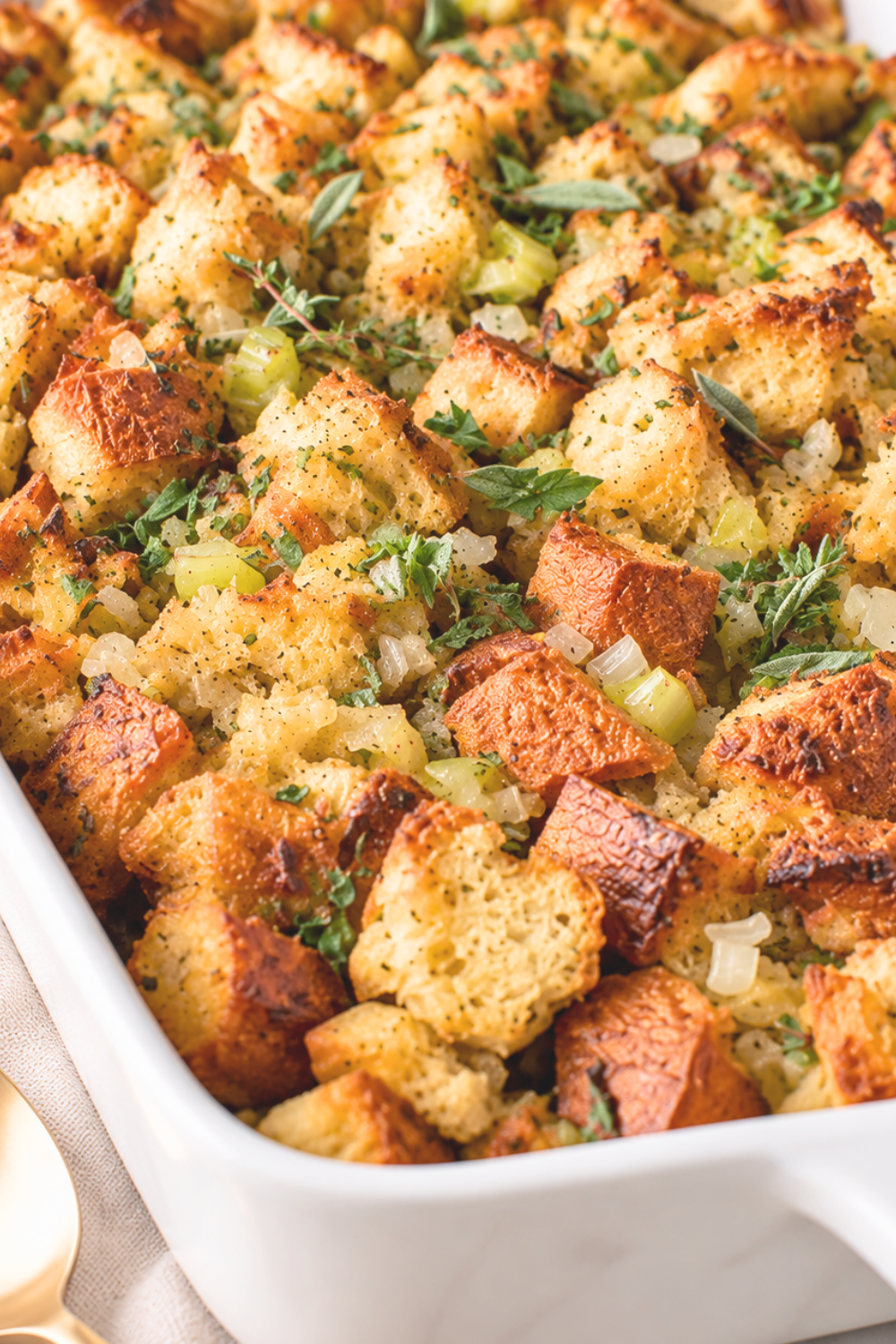
This homemade sourdough stuffing recipe is buttery, savory, and packed with fresh herbs, tender celery, and onions. Made with toasted sourdough bread, it’s perfectly crispy on top and soft in the center, making it one of the best classic Thanksgiving side dishes. Serve it alongside smoked Thanksgiving turkey, homemade turkey gravy, and crème brûlée sweet potato casserole for a delicious holiday dinner.
Find even more inspiration in my Thanksgiving dinner menu.
More Holiday Side Dishes You’ll Love


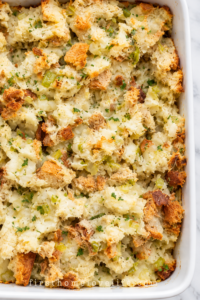

Why You’ll Love This Sourdough Stuffing Recipe
There are plenty of ways to make stuffing, but this classic version keeps things simple and lets the ingredients shine.
- Perfect texture: Crispy golden edges with a tender, buttery center.
- Rich, savory flavor: Fresh sage, rosemary, thyme, onions, and celery give this stuffing that traditional Thanksgiving flavor.
- Made with real sourdough bread: The sturdy texture holds up beautifully to broth and butter.
- Easy to prepare ahead: Assemble it the day before Thanksgiving and bake when you’re ready.
- Simple ingredients: Nothing fancy or complicated, just good old-fashioned homemade stuffing.
And if you love those crispy corners of the stuffing pan as much as I do, you’ll especially love this recipe.
What Makes Sourdough Bread So Good for Stuffing?
The secret to really good stuffing starts with the bread.
Sourdough bread has a firmer crumb and a slightly tangy flavor that balances the richness of the butter and savory herbs.
It’s also sturdy enough to soak up flavorful chicken broth without turning into a mushy mess.
I especially love using a rustic sourdough loaf with a thick, chewy crust. Those little crusty pieces get beautifully golden in the oven, giving every bite a combination of soft and crispy textures.
My biggest tip: Use dried-out sourdough bread rather than fresh bread. This helps the bread absorb the broth evenly and gives the finished stuffing a much better texture.
Ingredients for Homemade Sourdough Stuffing
You don’t need a long list of ingredients to make incredible stuffing. This recipe uses traditional ingredients that come together for a buttery, savory Thanksgiving side dish.
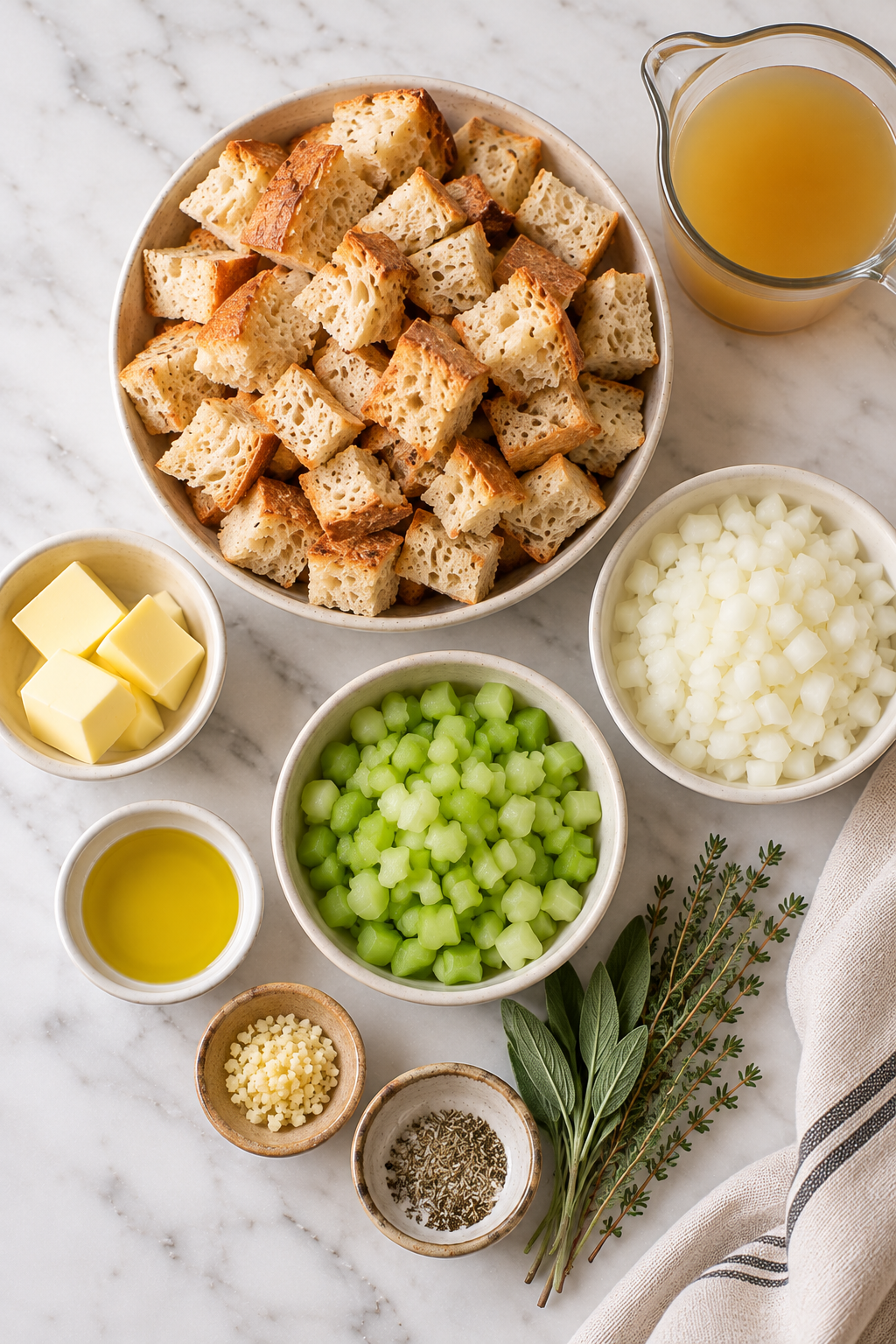
You’ll Need
- 1 large loaf sourdough bread (about 1 pound), cut into ¾-inch cubes
- ¾ cup unsalted butter (1½ sticks), divided
- 1 large yellow onion, finely diced
- 4 celery stalks, finely diced
- 4 garlic cloves, minced
- 2 tablespoons fresh parsley, chopped
- 1 tablespoon fresh sage, finely chopped
- 1 tablespoon fresh thyme leaves
- 2 teaspoons fresh rosemary, finely chopped
- 2½ to 3 cups low-sodium chicken broth
- 2 large eggs, lightly beaten
- 1 teaspoon kosher salt, plus more to taste
- ½ teaspoon freshly ground black pepper
Ingredient Notes
Sourdough bread: Choose a rustic loaf with a sturdy crust. Day-old bread works especially well, but you can also dry fresh bread in the oven.
Butter: This is what gives traditional stuffing its rich flavor. I recommend real unsalted butter so you can control the seasoning.
Onion and celery: The classic foundation of homemade Thanksgiving stuffing. Cooking them slowly in butter develops their flavor and keeps the finished stuffing from tasting raw.
Fresh herbs: Sage is essential for that nostalgic Thanksgiving flavor, while rosemary, thyme, and parsley add freshness.
Chicken broth: Adds moisture and savory flavor. Start with less and add more as needed, depending on how dry your bread is.
Eggs: Help bind the bread cubes together while keeping the inside of the stuffing tender.
How to Make Homemade Sourdough Stuffing
This homemade sourdough stuffing is surprisingly easy to prepare, and most of the work can be done ahead of time.
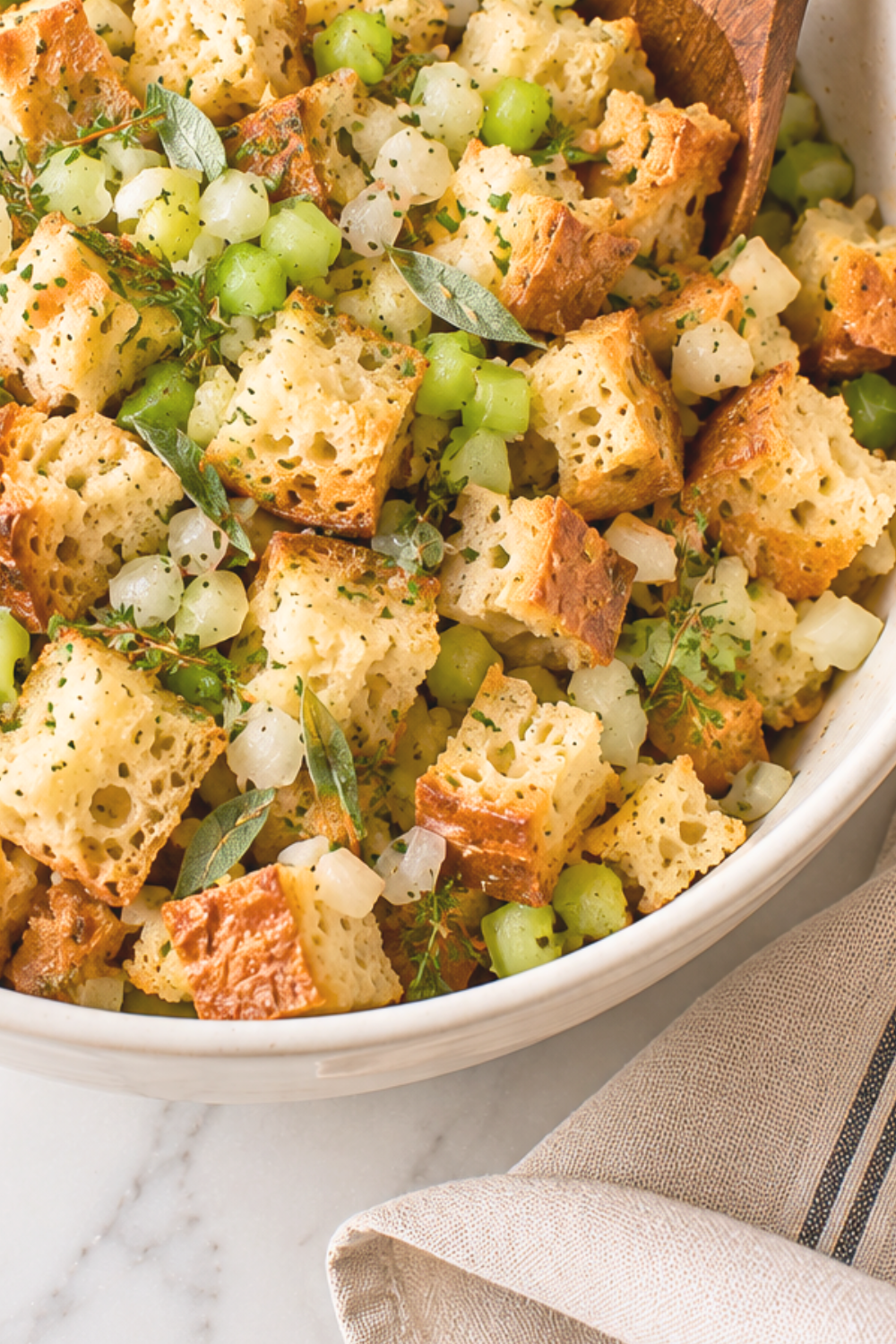
Step 1: Dry the Sourdough Bread
Preheat your oven to 275°F.
Cut the sourdough bread into approximately ¾-inch cubes and spread them evenly over two large baking sheets.
Bake for 35–45 minutes, tossing occasionally, until the bread feels dry and lightly crisp but hasn’t browned much.
Remove from the oven and allow the bread to cool.
If your bread is already stale and completely dried out, you can skip this step.
Tip: Don’t skip drying fresh bread. Bread that’s too soft can turn soggy once you add the broth.
Step 2: Cook the Onion and Celery
Increase the oven temperature to 350°F.
Melt ½ cup of butter in a large skillet over medium heat.
Add the diced onion and celery and cook for 8–10 minutes, stirring occasionally, until softened and fragrant.
You want the vegetables tender, not browned.
Add the minced garlic and cook for another minute.
Step 3: Add the Fresh Herbs
Stir the fresh sage, thyme, rosemary, and parsley into the buttery vegetables.
Cook for about 30 seconds, just until fragrant.
Season with the kosher salt and black pepper.
At this point, your kitchen should smell exactly like Thanksgiving.
Step 4: Combine the Bread and Vegetables
Place the dried sourdough cubes in a very large mixing bowl.
Pour the buttery onion, celery, and herb mixture over the bread.
Gently toss until the bread is evenly coated.
Step 5: Add the Broth and Eggs
In a separate bowl, whisk together the eggs and 2½ cups of chicken broth.
Pour the mixture gradually over the bread, tossing gently to distribute the moisture.
The bread should feel evenly moistened but shouldn’t be swimming in liquid.
If some pieces still seem very dry, add additional broth a little at a time, up to about ½ cup more.
The key to perfect stuffing: You want moist bread that holds its shape, not soggy bread that falls apart.
Step 6: Transfer to a Baking Dish
Butter a 9-by-13-inch baking dish.
Transfer the stuffing mixture to the dish and spread it into an even layer without packing it down too tightly.
Cut the remaining ¼ cup of butter into small pieces and scatter them over the top.
Those little pieces of butter help create the most delicious golden crust.
Step 7: Bake Until Golden and Crispy
Cover the baking dish tightly with aluminum foil.
Bake at 350°F for 30 minutes.
Remove the foil and continue baking for another 20–25 minutes, until the top is golden brown and the edges are crisp.
The center should reach 165°F on a food thermometer.
For extra crispy edges, bake uncovered for a few additional minutes, watching carefully so the top doesn’t burn.
Let the stuffing rest for 5–10 minutes before serving.
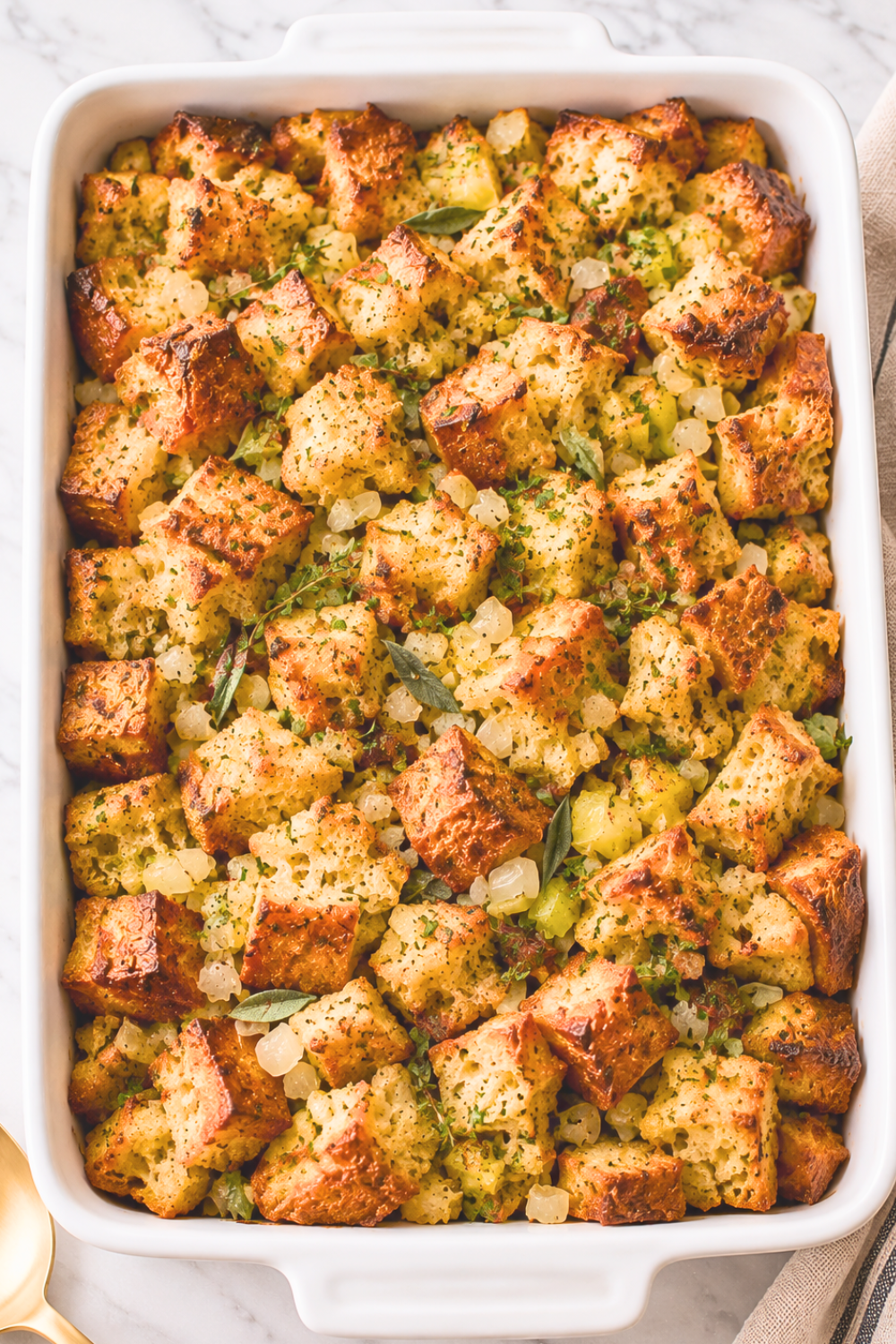
My Best Tips for Perfect Sourdough Stuffing
Use the Right Bread
A rustic sourdough loaf works best because it has enough structure to hold up to the broth.
Avoid using extremely soft sourdough sandwich bread if possible. It tends to break down more quickly.
Don’t Rush the Vegetables
Let the onions and celery soften slowly in butter. This is where so much of the stuffing’s savory flavor develops.
Add Broth Gradually
Not every loaf of sourdough absorbs liquid the same way.
A very dry, crusty loaf may need the full 3 cups, while a softer loaf may need less.
Don’t Pack the Baking Dish
Spread the stuffing loosely in the dish. Packing it tightly makes the finished stuffing dense rather than light and tender.
Bake Covered, Then Uncovered
Covering the dish first keeps the center moist.
Removing the foil toward the end creates those delicious crispy, buttery edges that make homemade stuffing so good.
Can You Make Sourdough Stuffing Ahead of Time?
Absolutely! This is one of my favorite Thanksgiving recipes to prepare ahead because it saves so much time on the holiday.
One day ahead: Dry the bread and cook the vegetables. Let the vegetables cool, then refrigerate them separately from the bread. Keep the dried bread in an airtight container at room temperature.
On Thanksgiving Day: Combine the bread and vegetables, add the broth and eggs, and bake as directed.
You can also assemble the stuffing completely the night before, cover it tightly, and refrigerate immediately. Bake directly from the refrigerator, allowing extra time as needed until the center reaches 165°F.
Don’t leave the assembled stuffing sitting at room temperature.
Sourdough Stuffing Variations
Once you’ve made this classic version, there are several delicious ways to change it up.
Sourdough Sausage Stuffing
Brown 1 pound of breakfast sausage or mild Italian sausage in a skillet, breaking it into small pieces as it cooks.
Drain any excess grease and fold the cooked sausage into the stuffing mixture before baking.
This makes an especially hearty Thanksgiving side dish.
Sourdough Stuffing with Apples
Add 1½ cups of diced Granny Smith or Honeycrisp apples to the skillet during the final few minutes of cooking the onions and celery.
The apples add a subtle sweetness that pairs beautifully with sage and rosemary.
Sourdough Stuffing with Mushrooms
Sauté 8 ounces of sliced cremini mushrooms in a separate skillet until their moisture evaporates and they begin to brown.
Fold them into the stuffing before baking for an earthy, savory variation.
Sourdough Stuffing with Cranberries
Add ½ cup of dried cranberries to the bread mixture for little bursts of sweetness.
This variation is especially pretty on a Thanksgiving table.


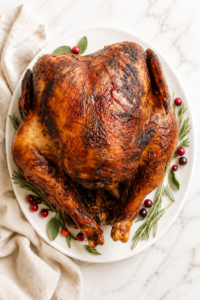

What to Serve with Sourdough Stuffing
Homemade sourdough stuffing is one of those classic Thanksgiving side dishes that goes with just about everything on the holiday table. The buttery, herb-filled bread is especially delicious alongside juicy turkey, creamy potatoes, homemade gravy, and a few colorful vegetable sides.
If you’re planning your Thanksgiving dinner menu, here are some of my favorite recipes to serve with sourdough stuffing.
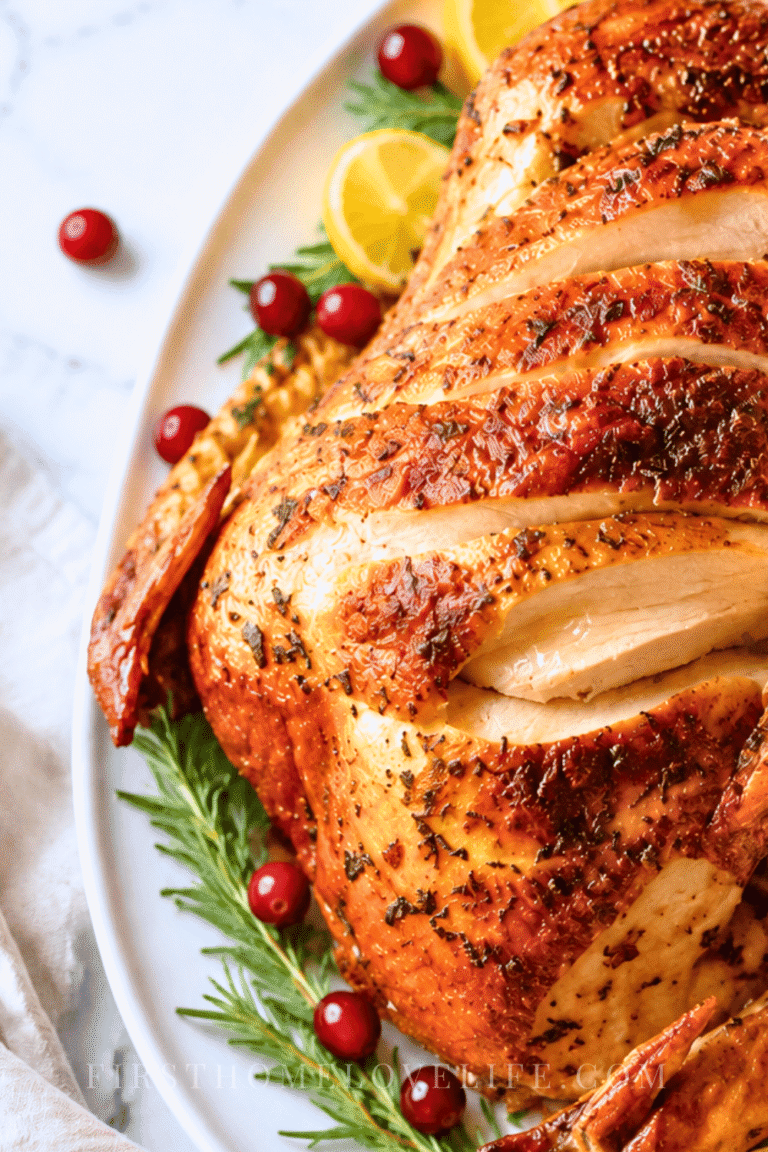
- Thanksgiving Smoked Turkey – Juicy, flavorful turkey with a beautiful smoky finish. The savory herbs in this sourdough stuffing complement it perfectly.
- Homemade Turkey Gravy from Scratch – Nothing beats a generous spoonful of rich homemade gravy poured over warm sourdough stuffing. This is an absolute must for Thanksgiving dinner.
- Crème Brûlée Sweet Potato Casserole – Creamy sweet potatoes with a delicate caramelized sugar crust add just the right amount of sweetness alongside savory stuffing.
- Roasted Brussels Sprouts with Chestnuts and Bacon – A delicious holiday vegetable side with savory bacon and nutty chestnuts. Find it in my Thanksgiving recipe collection.
- Old-Fashioned Giblet Gravy – For a truly traditional Thanksgiving dinner, this rich, homemade giblet gravy is wonderful served over stuffing and mashed potatoes.
- Classic Cranberry Marshmallow Salad – This nostalgic holiday favorite adds a sweet, tart contrast to all the buttery, savory dishes on your plate.
- Deep-Fried Thanksgiving Turkey – Crispy on the outside and juicy on the inside, this is another delicious main dish to pair with homemade sourdough stuffing.
For even more holiday inspiration, browse my Ultimate Thanksgiving Dinner Menu, filled with traditional Thanksgiving recipes, easy make-ahead side dishes, holiday desserts, and tips for planning a stress-free Thanksgiving feast.
And don’t forget to save a little stuffing for the next day. Thanksgiving leftovers are sometimes even better than the actual dinner!ter the next day.
PrintSourdough Stuffing Recipe | Easy Thanksgiving
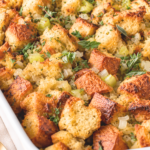
This homemade sourdough stuffing recipe is buttery, savory, and full of fresh herbs, tender celery, and onions. Made with rustic sourdough bread and baked until golden brown, it has perfectly crispy edges and a soft, flavorful center. An easy, classic Thanksgiving side dish that’s perfect for making ahead.
- Prep Time: 20 minutes
- Cook Time: 1 hour 40 minutes
- Total Time: 2 hours
- Yield: 10–12 servings 1x
- Category: Side Dish
- Method: Baking
- Cuisine: Holiday Recipes
- Diet: Vegetarian only if using vegetable broth
Ingredients
- 1 large loaf rustic sourdough bread (about 1 pound), cut into ¾-inch cubes
- ¾ cup unsalted butter, divided
- 1 large yellow onion, finely diced
- 4 celery stalks, finely diced
- 4 garlic cloves, minced
- 2 tablespoons fresh parsley, chopped
- 1 tablespoon fresh sage, finely chopped
- 1 tablespoon fresh thyme leaves
- 2 teaspoons fresh rosemary, finely chopped
- 2½–3 cups low-sodium chicken broth
- 2 large eggs, lightly beaten
- 1 teaspoon kosher salt, plus more to taste
- ½ teaspoon freshly ground black pepper
Instructions
- Dry the bread. Preheat oven to 275°F. Spread sourdough bread cubes evenly over two baking sheets. Bake for 35–45 minutes, tossing occasionally, until dry and lightly crisp. Remove and cool.
- Prepare the vegetables. Increase oven temperature to 350°F. Melt ½ cup butter in a large skillet over medium heat. Add onion and celery and sauté for 8–10 minutes until softened.
- Add the herbs. Stir in minced garlic and cook for 1 minute. Add parsley, sage, thyme, rosemary, salt, and pepper. Cook for another 30 seconds until fragrant.
- Combine the stuffing. Place dried sourdough bread cubes in a large mixing bowl. Pour the buttery vegetable mixture over the bread and gently toss to combine.
- Add the broth. In a separate bowl, whisk together eggs and 2½ cups chicken broth. Gradually pour over the bread mixture, gently tossing until evenly moistened. Add up to ½ cup additional broth if needed.
- Prepare for baking. Butter a 9-by-13-inch baking dish. Transfer the stuffing mixture into the dish without packing it down. Dot the top with the remaining ¼ cup butter.
- Bake covered. Cover tightly with aluminum foil and bake at 350°F for 30 minutes.
- Brown the top. Remove foil and bake for another 20–25 minutes until golden brown and crispy around the edges. The center should reach 165°F.
- Serve. Let rest for 5–10 minutes before serving warm.
Notes
Best bread: Use a rustic sourdough loaf with a sturdy crust. Day-old bread works especially well.
Don’t skip drying the bread: Fresh bread can become soggy. Drying the cubes first helps them absorb the broth while maintaining their texture.
Adjust the moisture: Start with 2½ cups of broth and add more gradually. The bread should be moist but not swimming in liquid.
Make ahead: Dry the bread and prepare the buttery vegetables one day in advance. Store the bread airtight at room temperature and refrigerate the cooked vegetables separately. Assemble and bake the next day.
For extra crispy edges: Bake uncovered for an additional 5 minutes, watching carefully to prevent burning.
Storage: Refrigerate leftovers in an airtight container within 2 hours of cooking for up to 3–4 days.
Freezing: Freeze cooled stuffing in an airtight container for up to 2–3 months for best quality.
Reheating: Add a splash of broth, cover with foil, and warm at 325°F until the center reaches 165°F.
How to Store and Reheat Leftover Stuffing
Refrigerator
Allow the stuffing to cool promptly, then transfer leftovers to an airtight container.
Refrigerate within two hours of cooking and store for up to 3–4 days.
Freezer
Place cooled stuffing in a freezer-safe airtight container or freezer bag.
Freeze for up to 2–3 months for best quality.
Thaw overnight in the refrigerator before reheating.
Reheating
Place the stuffing in an oven-safe dish and add a small splash of chicken broth to prevent it from drying out.
Cover with foil and warm at 325°F until heated through to 165°F.
Remove the foil toward the end if you’d like to crisp up the top again.
Frequently Asked Questions About Sourdough Stuffing
Is sourdough bread good for stuffing?
Yes! Sourdough is one of the best breads for homemade stuffing because its sturdy texture absorbs broth without becoming overly mushy. Its subtle tangy flavor also balances the richness of the butter and herbs.
Should sourdough bread be stale for stuffing?
Yes. Dried or stale sourdough bread works much better than fresh bread. You can leave bread cubes out to dry or toast them gently in the oven before preparing your stuffing.
Do you leave the crust on sourdough bread for stuffing?
Absolutely. The crust adds texture and helps create delicious crispy pieces throughout the stuffing. If your loaf has an especially thick, tough crust, you can trim some of it away.
How much broth do you put in sourdough stuffing?
For a 1-pound loaf of sourdough bread, start with approximately 2½ cups of broth and add more as needed. The exact amount depends on how dry and dense the bread is.
Why is my sourdough stuffing soggy?
Soggy stuffing usually happens when too much broth is added or the bread wasn’t dried sufficiently before mixing. Add broth gradually and make sure the bread cubes are thoroughly dried.
Is sourdough stuffing the same as sourdough dressing?
The terms are often used interchangeably, but traditionally, stuffing is cooked inside a turkey while dressing is baked separately in a casserole dish.
This recipe is technically a sourdough dressing because it’s baked in a casserole dish, although most people still call it stuffing.
Can I make sourdough stuffing without eggs?
Yes. You can omit the eggs if you prefer a looser, less bound stuffing. Add broth gradually to reach the desired moisture level.
Can I use homemade sourdough bread?
Definitely! Homemade sourdough bread makes wonderful stuffing. In fact, this recipe is a great way to use up a loaf that’s starting to get a little stale.
The Perfect Homemade Thanksgiving Stuffing
If you’ve never made stuffing with sourdough bread before, I think you’ll love the difference it makes.
The combination of buttery toasted sourdough, tender celery and onions, fresh herbs, and those golden crispy edges is everything a classic Thanksgiving stuffing should be.
It’s simple enough to make every year, special enough for the holiday table, and one of those traditional recipes that never goes out of style.
Whether you’re making a full Thanksgiving feast or serving it alongside a Sunday roast, this homemade sourdough stuffing is sure to become a favorite.