Homemade turkey gravy is the finishing touch that brings an entire holiday dinner together. Rich, savory, and perfectly smooth, this easy turkey gravy is made from scratch using flavorful pan drippings, turkey stock, butter, and a simple flour roux.
Planning your holiday meal? See my easy Thanksgiving dinner menu for turkey recipes, make-ahead side dishes, desserts, serving amounts, and an easy preparation timeline.
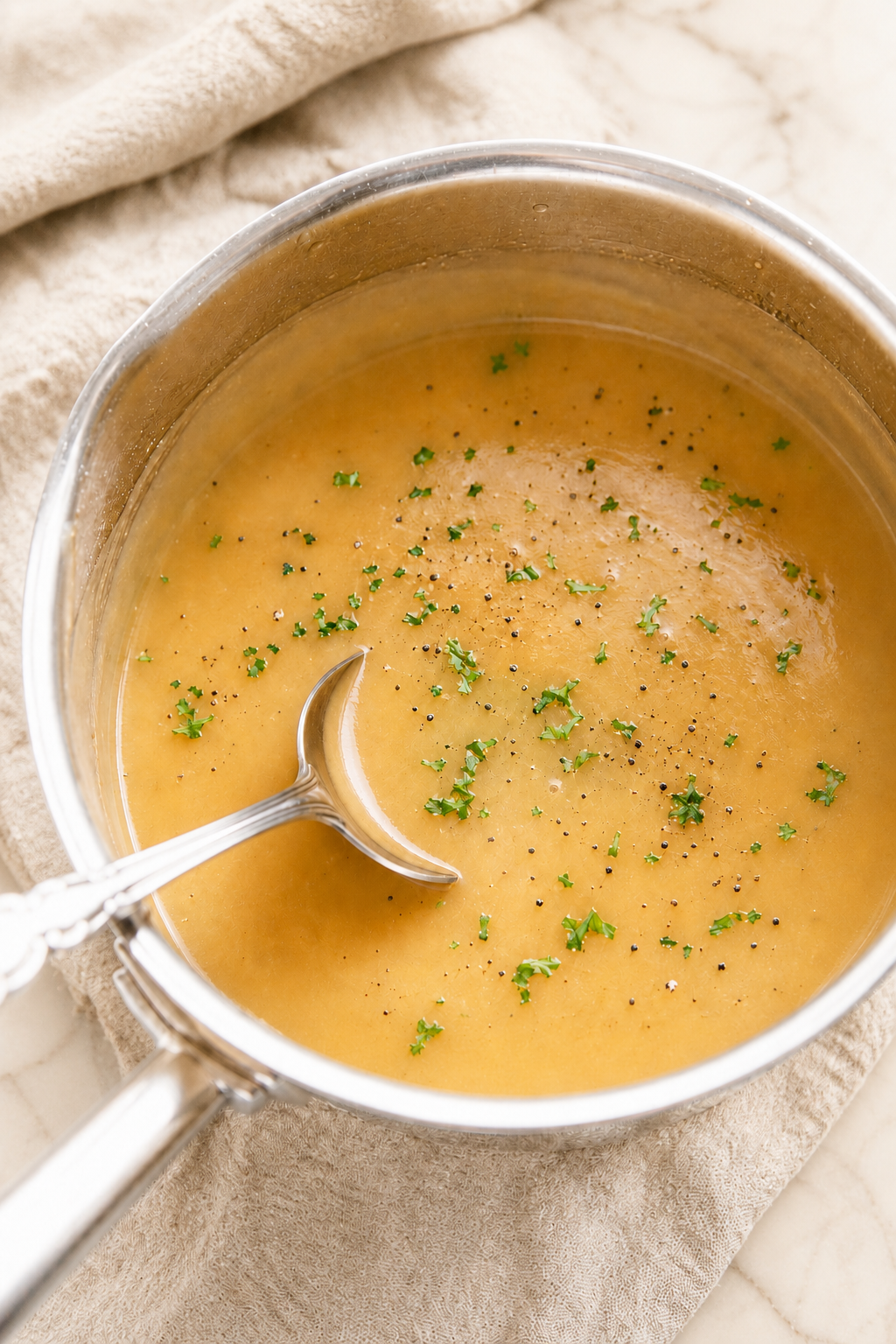
Once you learn how to make turkey gravy from scratch, you may never reach for a jar or packet again. The recipe is surprisingly simple, takes about 20 minutes, and can be adjusted depending on how many pan drippings you have available.
Serve this homemade gravy generously over roasted turkey, mashed potatoes, stuffing, and warm dinner rolls for the ultimate Thanksgiving or Christmas dinner.
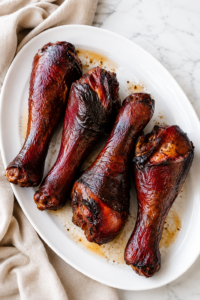
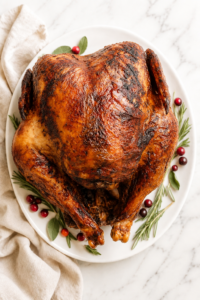
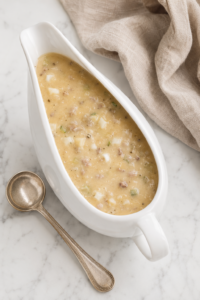
More Turkey Gravy Recipes

Why You’ll Love This Homemade Turkey Gravy
- Rich flavor from real turkey drippings
- Smooth and creamy without using heavy cream
- Ready in about 20 minutes
- Easy to make while the turkey rests
- Can be prepared ahead of time
- Simple to adjust if it becomes too thick or thin
- Perfect for Thanksgiving, Christmas, or Sunday dinner
What Makes Turkey Gravy Taste So Good?
The secret to the best turkey gravy is using the browned bits and juices left in the roasting pan. Those turkey drippings contain concentrated flavor from the meat, seasonings, butter, vegetables, and herbs used while roasting the turkey.
However, pan drippings alone usually do not provide enough liquid for a full batch of gravy. Combining them with good-quality turkey or chicken stock creates a gravy that is deeply flavorful without becoming overly salty or greasy.
A traditional roux made with turkey fat or butter and all-purpose flour thickens the gravy and gives it a smooth, velvety texture.
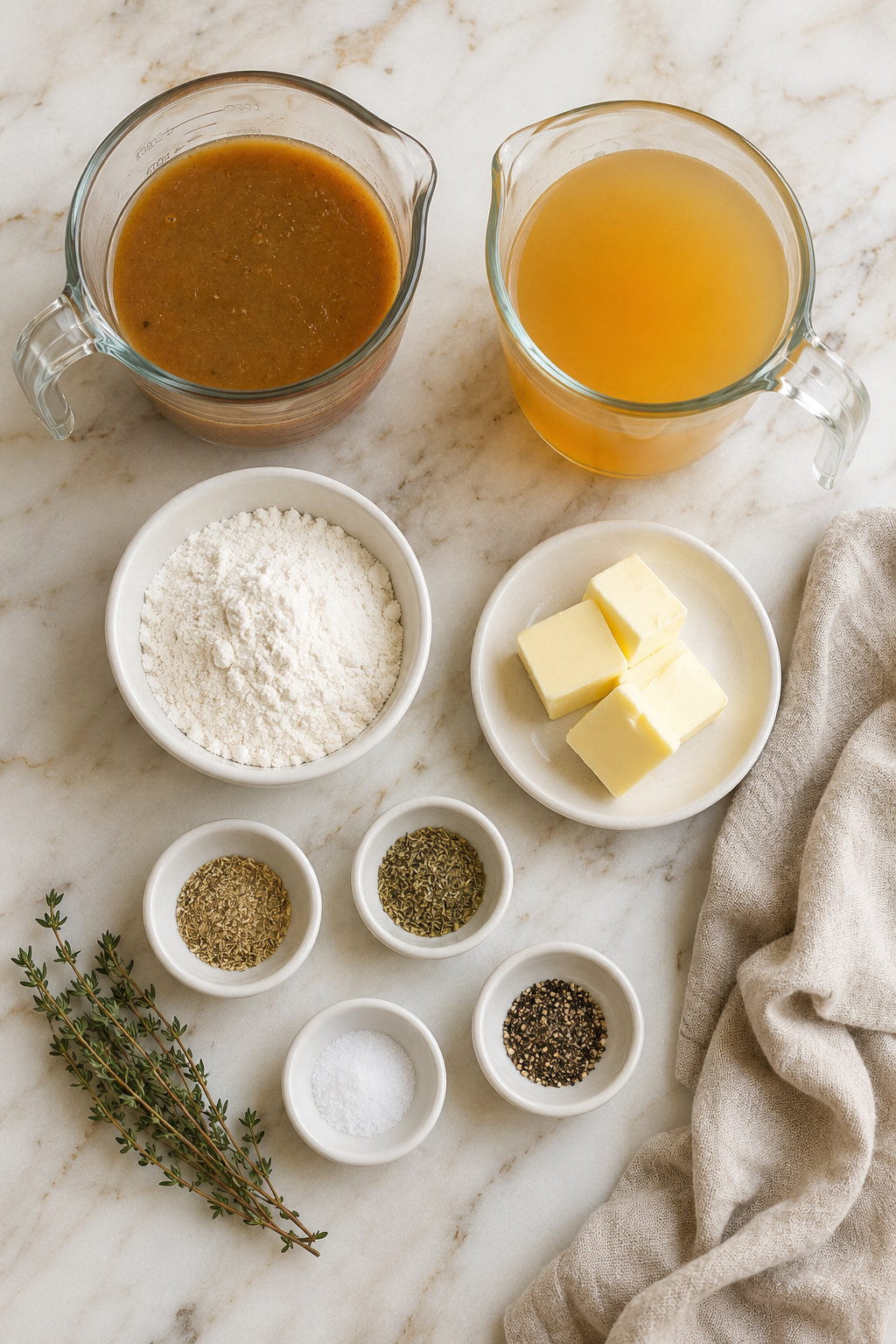
Ingredients for Turkey Gravy From Scratch
You only need a handful of ingredients to make flavorful homemade gravy.
Turkey drippings
After roasting the turkey, pour the liquid from the roasting pan into a fat separator or heat-safe measuring cup. The fat will rise to the top while the flavorful juices settle underneath.
Turkey fat or butter
Use the fat skimmed from the turkey drippings for the richest flavor. If you do not have enough turkey fat, add butter until you have ½ cup total.
All-purpose flour
Flour combines with the fat to form a roux, which thickens the gravy.
Turkey or chicken stock
Use turkey stock whenever possible. Chicken stock also works well and is easier to find. Choose a low-sodium variety so you can control the amount of salt in the finished gravy.
Seasonings
Black pepper, poultry seasoning, fresh thyme, and sage complement the turkey without overpowering its natural flavor. Add salt only after tasting the finished gravy because pan drippings can already be salty.
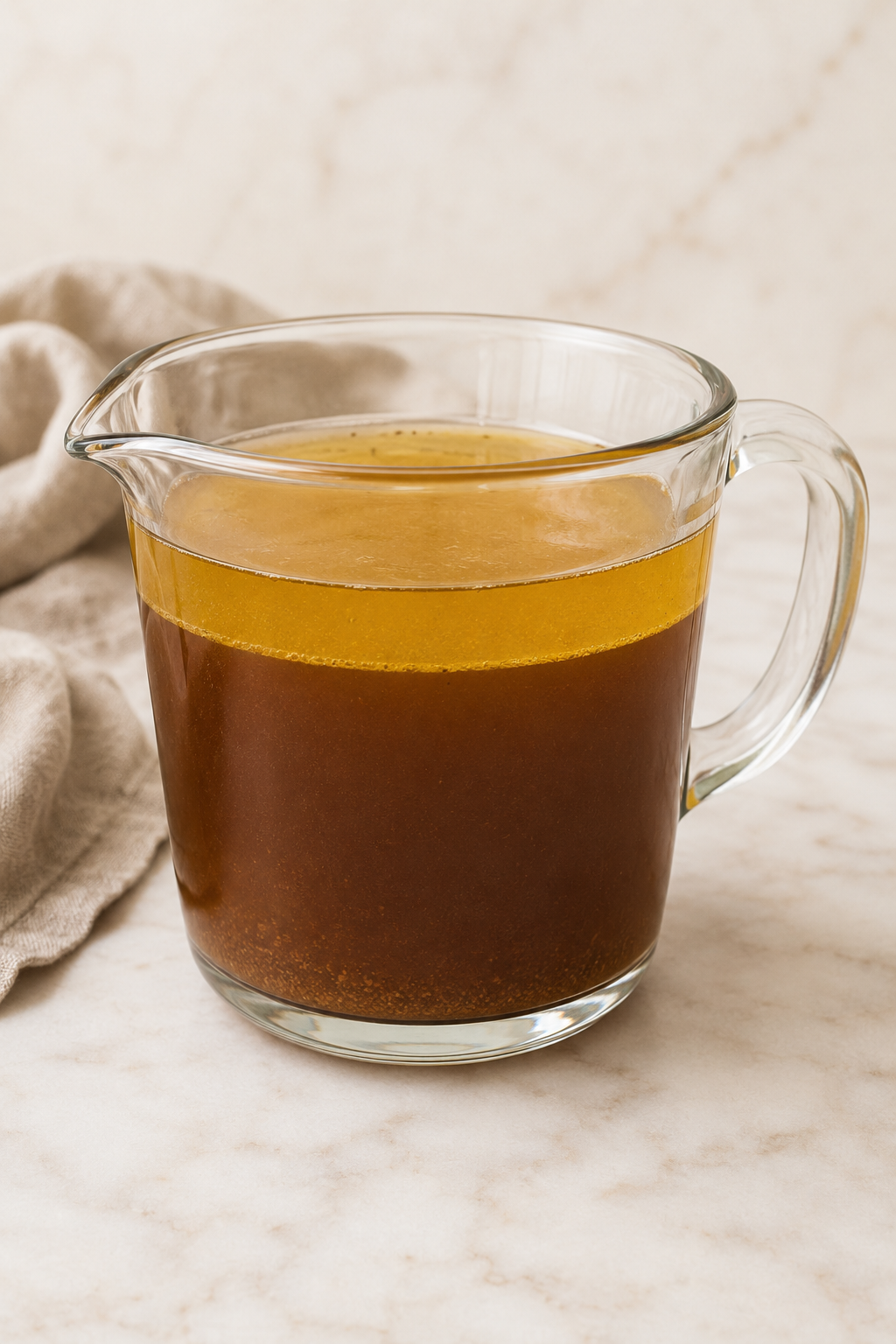
How to Separate Turkey Drippings
Carefully pour the liquid from the turkey roasting pan through a fine-mesh strainer and into a fat separator. Let it sit for approximately five minutes.
The clear fat will rise to the top, while the darker turkey juices remain underneath. Measure ½ cup of the fat for the roux. Reserve the remaining juices to use as part of the liquid in the gravy.
If you do not have a fat separator, pour the drippings into a heat-safe measuring cup. Allow the fat to rise, then skim it from the top with a spoon.

How to Make Turkey Gravy From Scratch
1. Collect the turkey drippings
Transfer the roasted turkey to a cutting board and let it rest. Pour the liquid from the roasting pan through a fine-mesh strainer.
Separate the fat from the turkey juices. Measure ½ cup of fat, adding butter if necessary.
2. Deglaze the roasting pan
Place the roasting pan over two stovetop burners on medium-low heat. Add approximately ½ cup of turkey stock.
Use a wooden spoon to scrape the browned bits from the bottom of the pan. These caramelized pieces add tremendous flavor to homemade gravy.
Carefully pour the liquid through a strainer and add it to the reserved turkey juices.
3. Measure the liquid
Combine the turkey juices with enough turkey or chicken stock to equal four cups of liquid.
Keeping the fat, flour, and liquid measurements balanced will help create gravy with the proper consistency.
4. Make the roux
Add ½ cup of turkey fat or butter to a large saucepan over medium heat. Sprinkle in the flour and whisk continuously.
Cook the roux for two to three minutes. It should become smooth and lightly golden. Cooking the flour removes its raw taste and helps deepen the flavor of the gravy.
5. Add the turkey stock
Slowly pour the turkey juice and stock mixture into the roux, whisking constantly. Add only a small amount at first and whisk until completely smooth before adding more.
This gradual process helps prevent lumps.
6. Simmer the gravy
Bring the gravy to a gentle simmer. Add the black pepper, poultry seasoning, thyme, and sage.
Continue cooking for five to eight minutes, whisking frequently, until the gravy has thickened enough to coat the back of a spoon.
7. Season and serve
Taste the gravy before adding salt. If the turkey drippings and stock were already seasoned, you may not need much additional salt.
Serve the gravy warm over sliced turkey, mashed potatoes, stuffing, or biscuits.




Tips for Perfect Turkey Gravy
Cook the flour
Do not immediately add the stock after stirring in the flour. Let the roux cook for at least two minutes to eliminate the raw flour taste.
Add the liquid slowly
Whisking the stock into the roux gradually is the easiest way to prevent lumpy gravy.
Use low-sodium stock
Turkey drippings can be salty, especially if the turkey was brined. Low-sodium stock gives you more control over the final seasoning.
Wait before adding salt
Always taste the finished gravy before adding salt. It is easy to add more seasoning, but difficult to correct gravy that is too salty.
Remember that gravy thickens as it cools
Remove the gravy from the heat when it is slightly thinner than your desired consistency. It will continue to thicken as it sits.
How to Fix Lumpy Gravy
If your gravy develops lumps, do not worry. Pour it through a fine-mesh strainer into a clean saucepan. You can also carefully blend it with an immersion blender until smooth.
To prevent lumps from forming, add the liquid slowly and whisk continuously as it is incorporated into the roux.
How to Thicken Turkey Gravy
If the gravy is too thin, let it simmer for a few additional minutes. It may simply need more time to reduce and thicken.
For very thin gravy, combine one tablespoon of cornstarch with one tablespoon of cold water. Slowly whisk the slurry into the simmering gravy. Cook for another minute or two before adding more.
Avoid adding dry flour directly to the gravy because it will create lumps.
How to Thin Gravy
If the gravy becomes too thick, whisk in additional turkey stock, chicken stock, or water. Add the liquid a few tablespoons at a time until the gravy reaches your preferred consistency.
What if the Gravy Is Too Salty?
Whisk in additional unsalted turkey stock or chicken stock. If this makes the gravy too thin, let it simmer until it thickens again.
You can also prepare a small amount of unsalted butter-and-flour roux and whisk it into the gravy along with additional unsalted stock.
Can You Make Turkey Gravy Without Drippings?
You can make delicious turkey gravy even if you do not have pan drippings.
Replace the turkey fat with butter and use four cups of turkey or chicken stock for the liquid. For extra flavor, sauté a few tablespoons of finely minced onion or shallot in the butter before adding the flour.
You can also add a small amount of poultry seasoning, fresh thyme, sage, or roasted turkey base to deepen the flavor.
Can Turkey Gravy Be Made Ahead of Time?
Turkey gravy can be prepared two to three days ahead of Thanksgiving. Make it using butter and turkey stock, then refrigerate it in an airtight container.
After roasting the turkey, reheat the gravy and whisk in the strained pan drippings. This gives you the convenience of make-ahead gravy with the rich flavor of freshly roasted turkey.
How to Store Leftover Turkey Gravy
Allow leftover gravy to cool, then transfer it to an airtight container. Refrigerate it for up to four days.
Reheat the gravy in a saucepan over low heat, whisking frequently. Add a splash of stock or water if it has become too thick.
Can You Freeze Turkey Gravy?
Flour-based turkey gravy freezes well. Store it in a freezer-safe container for up to three months, leaving a little room for expansion.
Thaw the gravy overnight in the refrigerator. Reheat it slowly on the stovetop, whisking until smooth. Add a small amount of stock if needed.
What to Serve With Homemade Turkey Gravy
This gravy is the perfect addition to:






How to Make the Best Turkey Gravy From Scratch
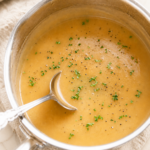
This homemade turkey gravy from scratch combines flavorful pan drippings, turkey stock, butter, flour, and herbs to create a rich, smooth gravy. It is ready in about 25 minutes and perfect for Thanksgiving, Christmas, or any roasted turkey dinner.
- Prep Time: 10 minutes
- Cook Time: 15 minutes
- Total Time: 25 minutes
- Yield: 6–8 servings (4 cups) 1x
- Category: CONDIMENT
- Method: STOVETOP
- Cuisine: American, Holiday Recipes
Ingredients
- ½ cup reserved turkey fat or unsalted butter
- ½ cup all-purpose flour
- Reserved turkey pan juices
- 3 to 4 cups low-sodium turkey or chicken stock, as needed
- ½ teaspoon freshly ground black pepper
- ¼ teaspoon poultry seasoning
- ½ teaspoon finely chopped fresh thyme or ¼ teaspoon dried thyme
- ¼ teaspoon rubbed sage
- Salt, to taste
Instructions
- Pour the turkey drippings through a fine-mesh strainer into a fat separator or heat-safe measuring cup. Let the drippings rest for about five minutes, allowing the golden fat to rise above the darker turkey juices.
- Separate and reserve ½ cup of turkey fat. If you do not have enough turkey fat, add unsalted butter until you have ½ cup total.
- Pour the darker turkey juices into a separate measuring cup. Add enough low-sodium turkey or chicken stock to equal four cups of liquid.
- Place the reserved turkey fat or butter in a large saucepan over medium heat.
- Add the flour and whisk until completely smooth. Cook the roux for two to three minutes, whisking constantly, until it turns lightly golden and no longer smells like raw flour.
- Slowly pour the turkey juice and stock mixture into the roux while whisking continuously. Begin with a small amount of liquid and whisk until smooth before gradually adding the remainder.
- Add the black pepper, poultry seasoning, thyme, and sage. Whisk to combine.
- Bring the gravy to a gentle simmer. Cook for five to eight minutes, whisking frequently, until the gravy is smooth and thick enough to coat the back of a spoon.
- Taste the gravy before adding salt. Turkey drippings and stock may already contain enough seasoning.
- Remove the gravy from the heat and serve warm over roasted turkey, mashed potatoes, stuffing, or biscuits.
Notes
- Use low-sodium or unsalted stock because turkey drippings can already contain a significant amount of salt.
- If the gravy is too thick, whisk in additional turkey stock a few tablespoons at a time.
- If the gravy is too thin, let it simmer for several additional minutes.
- For very thin gravy, combine one tablespoon of cornstarch with one tablespoon of cold water. Slowly whisk the slurry into the simmering gravy.
- If the gravy becomes lumpy, pour it through a fine-mesh strainer or carefully blend it with an immersion blender.
- Gravy continues to thicken as it cools, so remove it from the heat when it is slightly thinner than your preferred consistency.
- Refrigerate leftover gravy in an airtight container for up to four days.
- Freeze the cooled gravy in a freezer-safe container for up to three months.
- Nutritional information will vary depending on the amount of turkey fat, pan drippings, and sodium in the stock.
Make It Your Own
- Add sautéed mushrooms for a savory mushroom turkey gravy.
- Stir in finely chopped cooked giblets for traditional giblet gravy.
- Add a splash of dry white wine while deglazing the roasting pan.
- Use fresh rosemary, thyme, and sage for an herb-forward gravy.
- Stir in a spoonful of heavy cream for an extra-rich finish.
- Add a small splash of Worcestershire sauce for deeper savory flavor.
Frequently Asked Questions
What is the best ratio for homemade turkey gravy?
A dependable ratio is equal amounts of fat and flour, followed by approximately eight times as much liquid. For this recipe, use ½ cup fat, ½ cup flour, and four cups of turkey drippings and stock.
Should I use turkey stock or chicken stock?
Turkey stock provides the most traditional flavor, but chicken stock works very well. Choose a low-sodium or unsalted stock so the gravy does not become too salty.
Why does my turkey gravy taste like flour?
The roux may not have cooked long enough. Cook the fat and flour together for two to three minutes before adding the liquid.
Why is my turkey gravy greasy?
The fat may not have been properly separated from the pan juices, or too much fat may have been added. Strain the gravy and skim excess fat from the surface.
How much gravy should I make per person?
Plan on approximately ⅓ to ½ cup of gravy per person. Make extra if you are serving mashed potatoes, stuffing, and rolls or want leftovers.
The Best Homemade Turkey Gravy
Making turkey gravy from scratch is one of the easiest ways to elevate a holiday meal. The flavorful pan drippings, buttery roux, turkey stock, and fresh herbs create a smooth, savory gravy that tastes far better than anything from a jar.
Best of all, you can make it while the turkey rests or prepare most of it ahead of time. Pour it over turkey, mashed potatoes, and stuffing, and do not forget to save a little for those Thanksgiving leftover sandwiches the next day.