I’ve been chased by an alligator, seen one too many venomous snakes, and almost been bit by a brown recluse…
But nothing gives me the heebie jeebies like finding a tick on me or my pets.
If you live in a rural or semi-rural area, you already know how frustrating ticks can be. Here in the Northeast, once spring arrives the tick population explodes, especially around wooded areas, tall grass, and damp garden spaces. Not only are ticks unpleasant, but they can also carry serious diseases like Lyme disease, Rocky Mountain spotted fever, and Anaplasmosis.
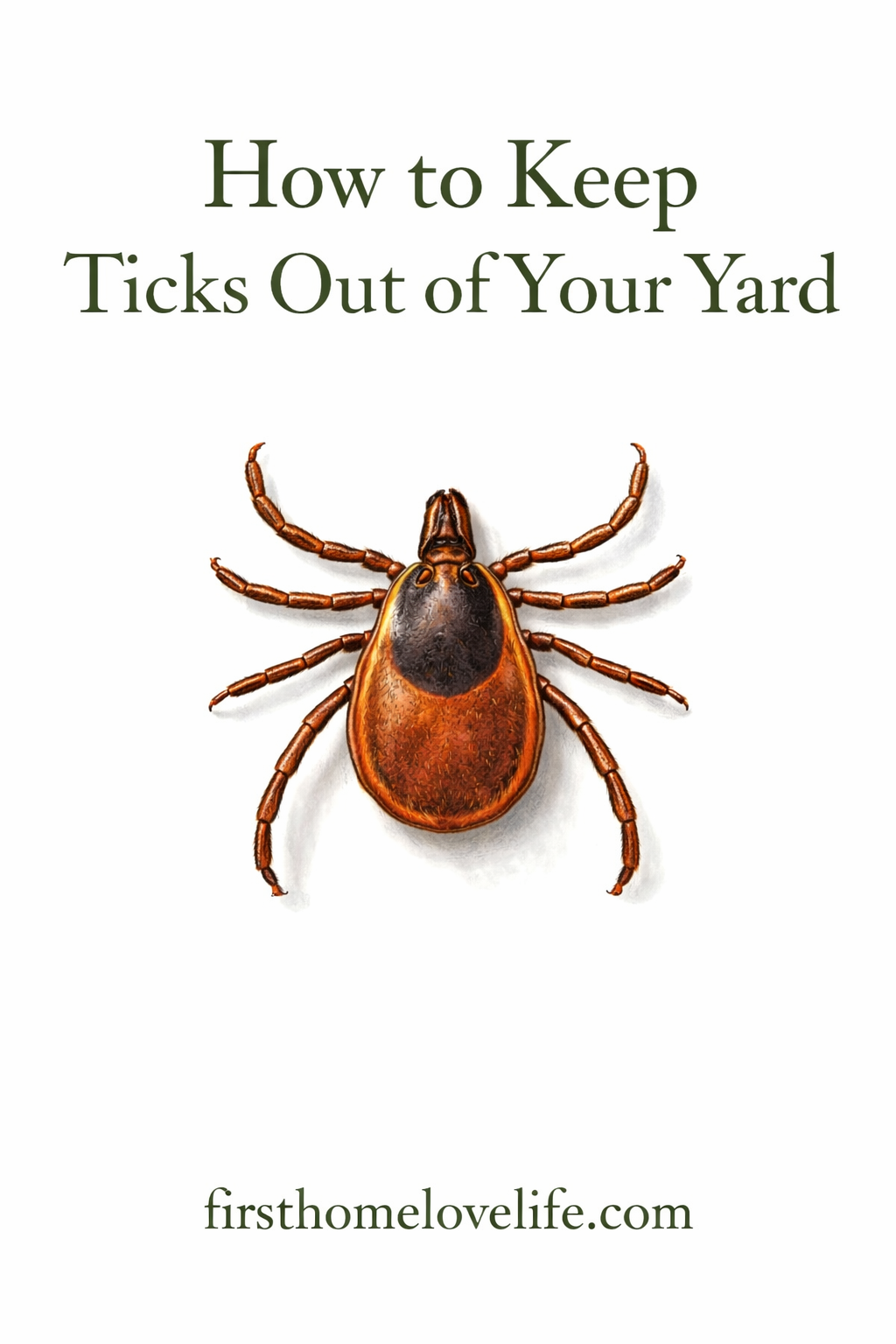
The good news is that with a few smart landscaping choices and natural prevention strategies, you can dramatically reduce ticks around your home, garden, and farmyard.
Whether you have pets, livestock, or just want to enjoy your backyard without constantly checking for ticks, this guide will walk you through the best proven ways to keep ticks out of your yard.
Other Gardening Tips You’ll Love:




Why Ticks Love Your Yard
Ticks thrive in environments that provide shade, moisture, and hosts (animals or humans). The most common places ticks hide include:
- Tall grass
- Leaf litter
- Woodpiles
- Brush and overgrown edges
- Damp shady garden beds
- Areas where deer and rodents travel
If your yard borders woods, fields, or brush lines, you are especially likely to have ticks migrating into your property.
10 Proven Ways to Keep Ticks Out of Your Yard
1. Keep Grass Short
Ticks hide in tall grass waiting for a host to brush past them.
To reduce tick habitat:
- Mow grass regularly
- Keep lawn under 3–4 inches tall
- Trim areas along fences and property edges
Short lawns expose ticks to sunlight and dry conditions, which they hate.
2. Remove Leaf Litter and Brush
Ticks thrive in damp piles of leaves and debris.
Clean up:
- Fall leaves
- Brush piles
- Stacked branches
- Overgrown hedges
Keeping your yard tidy removes one of the tick’s favorite hiding spots.
3. Create a Gravel or Mulch Barrier
A simple landscaping trick can dramatically reduce tick migration from wooded areas.
Create a 3-foot wide barrier of:
- Gravel
- Wood chips
- Bark mulch
Place this between your lawn and:
- Woods
- Stone walls
- Brush lines
Ticks dislike crossing dry open areas.
4. Stack Firewood Properly
Wood piles can become homes for mice and chipmunks — both common tick hosts.
To reduce this problem:
- Stack firewood neatly
- Keep wood off the ground
- Store wood away from the house
This discourages rodents that carry ticks.
5. Discourage Deer
Deer are one of the biggest tick carriers in North America.
Consider:
- Deer-resistant plants
- Garden fencing
- Motion sprinklers
- Removing plants deer love (hostas, tulips, etc.)
Limiting deer visits helps reduce tick populations dramatically.
6. Keep Play Areas Sunny and Open
Ticks prefer shady, moist environments.
Place things like:
- Swing sets
- Picnic tables
- Fire pits
- Patios
In sunny, dry areas of your yard instead of near wooded edges.
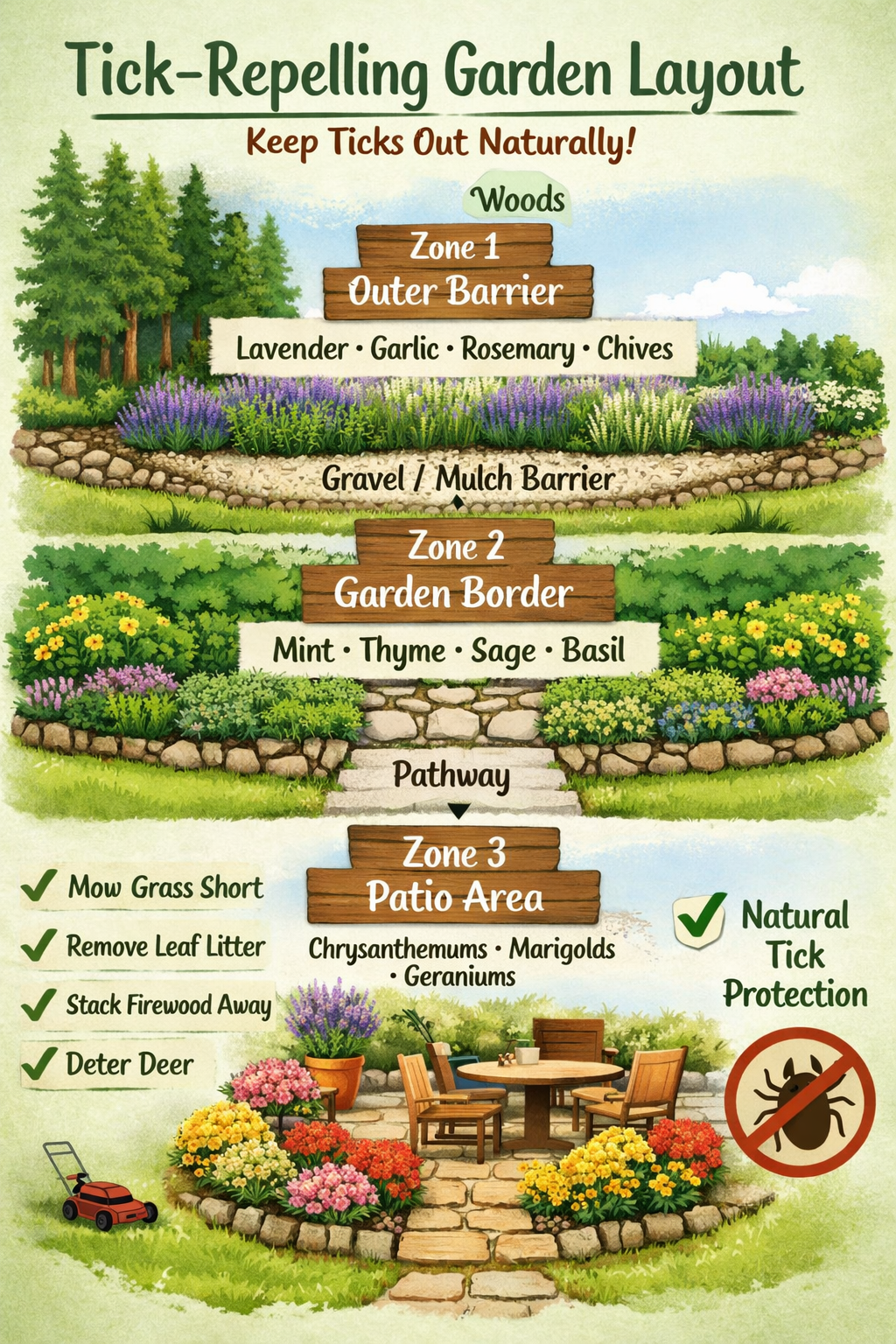
7. Use Tick-Repelling Plants
Some plants naturally repel insects and may help discourage ticks.
Popular choices include:
- Lavender
- Rosemary
- Garlic
- Mint
- Chrysanthemums
Planting these near patios, pathways, and garden borders can help reduce pests naturally.
8. Attract Tick-Eating Animals or Buy Them to Have
Certain animals naturally help control ticks.
Examples include:
- Chickens
- Guinea fowl (loud but great tick eaters)
- Wild birds
- Opossums
In fact, studies suggest opossums can eat thousands of ticks per season.
If you have a homestead or small farm, poultry can be surprisingly effective tick control.
9. Apply Natural Tick Treatments
Some homeowners use natural yard sprays to reduce tick populations.
Common options include:
- Cedar oil sprays
- Garlic oil treatments
- Nematodes (beneficial microscopic worms)
Beneficial nematodes are especially effective because they kill tick larvae in the soil.
10. Maintain Garden Beds and Edges
Ticks love dense garden edges where plants meet grass.
Keep beds maintained by:
- Mulching regularly
- Pruning dense plants
- Removing weeds
- Avoiding thick ground covers near lawns
This reduces shaded hiding places.
Bonus Tip: Protect Yourself While Gardening
Even with a well-maintained yard, ticks can still appear occasionally.
When gardening or working outdoors:
- Wear light-colored clothing
- Tuck pants into socks
- Use insect repellent
- Shower after working outside
- Check pets and clothing carefully
Early tick removal dramatically reduces disease risk.
Signs You May Have a Tick Problem
Watch for these warning signs:
- Ticks frequently found on pets
- Ticks crawling on outdoor furniture
- Deer regularly visiting your yard
- Tall grass or unmanaged brush nearby
If ticks are consistently present, you may want to consider professional tick control services.
Final Thoughts
Ticks are a reality of rural and suburban life, especially near woods and fields. But by maintaining your yard, removing hiding places, and creating barriers between your lawn and wild areas, you can drastically reduce tick populations.
A little prevention goes a long way — and it allows you to enjoy your yard, garden, and outdoor spaces without worrying about ticks every time you step outside.