Homemade crockpot marinara sauce is one of the easiest ways to turn fresh tomatoes into a rich, flavorful sauce you can use in dozens of meals. Everything slowly cooks together in the Crock-Pot, allowing the tomatoes, garlic, onions, and herbs to develop a deep homemade flavor without standing over the stove all day.
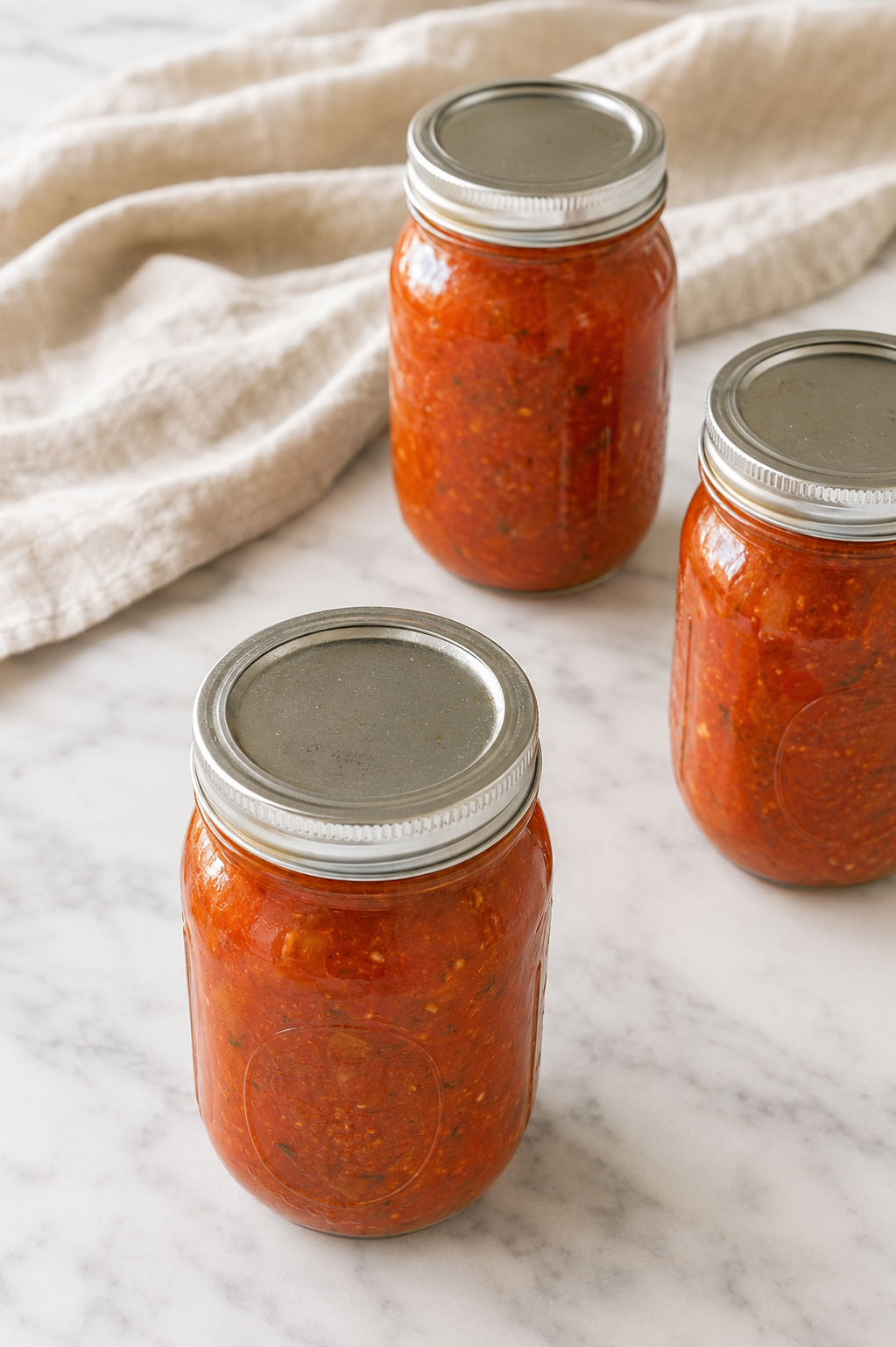
I love making a big batch of slow cooker marinara sauce when garden tomatoes are at their peak. You can serve it immediately, portion it into freezer containers, or use the tested canning version included below to safely preserve it in jars.
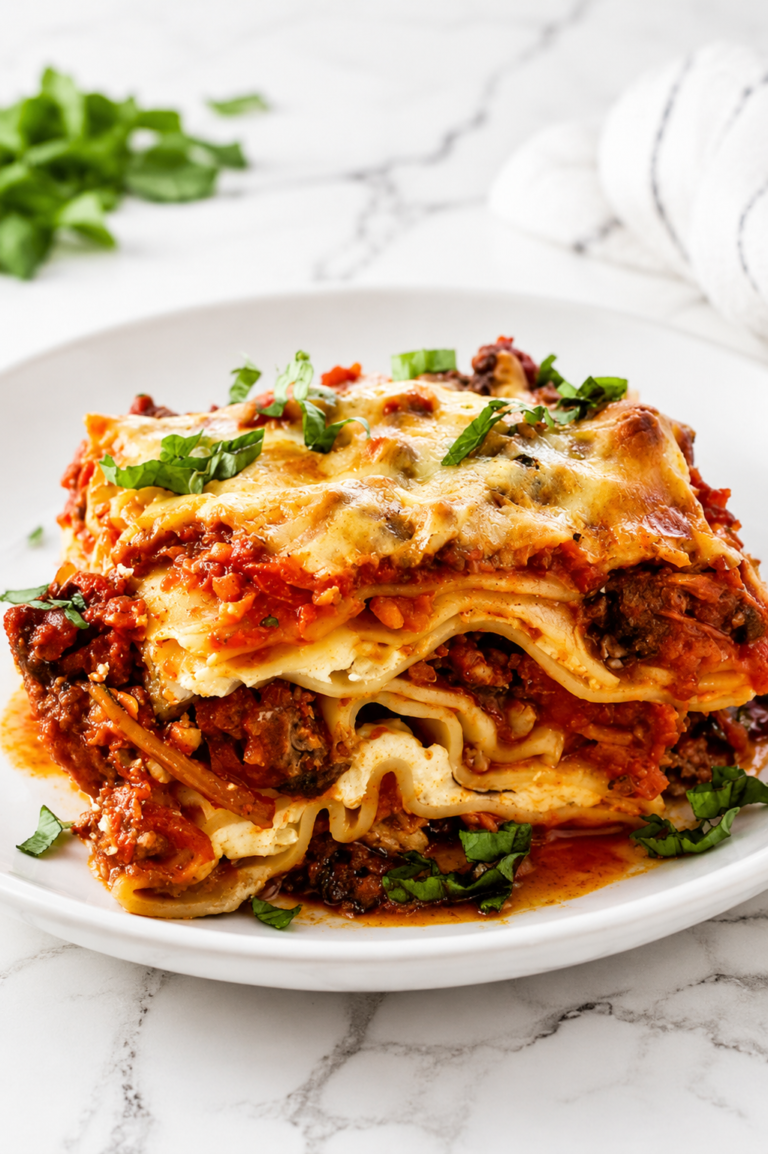
This sauce is perfect for spaghetti, homemade pizza, lasagna, baked ziti, meatballs, chicken Parmesan, and so much more. Once you have homemade marinara ready to go, an easy dinner is never far away.
More Preserving Recipes You’ll Love
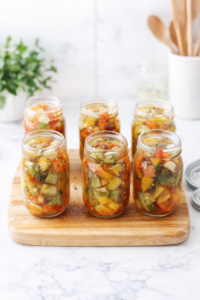
Why You’ll Love This Crockpot Marinara Sauce
This is one of those dependable homemade recipes that can be used in so many different ways.
- The Crock-Pot does most of the work.
- It is a great way to use fresh garden tomatoes.
- The sauce can be smooth or left slightly chunky.
- You can adjust the seasonings in the fresh or freezer version.
- It freezes beautifully for easy future meals.
- A separate tested version can be safely pressure-canned.
- It makes the entire house smell incredible while it cooks.
What Is Marinara Sauce?
Marinara is a simple tomato-based sauce traditionally made with tomatoes, garlic, herbs, and seasonings. Unlike a hearty meat sauce, marinara does not contain ground beef or sausage.
Because the ingredients are so simple, the flavor of your tomatoes makes a big difference. Ripe summer tomatoes create a naturally sweet, fresh-tasting sauce. However, canned whole and crushed tomatoes also work well when fresh tomatoes are not in season.
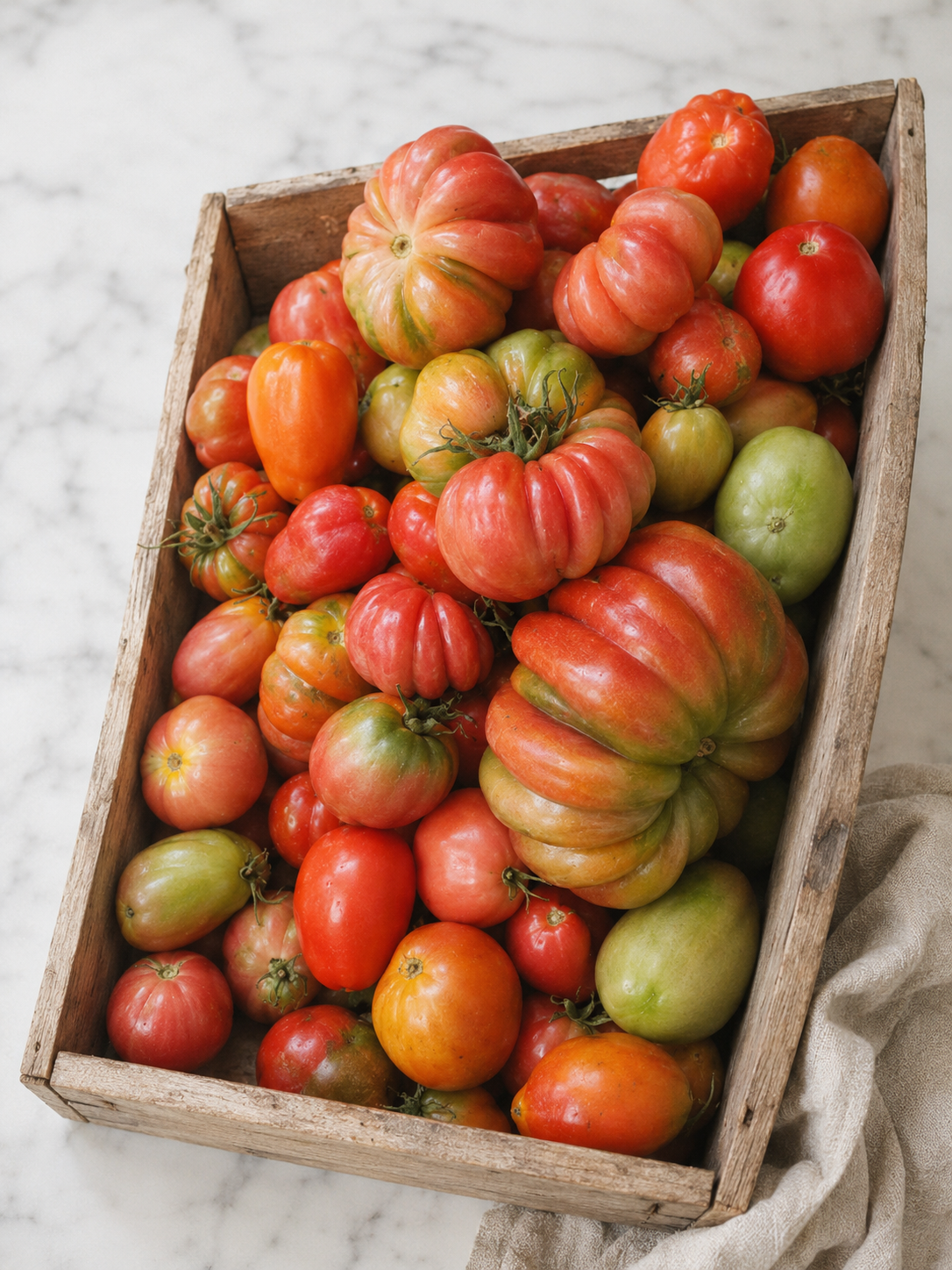
The Best Tomatoes for Homemade Marinara
Paste tomatoes are usually the best choice for homemade tomato sauce because they contain more flesh and less water than slicing tomatoes. This means they cook down faster and produce a thicker marinara.
Some of the best tomatoes for sauce include:
- Roma
- San Marzano
- Amish Paste
- Opalka
- Big Mama
- Plum Regal
You can also use beefsteak, cherry, or other garden tomatoes. Just remember that juicy slicing tomatoes may need additional cooking time before the sauce reaches the desired thickness.
For canning, use fresh, firm, ripe tomatoes without mold, insect damage, cracks, or signs of decay. Do not use tomatoes from dead or frost-damaged vines.
Easy Crockpot Marinara Sauce
This everyday version can be served immediately, refrigerated, or frozen. Since the seasonings and vegetables can be adjusted to taste, this flexible recipe should not be used for shelf-stable canning.
Crockpot Marinara Ingredients
- 2 tablespoons olive oil
- 1 medium yellow onion, finely chopped
- 4 garlic cloves, minced
- 2 cans whole peeled plum tomatoes, 28 ounces each
- 1 can crushed tomatoes, 28 ounces
- ½ cup dry red wine or water
- 1 tablespoon balsamic vinegar
- 1 tablespoon brown sugar, optional
- 1 tablespoon dried Italian seasoning
- 1 teaspoon kosher salt, plus more to taste
- ½ teaspoon freshly ground black pepper
- ¼ to ½ teaspoon crushed red pepper flakes
- ¼ cup chopped fresh flat-leaf parsley
- Fresh basil, optional
How to Make Marinara Sauce in a Crockpot
1. Sauté the onion and garlic
Heat the olive oil in a skillet over medium heat. Add the chopped onion and cook for four to five minutes, or until it begins to soften.
Add the minced garlic and cook for another 30 seconds. Stir constantly and do not allow the garlic to burn.
Sautéing the onion and garlic before adding them to the Crock-Pot gives the finished sauce a richer flavor. If your slow cooker has a sauté setting, you can complete this step directly in the slow cooker.
2. Add the ingredients to the Crock-Pot
Transfer the onion and garlic to the slow cooker.
Add the whole peeled tomatoes, crushed tomatoes, red wine or water, balsamic vinegar, brown sugar, Italian seasoning, salt, black pepper, and crushed red pepper flakes.
Use a wooden spoon or potato masher to break apart the whole tomatoes.
3. Slowly cook the marinara
Cover and cook the sauce on low for six to eight hours or on high for three to four hours.
The longer cooking time on low will give the marinara a deeper, more developed flavor.
4. Thicken the sauce
During the final hour, leave the lid slightly ajar so some of the excess moisture can escape. You can prop the lid open slightly with a wooden spoon if necessary.
Continue cooking until the marinara reaches your preferred consistency.
Keep in mind that the sauce will thicken slightly as it cools.
5. Blend the marinara
For a smooth marinara sauce, carefully blend it directly in the Crock-Pot with an immersion blender.
If you prefer a rustic or chunky marinara, blend only part of the sauce or leave the tomatoes as they are.
If using a traditional blender, allow the sauce to cool slightly and work in small batches. Never overfill a blender with hot liquid.
6. Add the fresh herbs
Stir in the chopped parsley and fresh basil during the final 15 minutes of cooking.
Taste the sauce and adjust the salt, pepper, sugar, or crushed red pepper before serving.
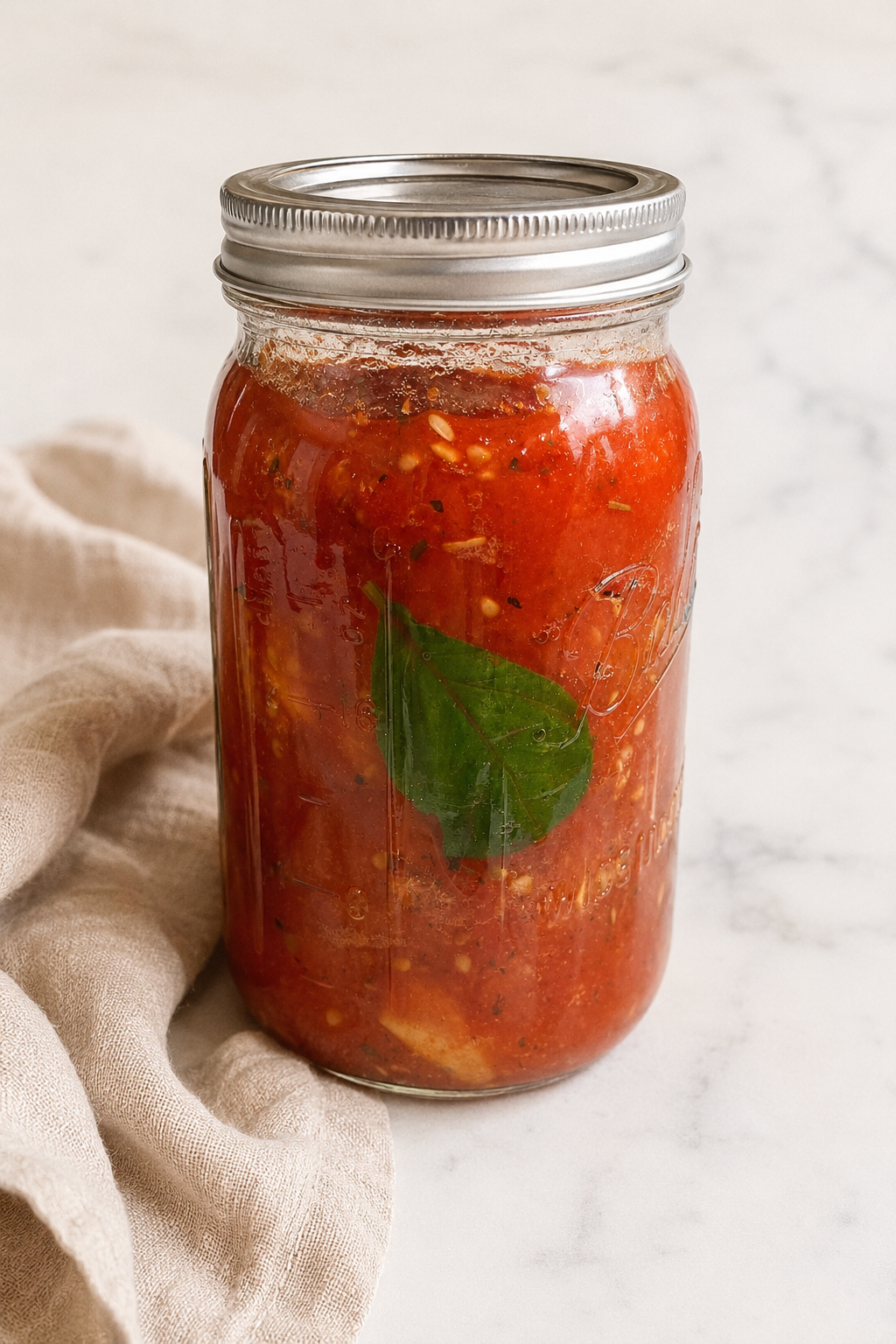
Can Crockpot Marinara Be Water-Bath Canned?
Not this recipe. (SCROLL DOWN FOR THE SAFE CANNING VERSION)
The tested canning version contains onions, garlic, oil, celery or peppers, and optional mushrooms. These are low-acid ingredients, which is why the finished sauce must be processed in a pressure canner.
Do not try to make an untested marinara recipe safe by adding a random amount of bottled lemon juice, citric acid, or vinegar.
If you do not have a pressure canner, freeze the everyday Crock-Pot marinara instead. Freezing allows you to customize the ingredients without worrying about changing a tested canning formula.
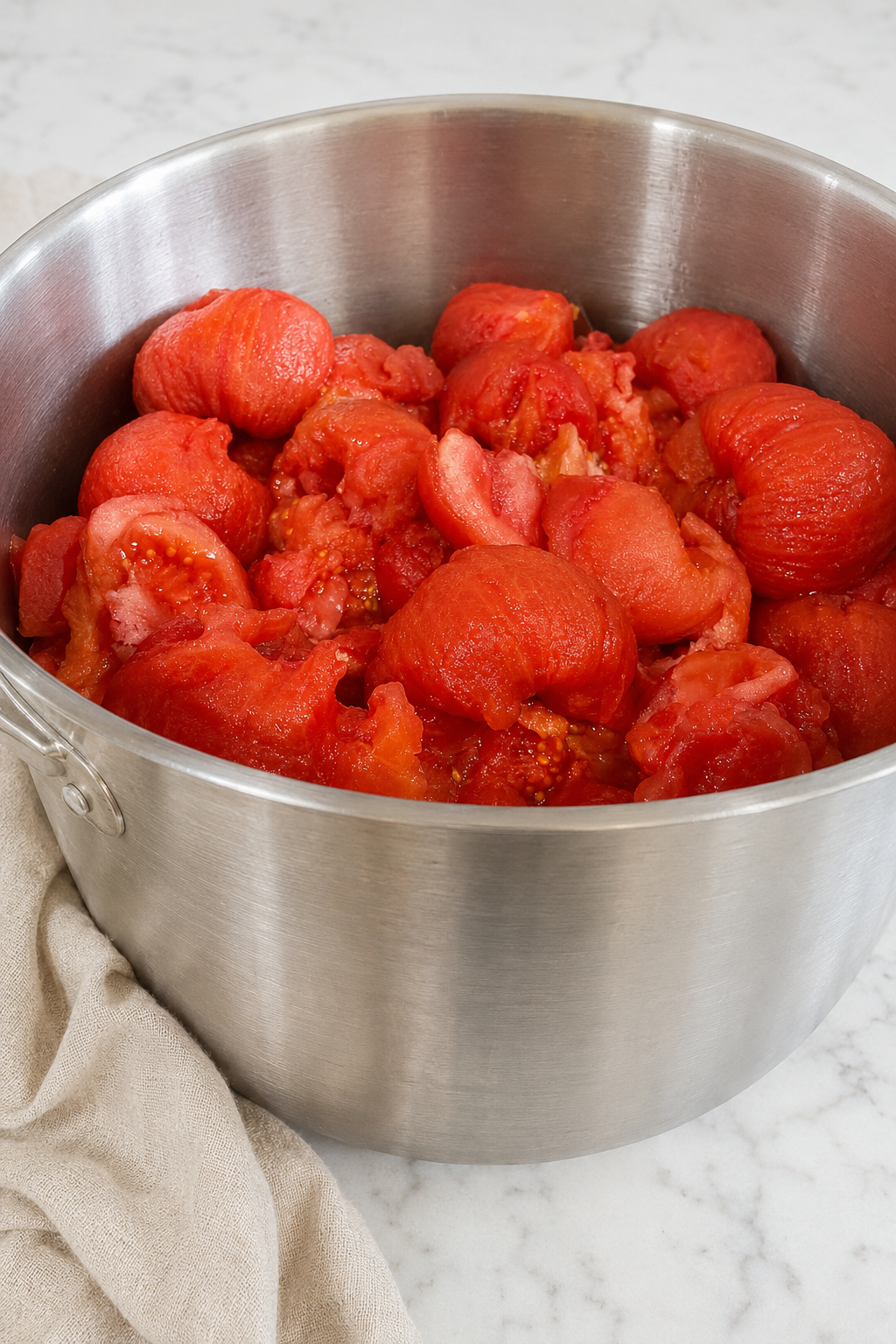
How to Make Crockpot Marinara with Fresh Tomatoes
You can replace the canned tomatoes in the everyday version with approximately six to seven pounds of fresh tomatoes.
For the best texture, peel and core the tomatoes before adding them to the Crock-Pot.
Bring a large pot of water to a boil. Cut a shallow “X” into the bottom of each tomato and place the tomatoes in boiling water for 30 to 60 seconds.
Once the skins begin to split, transfer the tomatoes to a bowl of ice water. Slip off the skins, remove the cores, and roughly chop the tomatoes.
Fresh tomatoes contain more liquid than canned tomatoes, so the sauce may need to cook uncovered for an additional hour or two to thicken.
How to Make Marinara Sauce Thicker
The amount of liquid in tomatoes varies, especially when using fresh garden tomatoes.
If your marinara is thinner than you prefer, try one of these methods:
- Cook it with the lid slightly open.
- Remove the lid completely during the final hour.
- Continue cooking on high until more liquid evaporates.
- Blend part of the sauce to create a thicker consistency.
- Add a small amount of tomato paste to the fresh or freezer version.
Do not add flour, cornstarch, tomato paste, or other thickeners to the pressure-canning recipe unless they are included in the tested instructions. Thicken the sauce after opening the jar instead.
How to Make This Marinara Your Own
The everyday Crock-Pot version is easy to customize. Try one of these simple variations:
Spicy Arrabbiata Sauce
Add additional crushed red pepper flakes for a spicier tomato sauce.
Meat Sauce
Brown ground beef, Italian sausage, or a combination of both. Drain the excess grease and add the cooked meat to the marinara.
If you plan to freeze the sauce, allow it to cool completely before placing it in freezer containers.
Pink Sauce
Stir heavy cream and freshly grated Parmesan into the finished marinara just before serving.
Do not add dairy products before freezing or canning.
Vegetable Marinara
Add sautéed mushrooms, carrots, bell peppers, or zucchini to the everyday sauce.
Because these vegetables are low-acid ingredients, this variation should be refrigerated or frozen rather than canned.
Meatball Marinara
Brown homemade or frozen meatballs and add them to the slow cooker during the final two to three hours.
This makes an easy dinner for spaghetti, meatball subs, or baked pasta.
How to Store Homemade Marinara
Allow the marinara to cool before transferring it to airtight containers.
Store homemade marinara in the refrigerator for up to four days. Reheat it in a saucepan, microwave, or Crock-Pot until steaming hot.
How to Freeze Crockpot Marinara
Crockpot marinara freezes beautifully and is an easy alternative if you do not own a pressure canner.
Allow the sauce to cool completely. Divide it into meal-size portions and transfer it to freezer-safe containers or bags.
Leave about 1 inch of headspace in rigid containers because the sauce will expand as it freezes. When using freezer bags, remove as much air as possible before sealing.
Lay the bags flat until frozen. Once solid, they can be stored upright to save freezer space.
For the best flavor and quality, use frozen marinara within six to eight months.
Thaw it overnight in the refrigerator and reheat it thoroughly before serving.
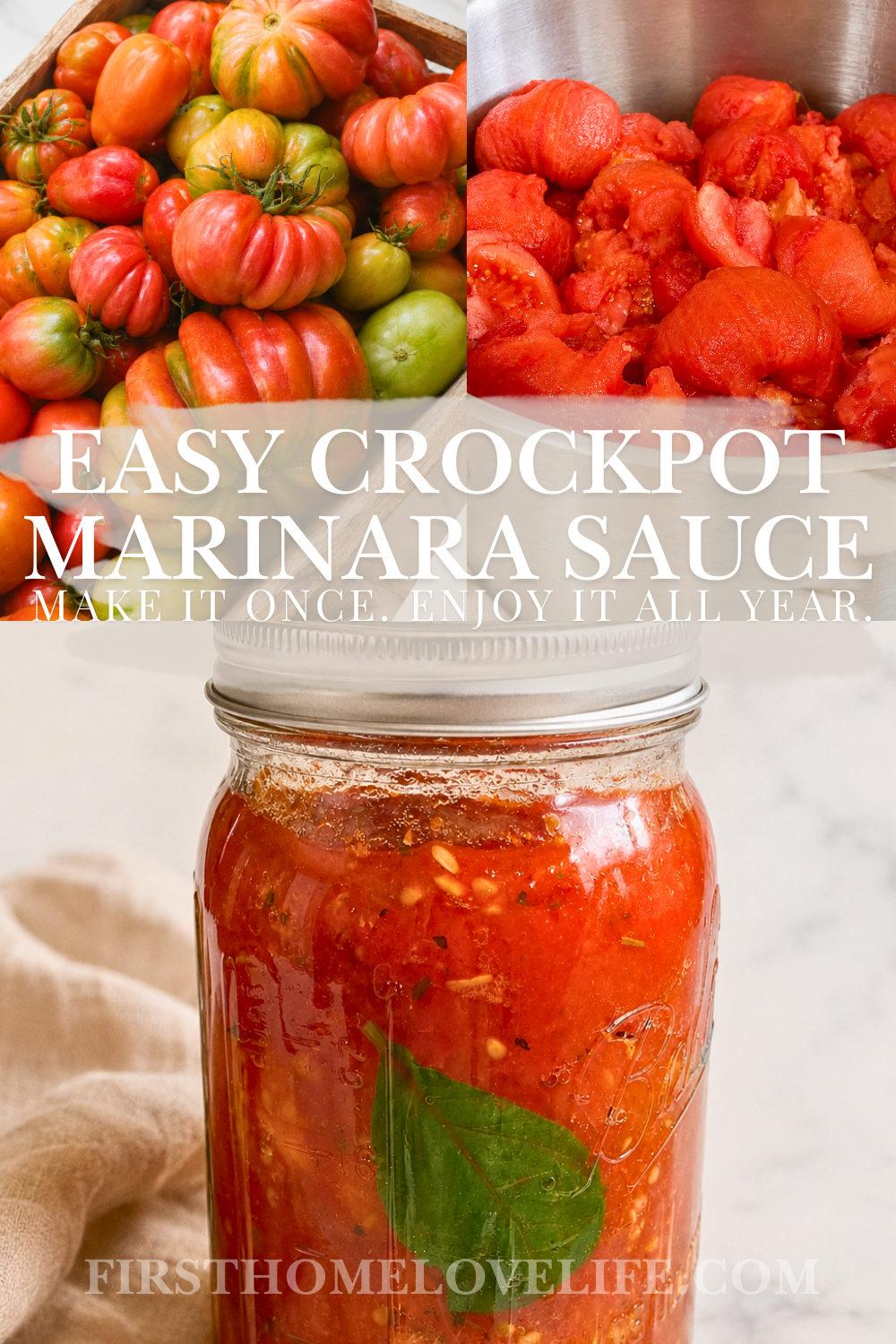
How to Can Homemade Marinara Sauce Safely
The flexible crockpot marinara recipe above should not be placed in jars and stored at room temperature. It contains untested amounts of onions, garlic, oil, wine, and seasonings.
For shelf-stable jars, use the following research-tested meatless spaghetti sauce recipe. Although the sauce may be slowly reduced in a Crock-Pot, it must be brought to a full boil before filling the jars and processed in a pressure canner.
This is not a water-bath canning recipe.
The ingredient proportions are based on the tested Spaghetti Sauce Without Meat recipe from the National Center for Home Food Preservation.
Yield: Approximately 9 pints
Important Canning Safety Notes
Do not increase the amount of onion, garlic, celery, green pepper, mushrooms, or oil.
You may omit the mushrooms. You can also reduce or omit the celery or bell pepper. However, do not use more than one cup total.
Do not add meat, cheese, cream, butter, flour, cornstarch, or additional oil before canning.
Do not substitute canned tomatoes for the fresh tomatoes in this tested recipe.
You can safely add extra seasonings, meat, cheese, or vegetables after opening the jar and reheating the sauce.
Pressure-Canning Processing Times
Process the jars for:
- Pints: 20 minutes
- Quarts: 25 minutes
Begin timing only after the canner has been properly vented and reaches the correct pressure for your canner and elevation.
Dial-Gauge Pressure Canner
- 0 to 2,000 feet: 11 pounds
- 2,001 to 4,000 feet: 12 pounds
- 4,001 to 6,000 feet: 13 pounds
- 6,001 to 8,000 feet: 14 pounds
- Above 8,000 feet: 15 pounds
Weighted-Gauge Pressure Canner
- 0 to 1,000 feet: 10 pounds
- Above 1,000 feet: 15 pounds
If the pressure drops below the required level at any point, return the canner to the correct pressure and restart the complete processing time.
Crockpot Marinara Sauce: How to Make, Freeze and Can It
- Prep Time: 2 HOURS
- Cook Time: 3 HOURS
- Total Time: 5 hours
- Yield: Approximately 9 pints 1x
Ingredients
- 30 pounds fresh ripe tomatoes
- 1 cup chopped onion
- 5 garlic cloves, minced
- 1 cup chopped celery or green bell pepper
- 1 pound fresh mushrooms, sliced, optional
- ¼ cup vegetable oil
- 4½ teaspoons salt
- 2 teaspoons ground black pepper
- 2 tablespoons dried oregano
- ¼ cup minced parsley
- ¼ cup brown sugar
Instructions
Prepare the Tomatoes
- Wash the tomatoes thoroughly under cool running water.
- Working in batches, place the tomatoes in boiling water for 30 to 60 seconds, or until the skins begin to split.
- Immediately transfer the tomatoes to a large bowl of ice water.
- Slip off the skins, remove the cores and cut the tomatoes into quarters.
- Place the prepared tomatoes in a large stockpot. Bring them to a boil and cook uncovered for 20 minutes.
- Pass the cooked tomatoes through a food mill or sieve to remove the seeds and create a smooth tomato pulp.
Prepare the Marinara Sauce
- Heat the vegetable oil in a large skillet over medium heat.
- Add the measured onion, garlic, celery or green pepper and optional mushrooms. Sauté until the vegetables are tender.
- Combine the sautéed vegetables and prepared tomato pulp in a large stockpot.
- Add the salt, black pepper, oregano, parsley and brown sugar.
- Bring the mixture to a boil. Reduce the heat and simmer uncovered until the sauce reaches serving consistency and its volume has been reduced by nearly one-half.
- Stir frequently while the sauce reduces to prevent scorching.
Prepare the Pressure Canner
- Prepare the pressure canner according to the manufacturer’s directions.
- Wash the jars, lids and screw bands in hot, soapy water. Rinse thoroughly and keep the jars hot until ready to fill.
- Keep the marinara boiling hot while filling the jars.
Fill the Jars
- Ladle the hot marinara into hot pint or quart jars, leaving 1 inch of headspace.
- Run a bubble-removal tool around the inside of each jar. Adjust the headspace if necessary.
- Wipe the jar rims with a clean, damp cloth.
- Center the lids on the jars and apply the screw bands until fingertip-tight.
- Place the filled jars in the prepared pressure canner.
Process the Marinara
- Vent and operate the pressure canner according to the manufacturer’s instructions.
- Process pint jars for 20 minutes or quart jars for 25 minutes at the correct pressure for your canner and elevation.
- If the pressure drops below the required level during processing, return the canner to the correct pressure and restart the entire processing time.
- When the processing time is complete, turn off the heat and allow the canner to depressurize naturally. Do not force-cool the canner.
- Open the canner according to the manufacturer’s directions, tilting the lid away from your face.
- Transfer the jars upright to a towel-lined counter. Allow them to cool undisturbed for 12 to 24 hours.
- Remove the screw bands and check the seals. Refrigerate and promptly use any jars that did not seal.
- Label the sealed jars and store them without the screw bands in a cool, dry, dark location.
Pressure Settings
Dial-Gauge Pressure Canner
- 0 to 2,000 feet: 11 pounds
- 2,001 to 4,000 feet: 12 pounds
- 4,001 to 6,000 feet: 13 pounds
- 6,001 to 8,000 feet: 14 pounds
- Above 8,000 feet: 15 pounds
Weighted-Gauge Pressure Canner
- 0 to 1,000 feet: 10 pounds
- Above 1,000 feet: 15 pounds
Notes
Do not increase the amount of onion, garlic, celery, green pepper, mushrooms or oil.
The mushrooms may be omitted. The celery or green pepper may also be reduced or omitted, but do not use more than one cup total.
Do not add meat, cheese, cream, butter, flour, cornstarch, extra vegetables, tomato paste or additional oil before canning.
Do not substitute commercially canned tomatoes for the fresh tomatoes in this tested recipe.
Do not cook the sauce down beyond the nearly one-half reduction specified in the recipe. An excessively thick sauce may not heat evenly during processing.
This sauce must be processed in a pressure canner. It is not suitable for boiling-water canning.
Always confirm your elevation and follow the operating instructions provided with your pressure canner.
For the best quality, use properly sealed jars within one year.
Recipe Source: Adapted from the research-tested Spaghetti Sauce Without Meat recipe from the National Center for Home Food Preservation.
Equipment
- Pressure canner
- Large stockpot
- Large skillet
- Food mill or sieve
- Canning jars, lids and screw bands
- Jar lifter
- Canning funnel
- Bubble-removal tool
- Ladle
- Clean kitchen towels
Ways to Use Homemade Marinara Sauce
Having containers or jars of homemade marinara on hand makes it easy to prepare a comforting dinner without starting from scratch.
Use your sauce for:

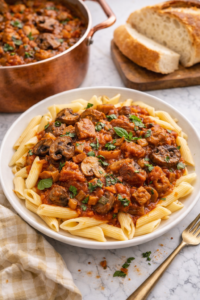
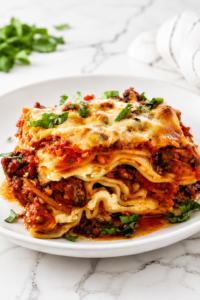
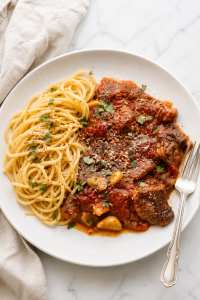
After opening a canned jar, you can add browned meat, sautéed vegetables, fresh herbs, grated cheese, crushed red pepper, or a splash of cream.
Frequently Asked Questions
Can I put raw tomatoes directly in the Crock-Pot?
Yes, raw tomatoes can be added directly to the everyday marinara recipe. For a smoother sauce, peel and core them first.
When making the pressure-canning version, prepare the tomatoes exactly as directed in the tested recipe.
Do I have to peel tomatoes for marinara sauce?
Peeling is optional when making marinara for immediate use or freezing, especially if you plan to blend the finished sauce.
Tomatoes used in the pressure-canning recipe should be peeled according to the tested instructions.
Can I leave crockpot marinara cooking overnight?
The sauce can cook on low for six to eight hours. Follow the safety instructions provided by your slow cooker manufacturer and avoid overfilling the appliance.
Do not leave the lid open overnight. Open or prop the lid during the final portion of cooking while you can check and stir the sauce.
Why is my crockpot marinara watery?
Fresh tomatoes naturally contain a lot of water. Leave the slow cooker lid partially open during the final hour or continue cooking uncovered until the sauce thickens.
Can I add tomato paste?
You can add tomato paste to marinara that will be eaten immediately, refrigerated, or frozen.
Do not add it to the pressure-canning recipe because it changes the thickness and density of the tested formula.
Can I add meatballs or sausage?
Meatballs and sausage can be added to the everyday crockpot marinara.
Do not add meat to the pressure-canning recipe. The processing instructions included here are specifically for sauce without meat.
How long does homemade marinara last?
Refrigerated marinara will keep for up to four days. Frozen marinara is best used within six to eight months.
For the best quality, use properly processed home-canned marinara within one year.
Final Thoughts
This homemade crockpot marinara sauce is an easy way to make the most of ripe garden tomatoes or create a flavorful sauce from pantry staples. The Crock-Pot slowly develops the tomato, garlic, onion, and herb flavors while keeping hands-on cooking to a minimum.
Make the flexible everyday version when you want a sauce you can customize, refrigerate, or freeze. When you want shelf-stable jars, follow the tested ingredient proportions and pressure-canning instructions exactly.
Once your freezer or pantry is stocked with homemade marinara, you will have the beginning of countless easy pasta dinners, casseroles, pizzas, and comforting Italian-inspired meals.