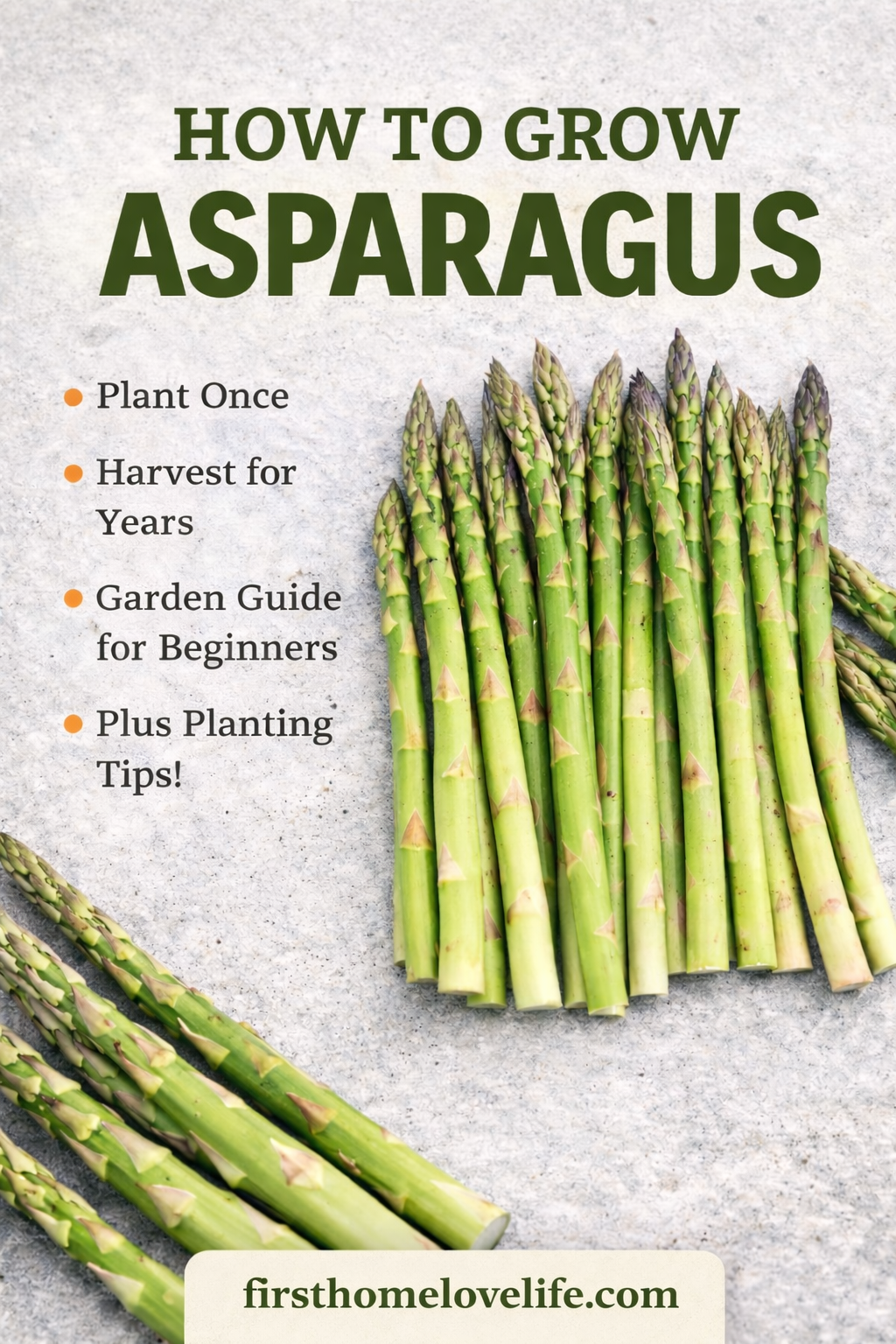
Asparagus is one of the best long-term investments you can plant in your garden. Once established, a healthy asparagus bed can produce tender spears every spring for 15–25 years. If you’re gardening in Zone 5 in Upstate New York, asparagus is especially well-suited to your climate — it thrives in cold winters and mild springs.
Here’s everything you need to know to plant it once and enjoy harvests for decades.
What Is Asparagus?
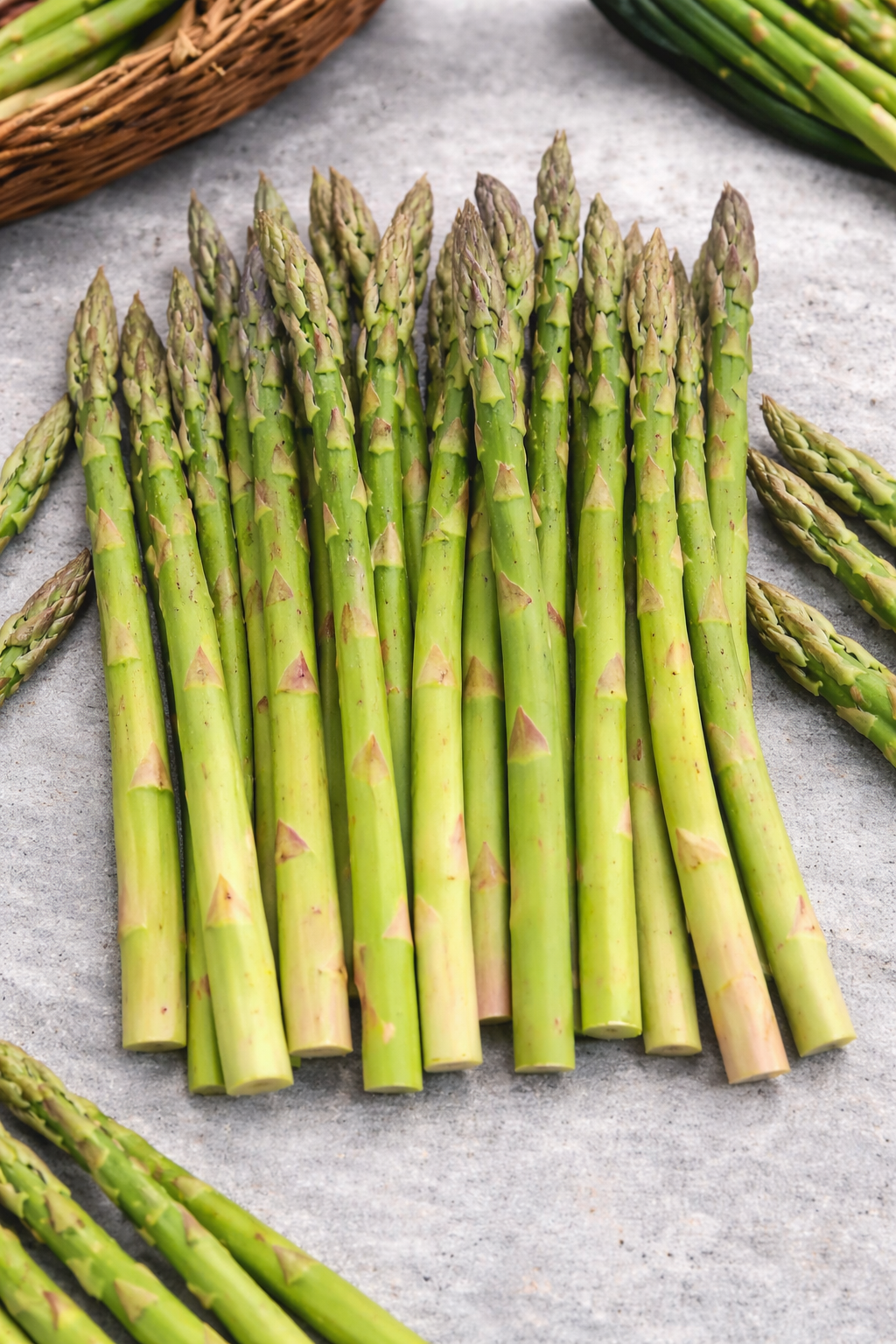
Asparagus officinalis is a cold-hardy perennial vegetable that sends up edible shoots (spears) in early spring. If left unharvested, the spears grow into tall, fern-like foliage that feeds the roots for the following year’s crop.
Popular varieties include:
- Jersey Knight (excellent for colder climates)
- Mary Washington (heirloom favorite)
- Purple Passion (sweet, purple spears)
Why Grow Asparagus?
- Perennial crop (plant once, harvest for decades)
- One of the first vegetables ready in spring
- Low maintenance once established
- High in fiber, folate, and antioxidants
If you’re planning long-term beds in your 50×50 garden layout, asparagus deserves its own permanent section since it doesn’t get rotated like annual vegetables.
Best Growing Conditions
Sunlight
Full sun (6–8+ hours daily)
Soil
- Well-draining
- Slightly sandy loam preferred
- pH between 6.5–7.5
In Upstate NY clay soils, consider raised rows or heavy compost amendment to improve drainage.
Spacing
- Rows: 3–4 feet apart
- Plants: 12–18 inches apart
When to Plant Asparagus
In Zone 5, plant asparagus crowns in early spring (April–May) as soon as the soil can be worked.
You can grow from seed, but crowns (1-year-old roots) give you a 1-year head start.
How to Plant Asparagus Crowns
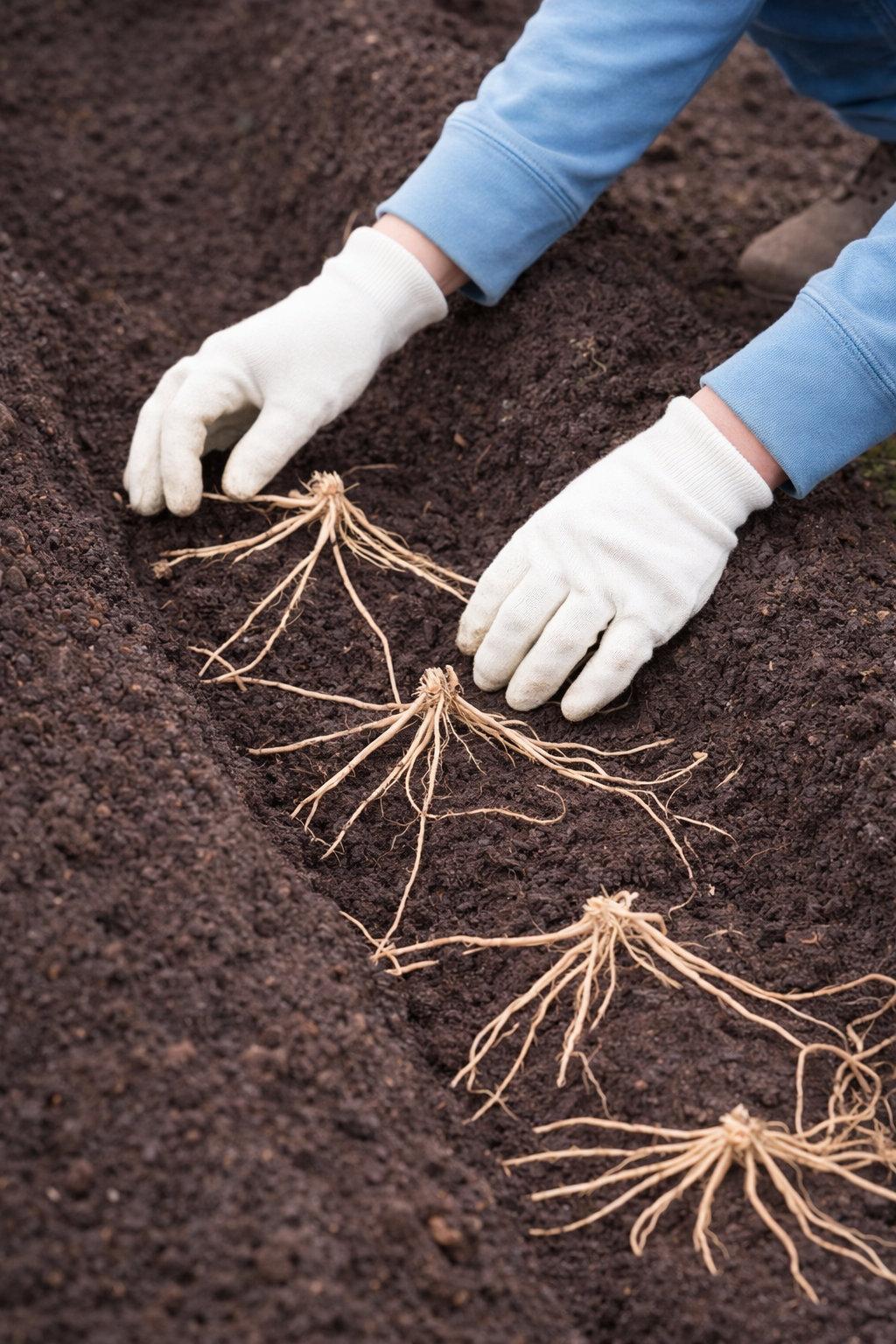
- Dig a trench 8–12 inches deep and 12 inches wide.
- Add compost or aged manure to the bottom.
- Form a small mound in the trench.
- Spread the crown roots over the mound like a spider.
- Cover with 2–3 inches of soil.
- As shoots grow, gradually fill in the trench over several weeks.
This gradual filling prevents rot and supports strong root development.
Watering & Fertilizing
- Keep soil consistently moist during the first year.
- Apply compost annually in early spring.
- Side dress with balanced organic fertilizer after harvest.
Avoid waterlogged soil — asparagus hates “wet feet.”
The Hard Part: Waiting to Harvest
This is where patience matters.
Year 1:
Do not harvest. Let all spears grow into ferns.
Year 2:
Light harvest for 2–3 weeks only.
Year 3 and beyond:
Full harvest for 6–8 weeks in spring.
Stop harvesting when spears become thin (pencil-size or smaller).
Caring for the Ferns
After harvest season:
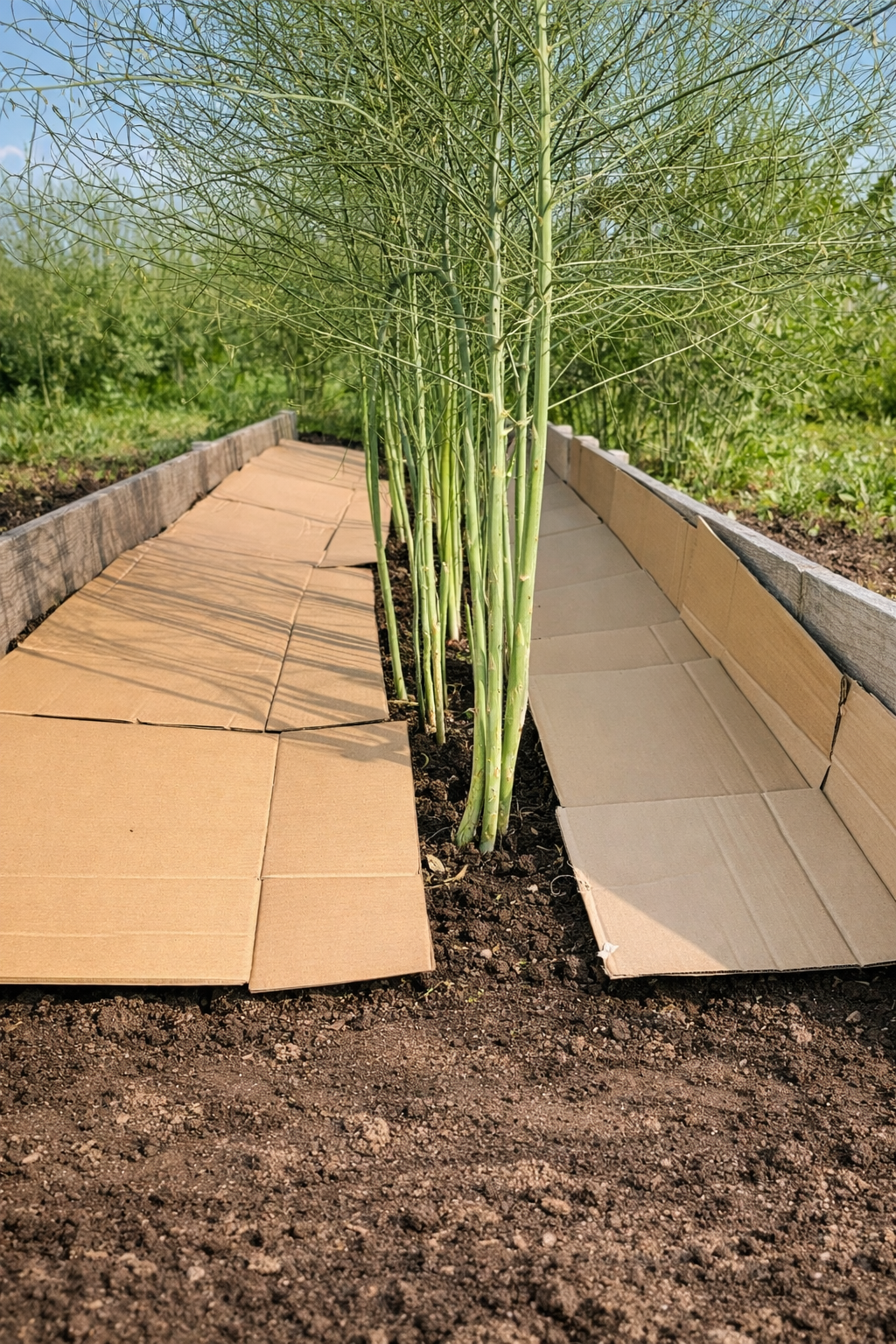
- Let spears grow into tall ferns (4–6 feet)
- These feed the roots for next year
- Cut ferns down after they turn brown in late fall
- Mulch heavily before winter in colder regions
For Zone 5 winters or colder, a thick layer of straw or shredded leaves works well. I also like to lay cardboard down to encourage worms to hang out there.
Common Problems
- Asparagus beetles – Handpick or use neem oil
- Rust fungus – Improve air circulation
- Poor drainage – Leads to root rot
Healthy soil and airflow prevent most issues.
How Long Does Asparagus Last?
With proper care, asparagus beds can produce for 20+ years. Some historic gardens have asparagus beds over 50 years old.
That’s an incredible return on a single planting effort.
Pro Tips for Success
- Dedicate a permanent bed — don’t rotate asparagus
- Add compost every spring
- Keep weeds out (asparagus hates competition)
- Plant more than you think — you’ll want extra
Final Thoughts
Asparagus requires patience up front, but once established, it becomes one of the most rewarding crops in the garden. In colder climates like Upstate New York, it thrives with minimal intervention.
If you’re building a long-term homestead garden, asparagus is one of those “plant it once, thank yourself forever” crops.