Weeding is one of the most dreaded chores for gardeners — especially in spring when weeds pop up everywhere. Many conventional weed killers contain harsh chemicals that harm your soil, plants, and the environment. Fortunately, there are effective natural methods you can use to control weeds safely and sustainably.
In this guide, we break down simple, garden-tested techniques to kill weeds naturally and keep them from coming back — no toxic sprays required.
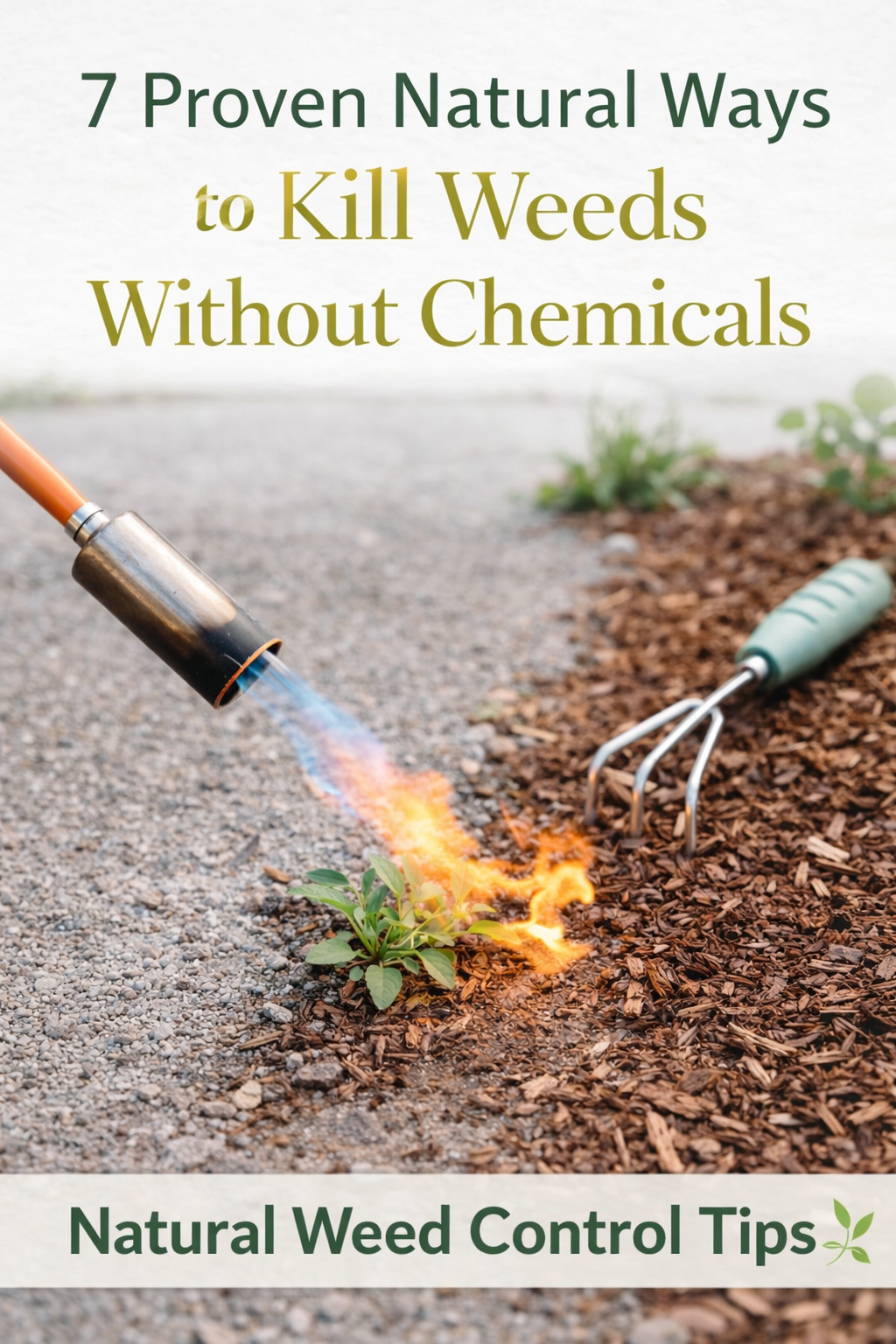
1. Burn Weeds with a Weed Torch (Flame Weeding)
Using a weed torch is one of the fastest and most effective natural ways to kill weeds without chemicals. Also known as flame weeding, this method uses controlled heat to rupture plant cells, causing weeds to wilt and die within hours. My favorite method, especially along livestock fencing.
This method works especially well for:
- Driveways
- Gravel paths
- Garden borders
- Cracks in sidewalks
- Around raised beds
You don’t need to turn weeds to ash — simply pass the flame over the leaves until they look slightly wilted. The heat disrupts the plant’s internal structure, and it will die within a day or two.
How to Use a Weed Torch Safely:
- Use on dry weeds (never during drought conditions with fire risk)
- Avoid mulched areas or dry grass
- Keep a hose or water source nearby
- Do not use near wooden structures
Best for: shallow-rooted annual weeds
Repeat as needed for tougher perennial weeds.
2. Boiling Water
Boiling water is a zero-cost, chemical-free weed killer that’s perfect for cracks in driveways, patios, and garden paths. The high temperature destroys plant cells and protein structures instantly.
Steps:
- Boil water in a kettle or pot.
- Carefully pour it over the weed bases.
- Repeat as needed — especially for tougher, established weeds.
3. DIY Spray With Dish Soap
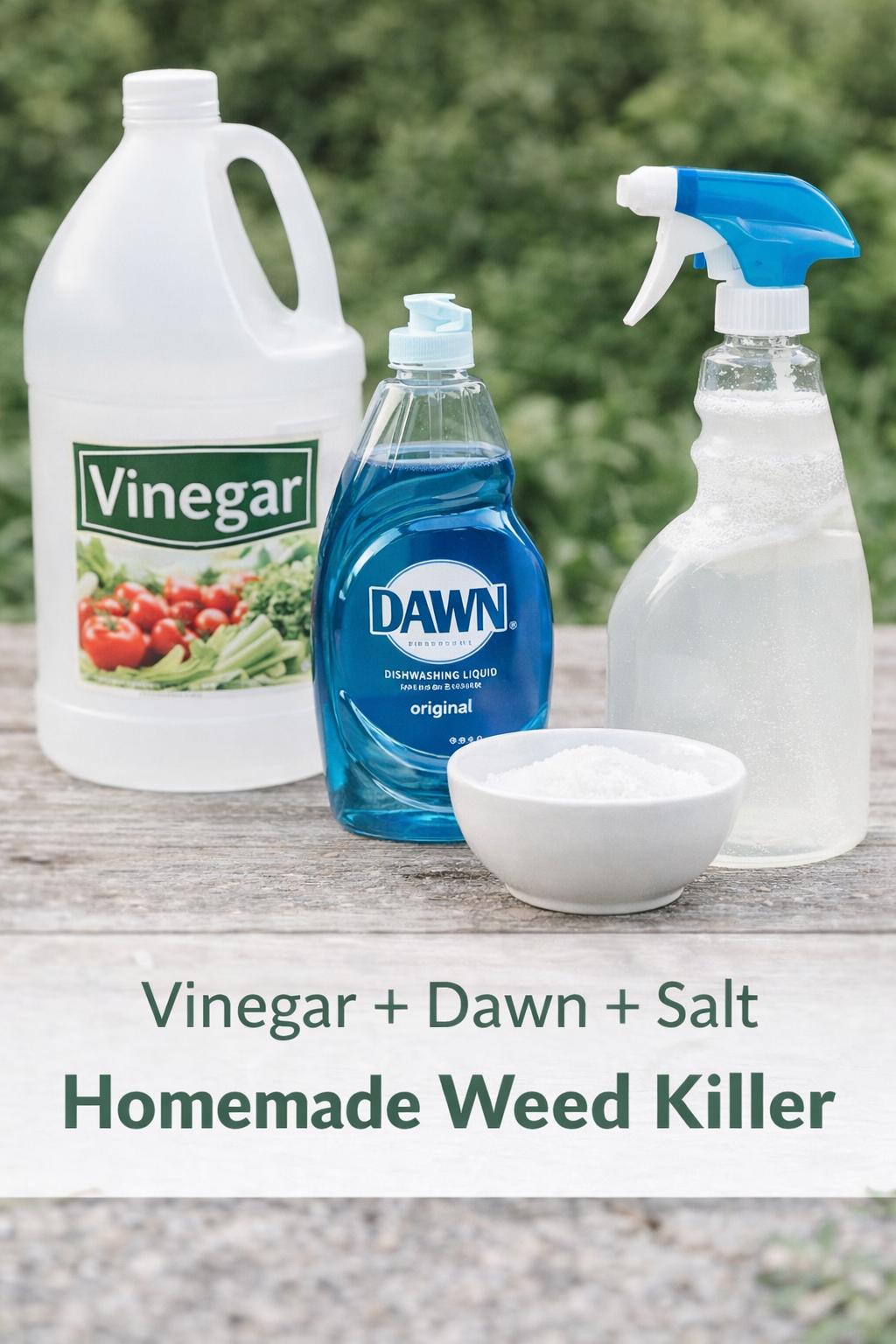
Adding a few drops of dish soap to a vinegar spray helps the solution stick to leaves more effectively. Dish soap acts as a surfactant to increase weed coverage. You can also experiment with a small amount of salt added to the mix for enhanced results, but be careful — salt can linger in soil and affect future plants.
Recipe (optional):
- 1 gallon vinegar
- 2–3 tablespoons dish soap
- 1/4 cup salt (optional for tough weeds)
4. Mulch to Prevent Weed Growth
While not an immediate killer, adding a thick layer of mulch (about 3–4 inches) around plants prevents sunlight from reaching weed seeds, reducing future sprouting. Organic mulch like wood chips also improves soil health over time.
Tip: Lay down newspaper under mulch in areas where weeds are persistent — paper decomposes and forms an extra weed barrier.
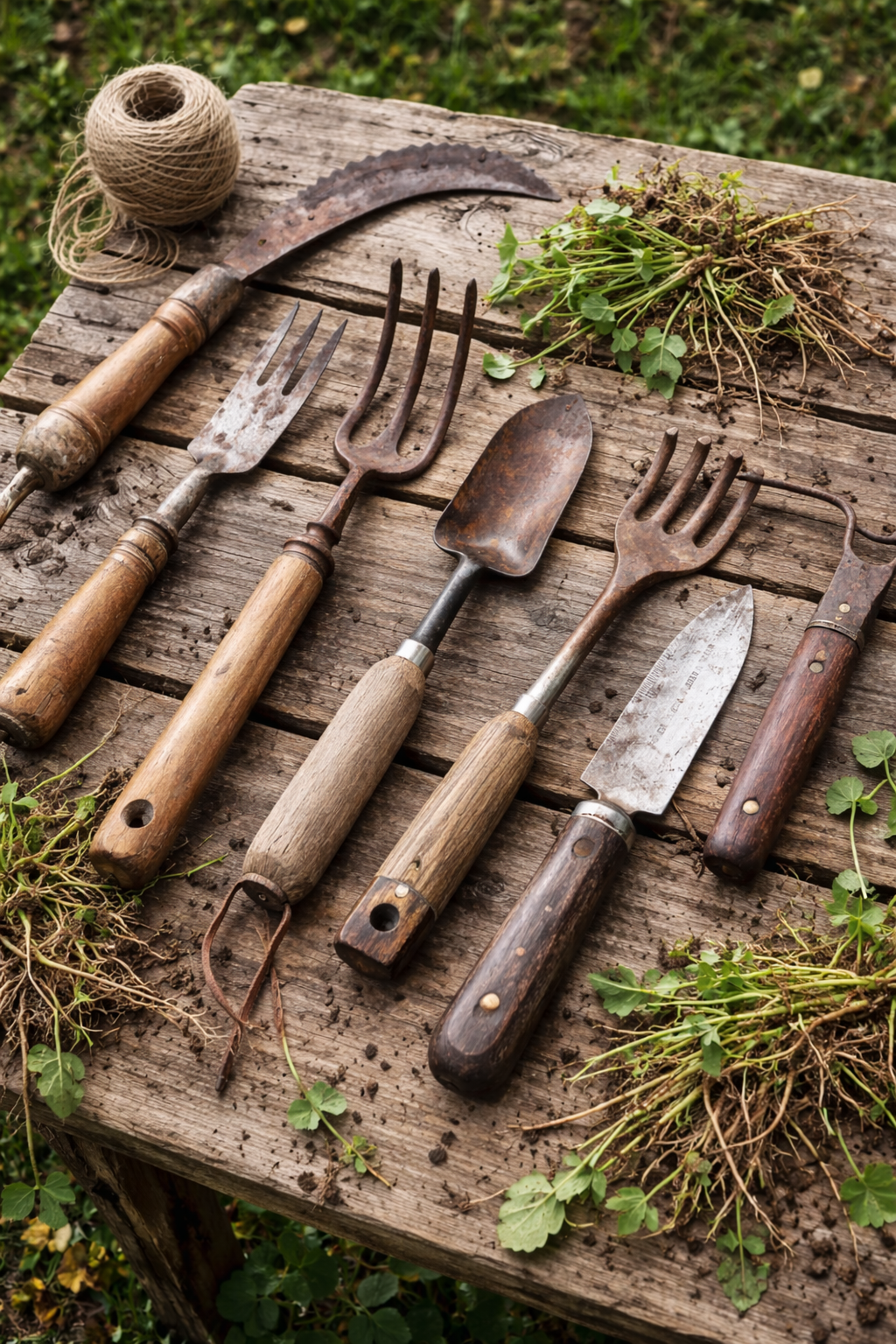
5. Manual Pulling (Best Early & Often)
Pulling weeds by hand is still one of the most effective methods, especially when weeds are young. Remove them before they go to seed to reduce long-term outbreaks. This works best after rain or watering, when the soil is soft.
6. Target Problem Areas With Natural Barriers
For cracks in pavement or pavers, methods like black landscape fabric, repeating boiling water treatments, or home remedies like baking soda can help keep weeds from returning. However, some methods require caution since they may affect nearby plants or surfaces.
7. Plant Companion Plants to Shade Out Weeds
Using groundcovers and dense plantings can naturally suppress weeds by shading bare soil. Fast-growing herbs, vegetables, or groundcovers fill space and reduce room for weeds to establish.
Tips for Success
- Treat weeds early in the season before they mature.
- Apply natural weed killers on sunny, dry days for best results.
- Always avoid spraying beneficial plants and flowers.
Final Thoughts
Weed control doesn’t have to rely on harsh chemicals. With simple household ingredients and a little patience, you can get rid of stubborn weeds while keeping your garden healthy and eco-friendly.
Do you have a natural weed-control method that works for you? Share it in the comments below! 🌿