Carrots are one of the most satisfying crops to grow. There’s nothing quite like pulling a bright orange root from the soil and brushing it clean right in the garden. The good news? They’re surprisingly easy to grow — especially in a cool climate like yours in Zone 5, Upstate New York.
If you’re planning your 50×50 vegetable garden with raised beds, carrots are a perfect crop to tuck into those 4×8 beds.

Why Grow Carrots at Home?
- Sweeter flavor than store-bought
- Excellent cold tolerance
- Great for succession planting
- Long storage life
- Perfect for raised beds
Best Carrot Varieties to Grow
Different carrots thrive in different soil types. If you’re working with raised beds (which is ideal), you can grow almost any type.
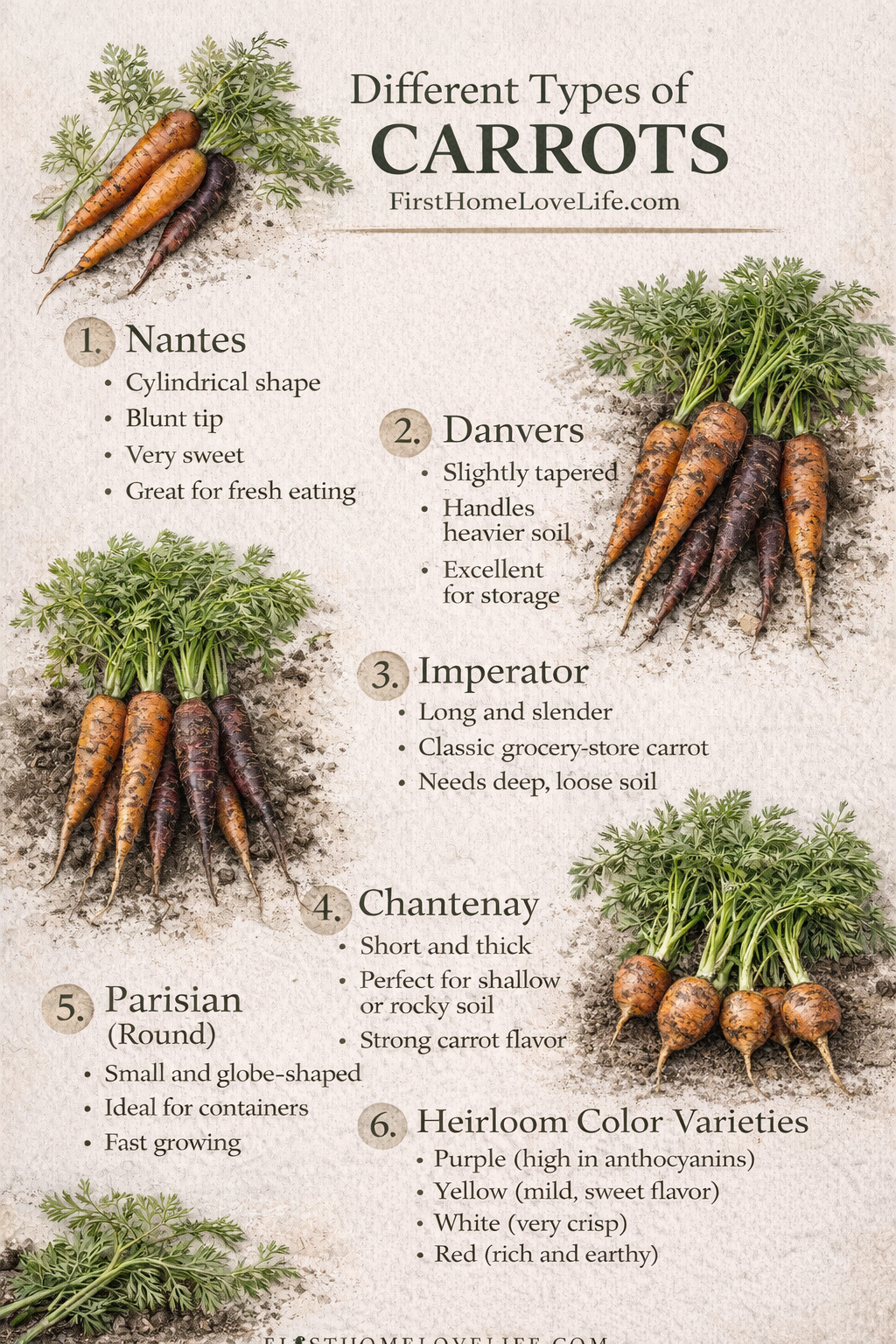
🥕 Nantes (Best All-Around)
- Sweet and tender
- Cylindrical shape
- 6–7 inches long
- Great for beginners
🥕 Danvers (Best for Heavier Soil)
- Slightly tapered
- Handles clay soil better
- Excellent storage carrot
Imperator (Long & Classic Grocery Store Types
- Long (8–10 inches)
- Needs deep, loose soil
- High sugar content
When to Plant Carrots (Zone 5)
Carrots love cool weather.
- Spring planting: 2–3 weeks before your last frost
- Fall crop: Late July through early August
In Upstate NY, you can typically sow:
- Late April to early May
- Again in late July for a sweet fall harvest
Cold weather actually makes carrots sweeter.
Soil Prep: The Secret to Straight Carrots
Carrots need:
- Loose, rock-free soil
- At least 8–12 inches deep
- No fresh manure (causes forked roots)
If your native soil is heavy clay, raised beds are your best friend. Mix:
- Compost
- Peat or coconut coir
- Sand (optional, if drainage is poor)
Rake the soil very smooth before planting.
How to Plant Carrot Seeds
Carrot seeds are tiny, so go slow.
- Make shallow rows (¼ inch deep).
- Sprinkle seeds thinly.
- Cover lightly with fine soil.
- Water gently.
💡 Tip: Mix seeds with sand for easier spreading.
Carrots need consistent moisture to germinate — which can take 10–21 days.
- A trick to help keep them moist is to cover them with a wooden board until they germinate. This will keep the soil moist to give them the best start. Remove the board once you see green sprouts then continue to monitor the soil. Don’t let it dry out!
Thinning Is Important
Once seedlings are 2–3 inches tall, thin them to:
- 2 inches apart (for small carrots)
- 3 inches apart (for large varieties)
Yes, it feels brutal. Do it anyway. Crowding = small mis-shaped carrots.
Watering & Care
- Keep soil evenly moist
- Avoid letting soil dry out completely
- Mulch lightly once seedlings are established
In raised beds, you may need to water more frequently during summer.
Companion Plants for Carrots
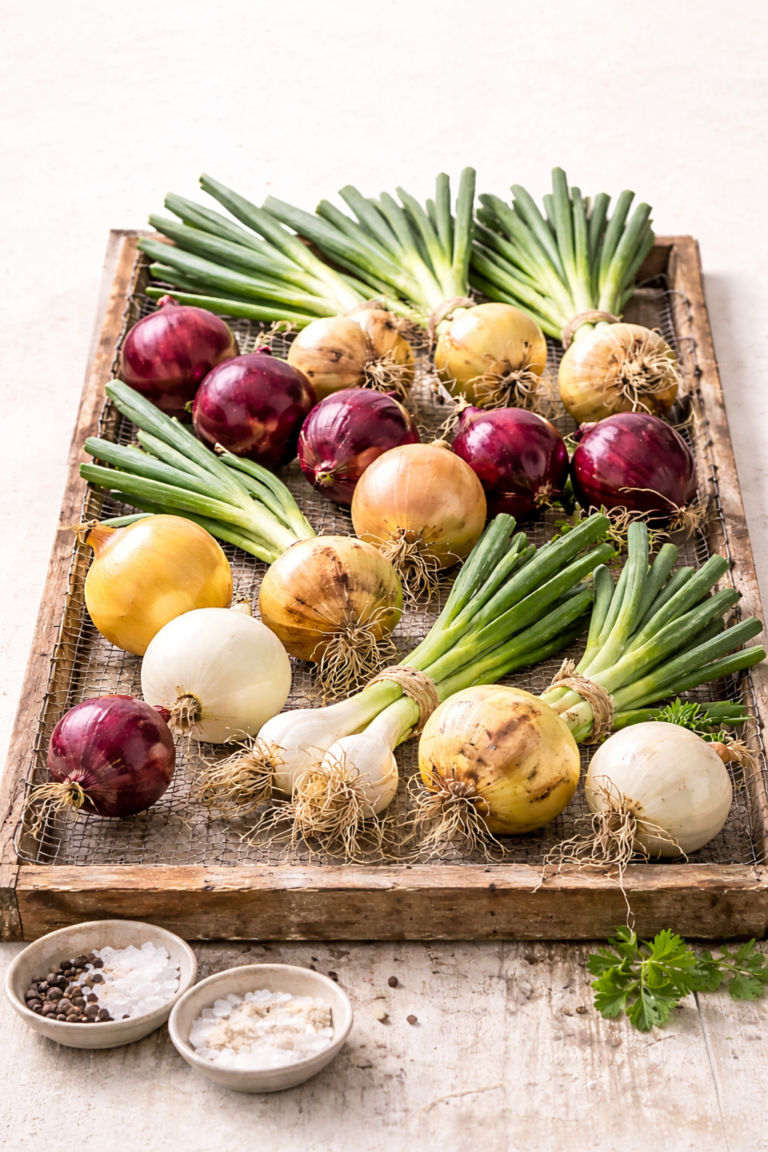
Carrots grow well with:
Avoid planting near dill or parsnips.
When to Harvest Carrots
Most carrots are ready in:
- 60–75 days (depending on variety)
Gently loosen soil before pulling to avoid snapping roots.
For fall carrots in Zone 5:
- Leave them in the ground after light frost
- Sweetness improves dramatically
You can even mulch heavily and harvest into early winter.
Storing Carrots
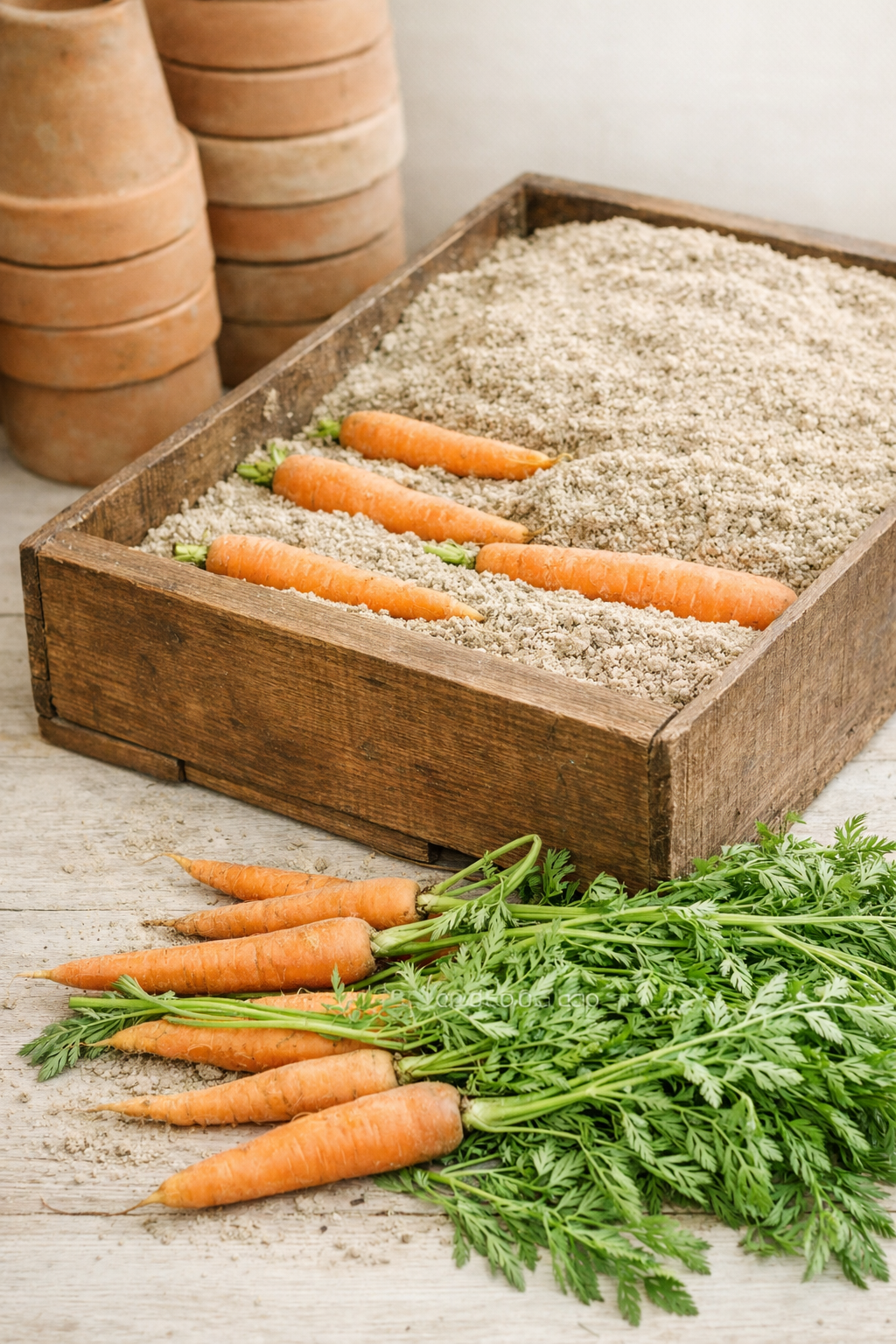
For long-term storage:
- Remove greens.
- Don’t wash until ready to use.
- Store in damp sand or sawdust in a cool place.
Properly stored carrots can last 4–6 months.
Common Carrot Growing Problems
Forked roots: Soil too compact or fresh manure used
Hairy roots: Inconsistent watering
Small carrots: Not thinned properly
Carrot rust fly: Use row covers early in the season
Why Carrots Are Perfect for Your Raised Beds
Since you’re planning raised beds, carrots will thrive in that loose, controlled soil environment. They’re also a great filler crop between slower growers like:
- Cabbage
- Tomatoes
- Peppers
You can succession plant every 2–3 weeks for a steady harvest.