Growing onions from seed gives you the widest variety selection, stronger plants, and better storage potential. While they take a little longer than sets, they’re easy to grow once you understand one key thing: day length matters.
If you’re gardening in Zone 5, like I am, you’ll typically grow long-day onions. Let’s walk through everything from seed starting to curing and storage.
Step 1: Choose the Right Onion Type
Onions form bulbs based on daylight hours — not plant size.
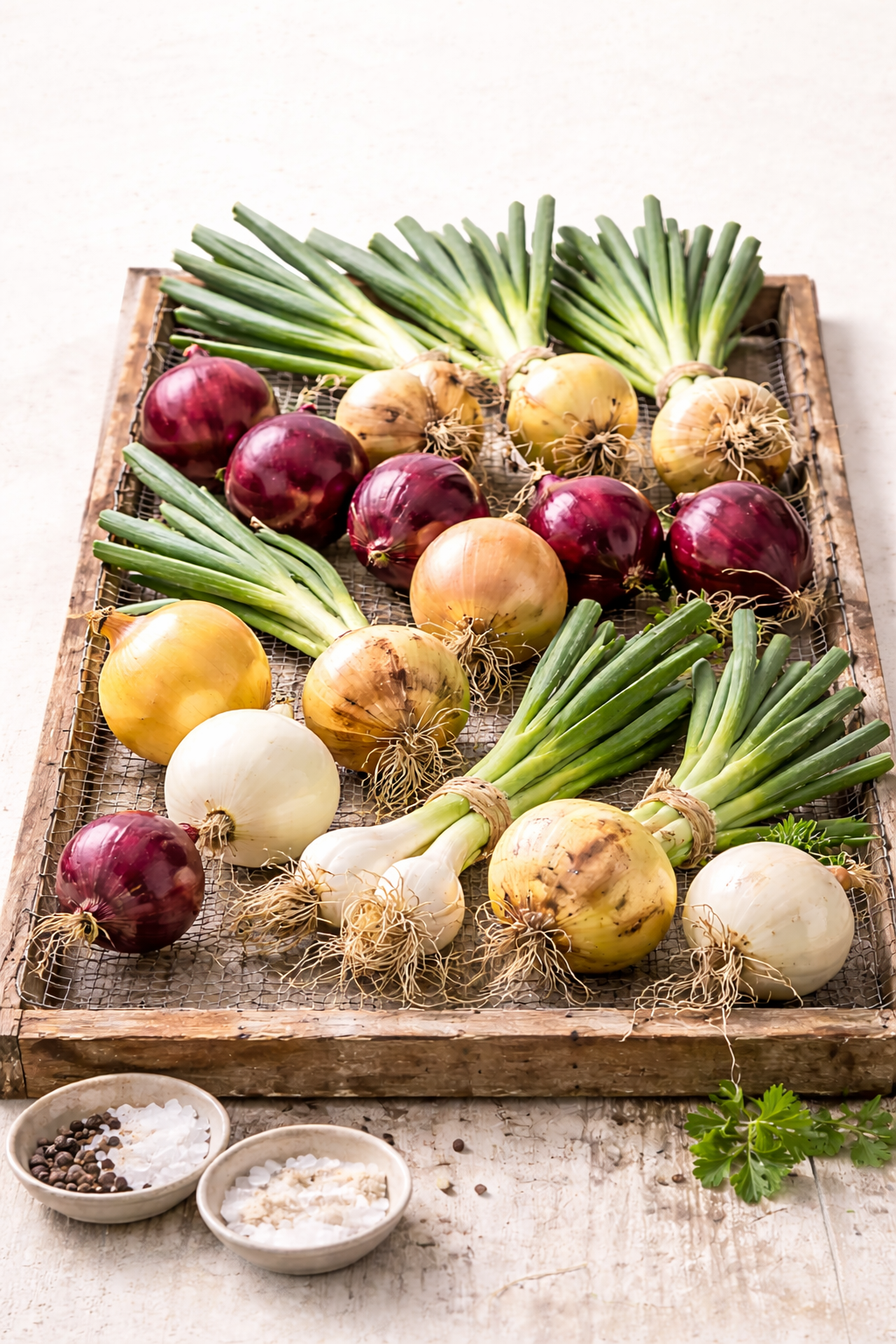
- Long-Day Onions – Best for northern states (Zone 5+). Bulb when days reach 14–16 hours.
- Intermediate-Day Onions – Good for middle regions.
- Short-Day Onions – Best for southern states (bulb at 10–12 hours).
For Zone 5, choose long-day varieties like:
- Walla Walla
- Patterson
- Redwing
- Cabernet
- Sierra Blanca
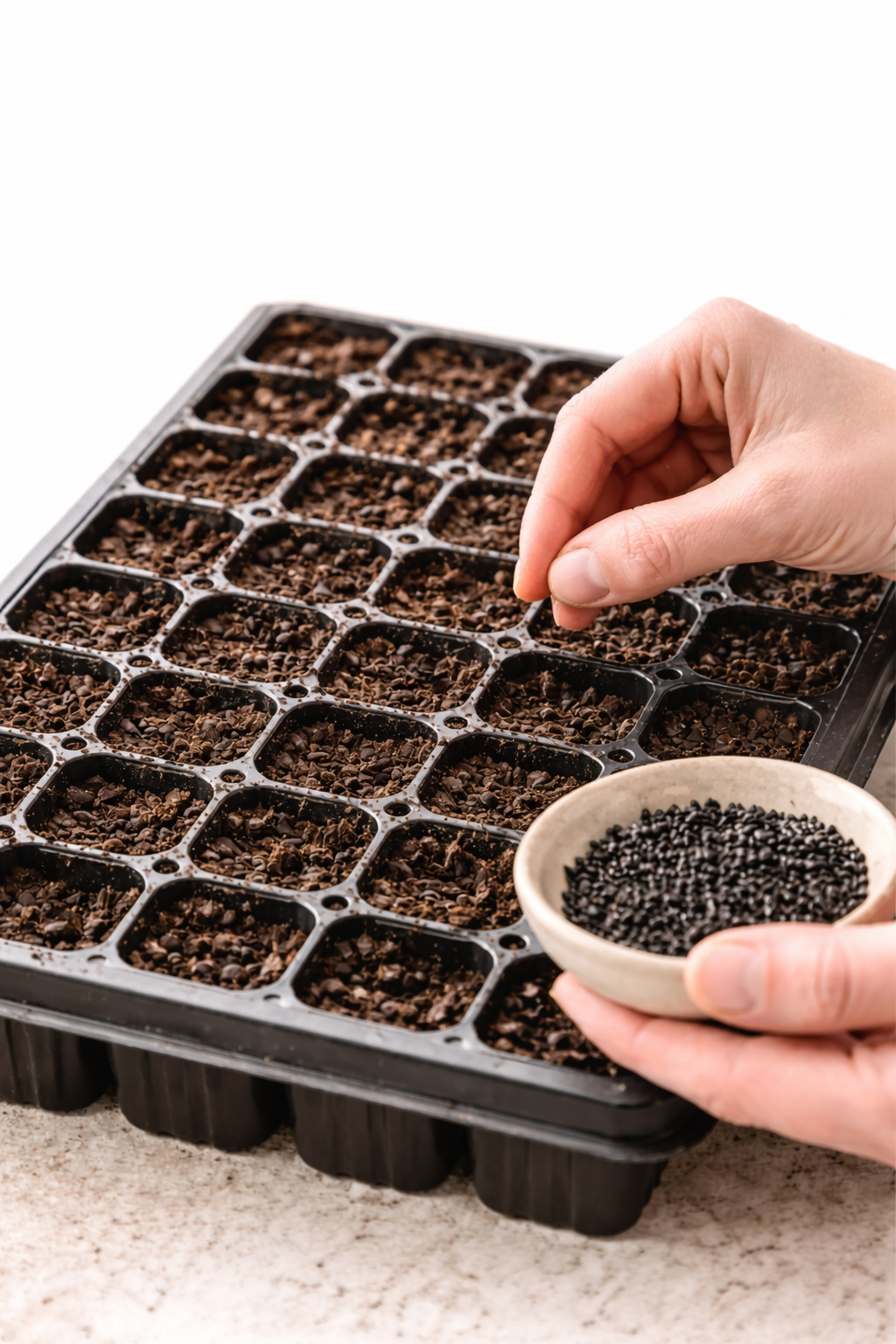
Step 2: Start Seeds Indoors (8–10 Weeks Before Last Frost)
In Zone 5, that means late February to early March.
Supplies:
- Seed trays or soil blocks
- Seed-starting mix
- Onion seeds
- Grow lights
How to Start:
- Fill trays with moist seed-starting mix.
- Sow seeds ¼ inch deep.
- Lightly cover and mist.
- Keep soil moist but not soggy.
- Place under grow lights immediately.
Onions like cooler temps — around 60–70°F is ideal.
Pro Tip:
When seedlings reach 5–6 inches tall, trim the tops back to 3–4 inches. This keeps them sturdy and prevents flopping.
Step 3: Harden Off
About 7–10 days before transplanting:
- Gradually expose seedlings to outdoor conditions.
- Start with a couple hours per day.
- Increase exposure daily.
Onions tolerate frost well — they can go out 2–4 weeks before your last frost date.
Step 4: Transplanting Outdoors
Onions love:
- Full sun (6–8+ hours)
- Loose, well-draining soil
- Rich soil high in nitrogen
Spacing:
- 4–6 inches apart for large bulbs
- 12–18 inches between rows
Plant them shallow — just deep enough to cover roots. The bulb forms above the soil surface.
Step 5: Fertilizing for Big Bulbs
Onions are heavy feeders.
- Use a nitrogen-rich fertilizer early on.
- Side-dress every 2–3 weeks until bulbing begins.
- Once bulbs start swelling, stop feeding nitrogen.
Consistent moisture is critical. Uneven watering leads to small or split bulbs.
Step 6: Weed Control
Onions have shallow roots and don’t compete well.
- Mulch lightly.
- Hand weed carefully.
- Avoid deep cultivation.
Keep beds weed-free for best results.
Step 7: When Bulbs Start Forming
As day length increases, bulbs will swell.
You’ll notice:
- Tops begin thickening at the base.
- Bulbs push slightly above soil.
- Growth speeds up in early summer.
Do NOT mound soil around bulbs — they need sunlight exposure.
Step 8: When to Harvest
Onions are ready when:
- Tops fall over naturally.
- 50–80% of the crop has flopped.
In Zone 5, this is typically July to early August.
Do not bend tops over manually — let nature signal maturity.
Step 9: Curing Onions
Curing is what allows onions to store long-term.
- Gently lift bulbs.
- Lay them out in a dry, shaded, well-ventilated area.
- Leave for 2–3 weeks.
They are cured when:
- Necks are tight and dry.
- Outer skins are papery.
Step 10: Storage
Trim tops to 1 inch.
Store in:
- Mesh bags
- Crates
- Braided bundles
Ideal conditions:
- 32–40°F
- Low humidity
- Good airflow
Long-day storage varieties can last 6–10 months when cured properly.
Common Onion Growing Mistakes
- Planting the wrong day-length type
- Overcrowding
- Letting weeds compete
- Overwatering late in season
- Not curing properly
Bonus: Growing Onions for Different Uses
- Sweet onions → Eat fresh
- Storage onions → Long keeping
- Red onions → Salads & pickling
- White onions → Cooking & salsa
Final Thoughts
Growing onions from seed gives you better flavor, stronger plants, and more variety options than sets. Once you understand day length and feeding needs, they’re one of the most reliable crops you can grow — especially in northern gardens.