Your dishwasher is one of the most convenient appliances in your kitchen, but not everything belongs inside it. While dishwashers are designed to handle everyday plates, bowls, and utensils, certain materials can be damaged by the heat, water pressure, and harsh detergents used during the wash cycle.
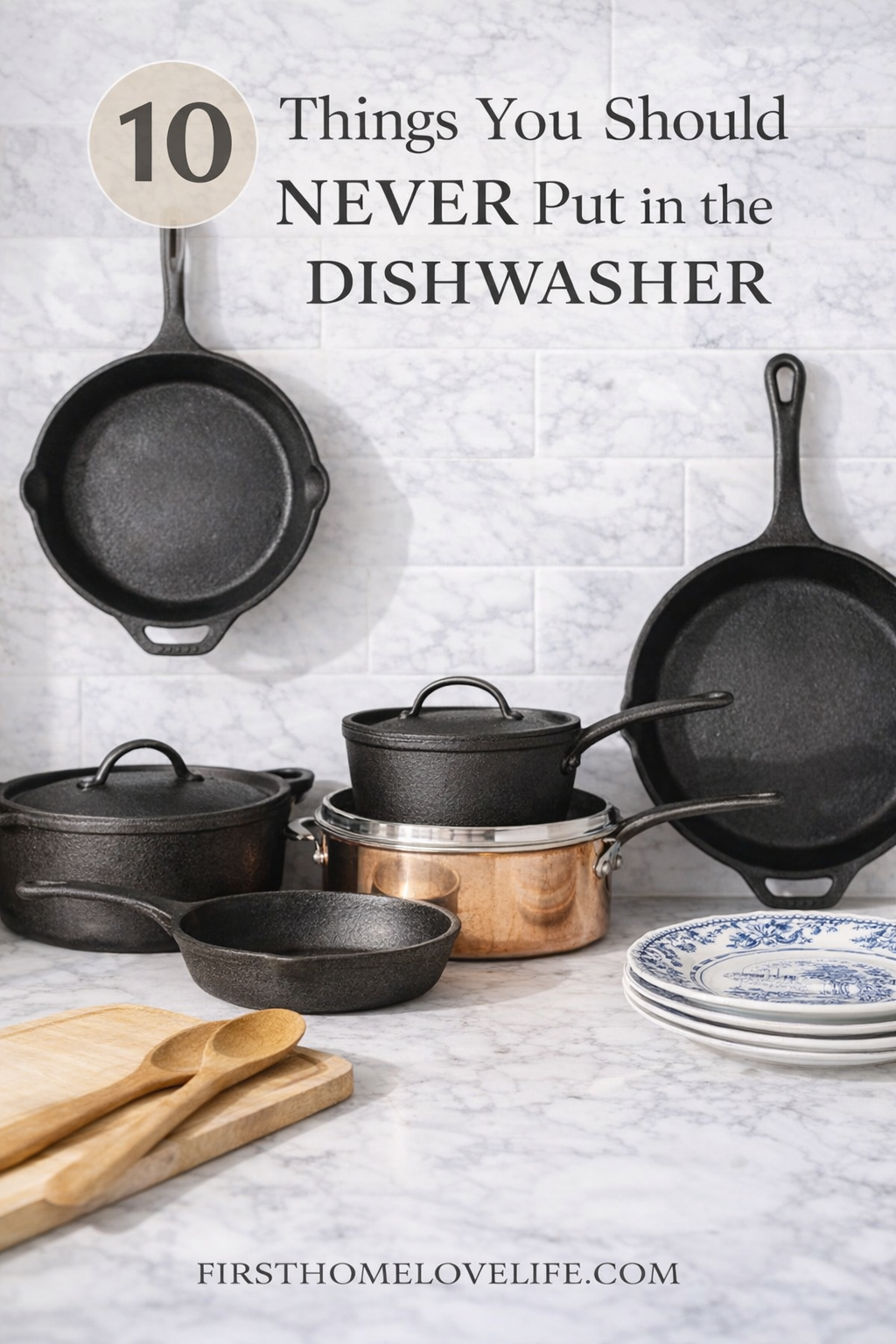
Putting the wrong items in your dishwasher can cause warping, rust, dull blades, and ruined cookware. Knowing what should be hand washed instead can help protect your kitchen tools and keep them lasting for years.
If you’re trying to improve your kitchen cleaning routine, learning what not to put in the dishwasher is just as important as knowing how to load a it the right way.
10 Items You Should Never Put in the Dishwasher
1. Cast Iron Pans
Never put cast iron cookware in the dishwasher. Dishwasher detergent strips away the seasoning that protects the pan and creates its natural nonstick surface.
As a result, the pan can rust and lose its protective coating. Instead, rinse cast iron with warm water, scrub it with a stiff brush if needed, and dry it immediately.
2. Wooden Spoons and Cutting Boards
Wood absorbs water easily, which means the heat and moisture inside a dishwasher can cause wooden utensils to warp or crack.
Hand wash wooden spoons, cutting boards, and wooden bowls with mild dish soap. Then dry them thoroughly to prevent damage.
- Wooden spoons
- Wooden cutting boards
- Wooden bowls
- Wooden utensils
Hand wash wood items with mild soap and dry them thoroughly.
3. Sharp Kitchen Knives
Avoid putting sharp kitchen knives in the dishwasher. The powerful spray and detergent can dull the blade and damage the handle.
In addition, knives can bump against other utensils during the wash cycle. This contact can chip the blade or reduce its sharpness over time.
- Lose their sharp edge
- Chip against other utensils
- Damage wooden or plastic handles
High-quality kitchen knives should always be washed by hand and dried immediately.
4. Nonstick Pans Should Never Be Put in the Dishwasher
The strong detergents used in dishwashers can gradually break down the nonstick coating on pans.
Over time this can cause:
- Peeling coating
- Reduced nonstick performance
- Shortened lifespan of the pan
To protect your cookware, hand wash nonstick pans using warm water and gentle soap.
5. Copper Cookware
Dish detergent reacts with copper and causes discoloration.
If you want to keep copper cookware shiny and beautiful, wash it by hand and dry it immediately after cleaning.
6. Insulated Travel Mugs
Travel mugs and insulated tumblers often contain a sealed vacuum layer that keeps drinks hot or cold.
Dishwashers can break the seal, which ruins the insulation.
These mugs should be washed by hand unless specifically labeled safe.
7. Fine China
While some modern china may be labeled safe, older or delicate china can easily chip or fade during a wash cycle.
Hand washing helps protect delicate dishware from damage.
8. Crystal Glassware Should Not Be Washed in there
For example, crystal glasses are much more fragile than standard glassware.
Heat and detergent can cause:
- Cloudiness
- Etching
- Cracking
Crystal should always be washed gently by hand.
9. Aluminum Cookware
Dishwasher detergent can react with aluminum, causing it to darken or develop a dull, chalky finish.
To keep aluminum cookware looking its best, wash it by hand.
10. Antique or Hand-Painted Dishes
Decorative dishes with hand-painted designs or antique finishes should never be placed in the dishwasher.
The hot water and detergent can fade paint and damage delicate surfaces.
Why Some Items Should Never Go in the Dishwasher
Dishwashers clean using a combination of:
- High heat
- Strong detergent
- Powerful water pressure
As a result, this works well for everyday dishes. However, delicate materials and specialty cookware can easily be damaged by these conditions.
Understanding what not to put in the dishwasher helps protect your kitchen tools and keeps them looking their best.
Protect Your Cookware and Kitchen Tools
Avoiding these common dishwasher mistakes will help extend the life of your cookware, utensils, and dishes.
For everyday cleaning success, make sure you’re also using the best dishwasher loading techniques so water can circulate properly and clean dishes effectively.
By combining smart dishwasher habits with proper loading and maintenance, your dishwasher can become one of the most reliable appliances in your kitchen.
FAQ
Can stainless steel go in the dishwasher?
Yes, most stainless steel cookware and utensils can safely go in the dishwasher. However, you should avoid placing stainless steel directly against silver items because this can cause a chemical reaction during the wash cycle. Instead, place stainless steel pieces in separate sections of the dishwasher so water can circulate properly.
Why does aluminum turn dark in the dishwasher?
Aluminum can darken in the dishwasher because dishwasher detergent reacts with the metal. As a result, the surface may develop a dull or chalky finish. For this reason, many people prefer to wash aluminum cookware by hand to preserve its appearance.
Can wooden cutting boards go in the dishwasher?
No, wooden cutting boards should never go in the dishwasher. This is because wood absorbs moisture, which can cause the board to warp, crack, or split over time. Instead, wash wooden cutting boards by hand using warm water and mild soap, then allow them to dry completely.
Why shouldn’t cast iron go in the dishwasher?
Cast iron should never go in the dishwasher because the detergent and moisture remove the seasoning that protects the pan. As a result, the pan can quickly develop rust and lose its natural nonstick surface. Instead, clean cast iron with warm water and dry it thoroughly after washing.