Interior concrete floors in homes used to sound cold, industrial, and a little intimidating. Most people imagine warehouses or garages—not cozy kitchens and living rooms.
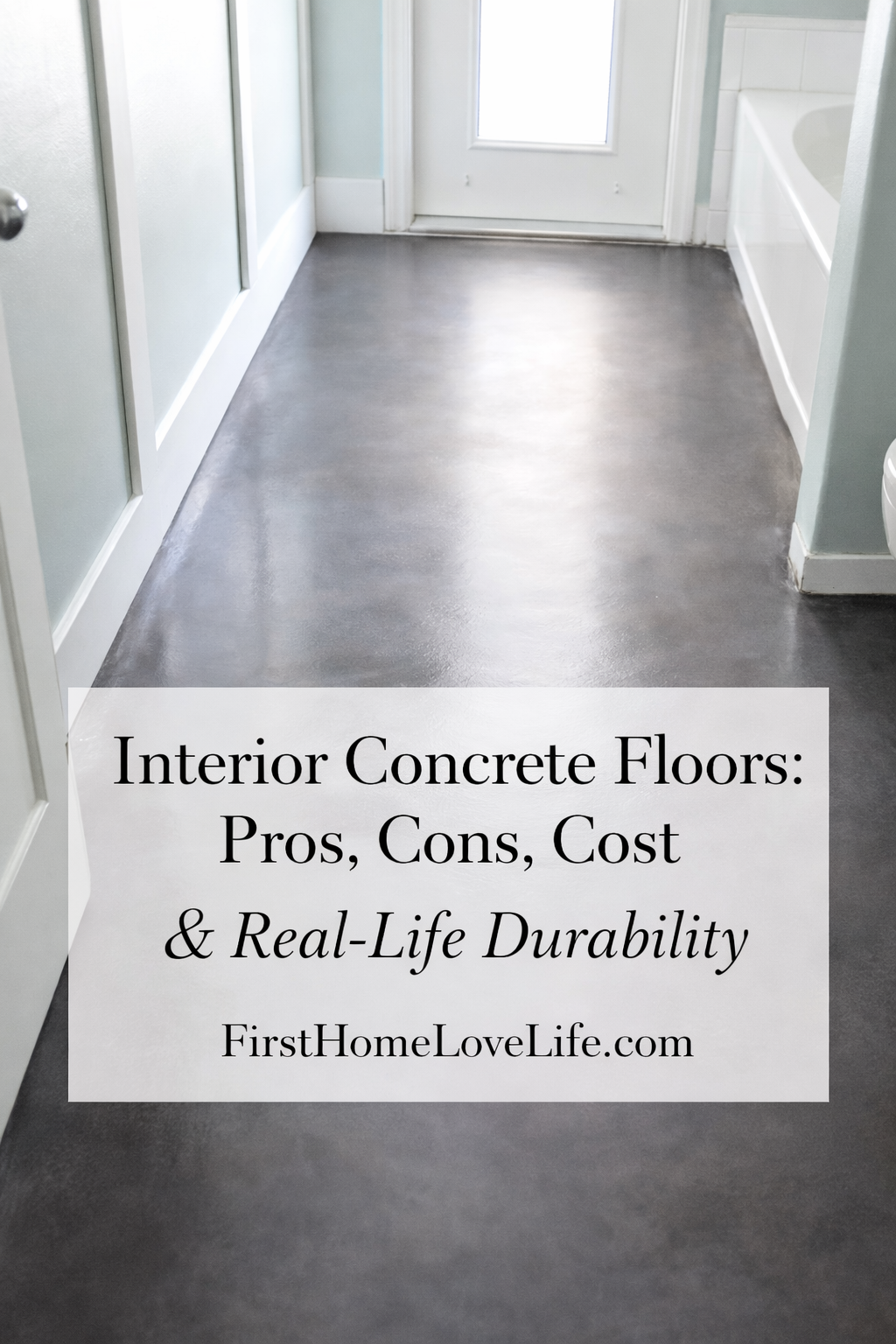
When we first bought our house in Florida, the floors were a mix of worn carpet and outdated porcelain tile. Like many young first-time homeowners, we had big plans but a very small budget. Replacing everything wasn’t realistic, so we started researching interior concrete floors in homes as a more affordable and durable option.
Instead of installing new flooring, we ripped everything out and worked with what was already there — the concrete slab beneath it all. We chose to do a concrete overlay over the existing subfloor, turning the foundation of the house into the finished floor itself. What started as a budget solution ended up becoming one of the most durable and surprisingly beautiful features in the entire home.
If you’re considering interior concrete floors in homes, here’s everything we learned about the pros, cons, cost, and long-term durability.
Interior concrete floors have quietly become one of the most practical, beautiful, and low-maintenance flooring choices for modern homes. What once belonged only in industrial spaces is now a favorite among homeowners who want durability, simplicity, and timeless style.
If you’re building a home, renovating, or simply dreaming about flooring options that can actually handle real life, concrete floors might be exactly what you’re looking for.
Let’s talk about why.
What Are Interior Concrete Floors?
Interior concrete floors are exactly what they sound like: the structural concrete slab of a home that has been finished, polished, sealed, or stained to serve as the final floor surface.
Instead of covering the slab with hardwood, tile, or carpet, the concrete itself becomes the finished floor.
Modern finishing techniques allow concrete to be:
- Polished to a smooth reflective surface
- Stained for rich color variation
- Stamped or textured
- Matte or glossy
- Warm or industrial in appearance
Because of this flexibility, concrete floors can fit everything from rustic farmhouse kitchens to sleek modern interiors.
Why Concrete Floors Are Perfect for Real Life
The biggest reason people fall in love with concrete floors is simple:
They can take a beating.
Concrete is one of the most durable flooring materials available and can withstand heavy traffic, furniture movement, and daily wear far better than softer flooring like wood or vinyl.
That makes it ideal for homes with:
- Kids
- Pets
- Muddy boots
- Farm life
- Entertaining
- Busy kitchens
Instead of worrying about scratching hardwood or staining carpet, you simply live your life.
Spilled milk?
Dog water bowls?
Dropped spaghetti sauce?
Just wipe it up.
The Benefits of Interior Concrete Floors in Homes
1. Extremely Durable
Concrete floors can last for decades when properly installed and sealed. In many cases, they outlast traditional flooring materials that need replacing every 10–20 years.
You won’t worry about:
- Scratches from furniture
- Pet claws
- High foot traffic
- Dents or gouges
That durability is why concrete is commonly used in commercial buildings and warehouses.
2. Very Low Maintenance
One of the best things about concrete floors is how easy they are to maintain.
Most floors simply require:
- Sweeping
- Occasional damp mopping
Unlike hardwood floors, they don’t require refinishing or special treatments, and they don’t trap allergens the way carpets can.
For busy households, that simplicity is priceless.
3. Beautiful, Custom Finishes
Concrete floors are anything but boring today.
Modern techniques allow for:
- Acid staining
- Decorative dyes
- Polishing
- Etching
- Stamping
- Colored concrete
These finishes can mimic everything from stone to tile while maintaining the durability of concrete.
Every concrete floor ends up being slightly unique, which adds character to a home.
4. Eco-Friendly and Sustainable
Concrete floors can also be a sustainable choice.
Instead of installing additional flooring materials, the existing slab becomes the finished surface. This reduces the need for additional materials and waste.
Many polished concrete floors also:
- Reflect light
- Improve natural brightness
- Reduce lighting needs
This can slightly improve energy efficiency in a home.
5. Great for Radiant Heat
If you want the ultimate luxury pairing, combine concrete floors with radiant floor heating.
Concrete has excellent thermal mass, meaning it absorbs heat and slowly releases it throughout the room.
The result?
Warm floors in winter and consistent indoor temperatures.
A Few Things to Consider
Concrete floors are amazing, but like any flooring choice, they come with a few trade-offs.
They Are Hard
Concrete is extremely strong—but that also means it’s hard underfoot. Standing on it for long periods may feel uncomfortable without rugs or mats.
Also, if you drop a glass on concrete…
It probably won’t survive.
They Can Feel Cold
Concrete naturally conducts temperature, which can make floors feel cool in winter if they are not heated.
Area rugs and radiant heating easily solve this issue.
Hairline Cracks Can Appear
Concrete is a natural material and may develop small hairline cracks over time as a house settles.
Some homeowners see this as a flaw.
Others see it as character.
The Rooms Where Interior Concrete Floors in Homes Work Best
Concrete floors work especially well in:
- Kitchens
- Living rooms
- Basements
- Mudrooms
- Bathrooms
- Entryways
Basically, anywhere durability and easy cleaning are priorities.
High-traffic areas benefit the most from concrete’s strength and resilience.
Why I Loved Having Concrete Floors
The truth is simple.
Concrete floors are one of the few flooring choices that actually work with real life instead of fighting it.
They don’t panic over spilled milk or don’t scratch easily.
They don’t stain the second someone walks through the door with muddy boots.
They’re simple. Durable. Beautiful.
And sometimes the best design choices are the ones that let you stop worrying about the floor—and start enjoying your home.
*We did our house in 2011 so the price was substantially different than today unfortunately.
Average Cost Per Square Foot in 2026
- Basic concrete floor: $3 – $7 per sq ft
- Polished concrete: $4 – $12 per sq ft
- Concrete overlay (like you described): $3 – $10 per sq ft
- Decorative / custom finishes: $13 – $20+ per sq ft
Estimated Cost for a 2,000 sq ft House in 2026
| Type of Concrete Floor | Price per sq ft | Total for 2,000 sq ft |
|---|---|---|
| Basic sealed concrete | $3 – $7 | $6,000 – $14,000 |
| Concrete overlay | $3 – $10 | $6,000 – $20,000 |
| Polished concrete | $4 – $12 | $8,000 – $24,000 |
| High-end decorative | $13 – $20+ | $26,000 – $40,000+ |
What Most Homes Actually Pay
For many residential projects where homeowners polish or overlay an existing slab, the typical total cost lands around:
$10,000 – $20,000 for a 2,000 sq ft house
This assumes:
- existing slab already in place
- minor repairs only
- simple stain or polish
Factors That Change the Price
Costs go up if you need:
- crack repair or leveling
- decorative staining or scoring
- heavy grinding to expose aggregate
- multiple sealers or epoxy finish
- furniture removal or demolition
Why Many People Choose Concrete Floors
Even though installation can cost several thousand dollars, concrete floors last decades with very little maintenance, making them cheaper long-term than carpet, laminate, or vinyl that may need replacing every 10–15 years.
Final Thoughts
Interior concrete floors have evolved from industrial practicality into a beautiful, durable flooring option for modern homes.
If you want floors that are:
- Low maintenance
- Long lasting
- Pet and kid friendly
- Customizable in style
Concrete might be one of the smartest flooring choices you can make.
And once you live with them for a while, you might find yourself wondering why more homes don’t use them.