Fresh lettuce is one of the easiest and most rewarding crops you can grow in your garden. Whether you’re planting a large backyard garden or a few containers on your porch, lettuce grows quickly, requires minimal care, and produces delicious harvests for salads, sandwiches, and wraps.
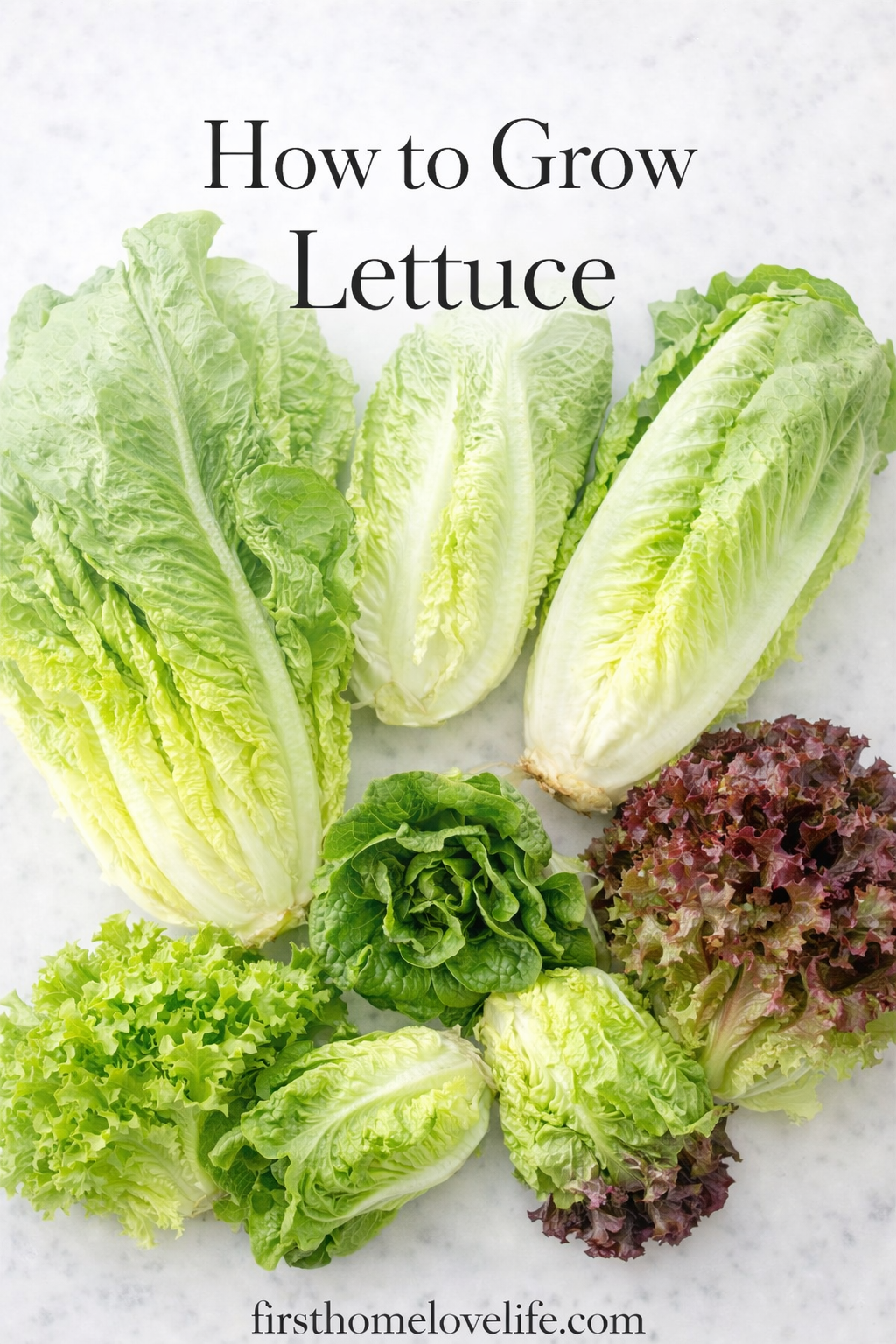
If you’re looking for a beginner-friendly vegetable that grows fast and keeps producing, learning how to grow lettuce is the perfect place to start.
Why Grow Your Own Lettuce
Growing lettuce at home has several benefits:
- Lettuce grows quickly (often ready in 30–45 days)
- You can harvest it multiple times
- It grows well in raised beds, containers, and small gardens
- Fresh-picked lettuce tastes far better than store-bought
- It’s one of the best cool-season crops for spring and fall gardens
For gardeners in Zone 5 like we are, lettuce is usually one of the very first things you can plant in early spring.
Types of Lettuce to Grow
There are several types of lettuce, and each one grows a little differently.
Leaf Lettuce
The easiest type for beginners.
- Loose leaves
- Harvest outer leaves as needed
- Continues producing for weeks
Popular varieties include Black Seeded Simpson, Red Sails, and Green Leaf.
Romaine Lettuce
Also called cos lettuce, romaine grows upright heads with crisp leaves.
Popular varieties:
- Parris Island
- Little Gem
- Jericho
Butterhead Lettuce
Soft, tender leaves that form loose heads.
Popular varieties:
- Bibb
- Boston
- Buttercrunch
Crisphead Lettuce
This is the classic iceberg style lettuce.
- Takes longer to grow
- Requires cooler temperatures
Best Time to Plant Lettuce
Lettuce prefers cool weather and does best in spring and fall.
Typical planting times:
- Early Spring: As soon as soil can be worked
- Late Summer: For a fall harvest
- Fall: In milder climates
In Zone 5, you can usually start planting lettuce 4–6 weeks before the last frost.
Because lettuce grows quickly, you can also plant new seeds every 2–3 weeks for a continuous harvest.
Where to Plant Lettuce
Lettuce grows best in:
- Full sun to partial shade
- Loose, well-draining soil
- Soil rich in organic matter
In hotter weather, lettuce actually benefits from some afternoon shade to help prevent bolting.
Great places to grow lettuce:
- Raised beds
- Containers
- Garden rows
- Window boxes
- Greenhouses or cold frames
How to Plant Lettuce Seeds
Lettuce seeds are very small and easy to plant.
Step-by-Step
- Loosen the soil and remove any rocks.
- Lightly sprinkle lettuce seeds over the soil.
- Cover with about ¼ inch of soil.
- Water gently.
- Keep soil consistently moist until seeds germinate.
Seeds usually sprout within 7–10 days.
Spacing Lettuce Plants
Spacing depends on the type you grow.
Typical spacing guidelines:
- Leaf lettuce: 4–6 inches apart
- Romaine: 8–12 inches apart
- Butterhead: 8–10 inches apart
- Iceberg: 12 inches apart
If you’re harvesting baby greens, spacing can be closer.
Watering Lettuce
Lettuce needs consistent moisture to stay tender and sweet.
Best watering tips:
- Water deeply but gently
- Avoid letting soil dry out
- Water at the base of the plant
- Mulch lightly to retain moisture
Dry conditions can cause lettuce to become bitter or tough.
Fertilizing Lettuce
Lettuce grows best in nutrient-rich soil.
You can improve growth by adding:
- Compost
- A balanced vegetable fertilizer
- Worm castings
Because lettuce grows quickly, it usually doesn’t require heavy feeding.
When to Harvest Lettuce
One of the best things about growing lettuce is how fast you can harvest it.
Baby Greens
Harvest when leaves are 3–4 inches tall.
Leaf Lettuce
Cut outer leaves and allow the center to continue growing.
Head Lettuce
Harvest the entire head once it feels firm and full.
Harvesting regularly actually encourages more leaf growth.
How to Keep Lettuce From Bolting
Bolting happens when lettuce sends up a flower stalk and becomes bitter.
Common causes:
- Hot weather
- Dry soil
- Long daylight hours
Ways to prevent bolting:
- Plant in cool seasons
- Provide afternoon shade
- Keep soil consistently moist
- Choose bolt-resistant varieties
Common Lettuce Growing Problems
Bitter Lettuce
Usually caused by heat or drought.
Slugs
Use barriers like crushed eggshells or diatomaceous earth.
Aphids
Spray plants with a strong stream of water or insecticidal soap.
Growing Lettuce in Containers
Lettuce is perfect for container gardening.
Container tips:
- Use a pot at least 6 inches deep
- Choose well-draining potting soil
- Water more frequently than garden beds
- Place containers in morning sun
Even a small patio container can produce multiple salad harvests.
Successive Planting for Continuous Harvest
One of the best lettuce gardening tips is succession planting.
Instead of planting everything at once:
- Sow new seeds every 2–3 weeks
- This ensures fresh lettuce all season long
- Prevents harvesting too much at once
Final Thoughts
Growing lettuce is one of the simplest ways to start a productive vegetable garden. With just a little soil, water, and sunshine, you can enjoy fresh, crisp greens straight from your garden for months.
Whether you’re planting a large backyard garden or a few containers on the porch, lettuce is a fast-growing crop that rewards you quickly.
Once you start harvesting your own fresh lettuce, it’s hard to go back to the store-bought kind.