Learning how to make buttermilk at home is one of those simple kitchen skills that instantly upgrades your baking and cooking. Whether you’re halfway through a recipe and realize you’re out of buttermilk—or you just prefer making pantry staples yourself—this easy method gives you perfect homemade buttermilk in minutes.
This guide covers the best buttermilk substitute, why it works, and how to use it in everything from pancakes to fried chicken.
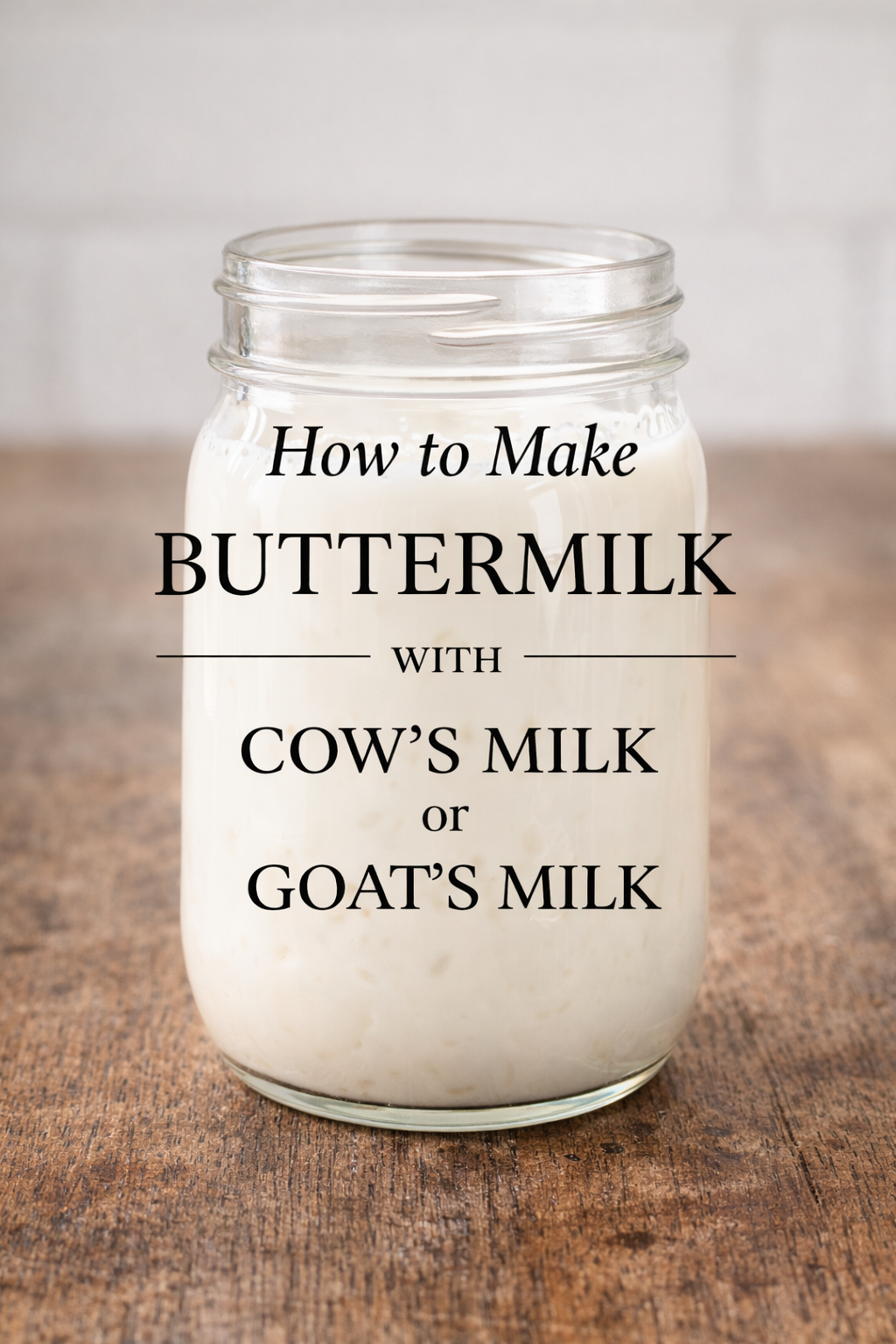
What Is Buttermilk?
Traditional buttermilk is the tangy liquid left after churning butter from cultured cream. Today, most store-bought buttermilk is cultured, meaning beneficial bacteria are added to milk to create its signature tang and thickness.
The good news? You can recreate that acidity at home with simple ingredients you already have.
Why Make Buttermilk at Home?
- No last-minute grocery runs
- Costs less than store-bought
- Works perfectly in baking and cooking
- Made with ingredients you already have
Homemade buttermilk is ideal for recipes that rely on acidity to activate baking soda, creating tender textures and great rise.
How to Make Buttermilk with Cows Milk (2 Ingredients)
Ingredients
- 1 cup milk (whole milk works best, but any milk will do)
- 1 tablespoon acid (lemon juice or white vinegar)
Instructions
- Pour the milk into a measuring cup or bowl.
- Stir in the lemon juice or vinegar.
- Let the mixture sit for 5–10 minutes at room temperature.
- Once slightly thickened and lightly curdled, it’s ready to use.
That’s it—your DIY buttermilk is ready for baking or cooking.
Best Milk to Use for Homemade Buttermilk
- Whole milk – Best texture and richness
- 2% milk – Works well in most recipes
- Low-fat or skim milk – Still effective, just thinner
- Non-dairy milk – Unsweetened almond or soy milk can work in a pinch
For the most authentic results, higher-fat milk is recommended.
Vinegar vs Lemon Juice: Which Is Better?
Both create excellent results, but there are subtle differences:
- Lemon juice: Slight citrus note, great for pancakes and baked goods
- White vinegar: Neutral flavor, ideal for savory recipes
Choose based on what you’re making—or what you have on hand.
How to Use Homemade Buttermilk
Use this homemade buttermilk 1:1 in any recipe calling for buttermilk, including:
- Pancakes and waffles
- Biscuits and scones
- Cakes and muffins
- Fried chicken and marinades
- Salad dressings and sauces
The acidity helps tenderize proteins and creates light, fluffy baked goods.
Can You Store Homemade Buttermilk?
Homemade buttermilk is best used immediately. If needed, you can refrigerate it for up to 24 hours, but it may separate—just stir before using.
I raise dairy goats, so goat’s milk is what I always have on hand. Making buttermilk from fresh goat’s milk is an easy way to use what I have, reduce waste, and keep things simple in the kitchen. It works beautifully in baking and everyday recipes, with the same reliable results as traditional buttermilk.
How to Make Buttermilk With Goat’s Milk
Use the same simple method as cow’s milk:
Ingredients
- 1 cup goat’s milk
- 1 tablespoon lemon juice or white vinegar
Instructions
- Stir the acid into the goat’s milk.
- Let it sit at room temperature for 5–10 minutes.
- It’s ready when it looks slightly thickened and lightly curdled.
Use it 1:1 anywhere a recipe calls for buttermilk.
What to Expect (Important Differences)
Goat’s milk behaves a little differently than cow’s milk:
- Thinner texture: Goat’s milk naturally forms a softer curd, so it may not thicken as much—this is normal.
- Milder tang: The flavor is slightly sweeter and less sharp.
- Excellent performance: The acidity still activates baking soda and tenderizes proteins just as effectively.
If you want it a bit thicker, let it sit closer to 10 minutes or start with whole goat’s milk.
Best Uses for Goat’s Milk Buttermilk
- Pancakes, waffles, muffins, and quick breads
- Cakes that need a tender crumb
- Biscuits and scones
- Marinades for chicken or pork
It’s especially good in baked goods where you want moisture without heaviness.
Pro Tip
For savory recipes (like fried chicken or biscuits), white vinegar keeps the flavor neutral. For sweeter bakes, lemon juice adds a gentle brightness.
Bottom line
Homemade buttermilk made with goat’s milk works beautifully. It may look a little thinner than store-bought buttermilk, but functionally—and deliciously—it does the job every time.
How to Make Buttermilk at Home
An easy, foolproof way to make homemade buttermilk at home using simple pantry ingredients. Perfect for baking, cooking, and everyday recipes.
- Prep Time: 5 MINUTES
- Total Time: 5 minutes
- Yield: 1 CUP 1x
- Category: BASICS
- Cuisine: American
Ingredients
-
1 cup milk (cow’s milk or goat’s milk)
-
1 tablespoon lemon juice or white vinegar
Instructions
-
Pour the milk into a measuring cup or bowl.
-
Stir in the lemon juice or vinegar.
-
Let the mixture sit at room temperature for 5–10 minutes.
-
Once slightly thickened and lightly curdled, the buttermilk is ready to use.
Notes
-
Whole milk works best, but any milk can be used.
-
Goat’s milk may appear thinner than traditional buttermilk—this is normal and still works perfectly in baking.
-
Use this homemade buttermilk 1:1 in any recipe that calls for buttermilk.
Frequently Asked Questions
Can I make buttermilk without vinegar or lemon juice?
Yes. Cream of tartar (1¾ teaspoons per cup of milk) is another option, though less common.
Why does buttermilk look curdled?
That’s normal. The acid reacts with the milk proteins, creating the texture needed for baking.
Can I freeze homemade buttermilk?
It’s not recommended. Freezing can change the texture and reduce effectiveness in recipes.
Final Thoughts
Knowing how to make buttermilk at home is a simple kitchen trick that saves time and guarantees you’re never stuck mid-recipe. With just milk and an acid, you get reliable, tangy buttermilk that works beautifully in both sweet and savory dishes.
Once you try it, you’ll never stress about running out of buttermilk again.