Stainless steel appliances are beautiful, timeless, and modern — but they show every fingerprint, water spot, and smudge. If you’ve ever cleaned your refrigerator only to see streaks appear minutes later, you’re not alone.
Here’s exactly how to clean stainless steel the right way so it stays shiny, streak-free, and protected.
Why Stainless Steel Gets So Streaky
Despite the name, stainless steel isn’t completely stain-proof. It easily shows:
- Fingerprints
- Grease splatter
- Hard water spots
- Smudges
- Dust and residue buildup
The key to keeping it clean isn’t scrubbing harder — it’s cleaning with the grain and using the right materials.
What You Need to Clean Stainless Steel
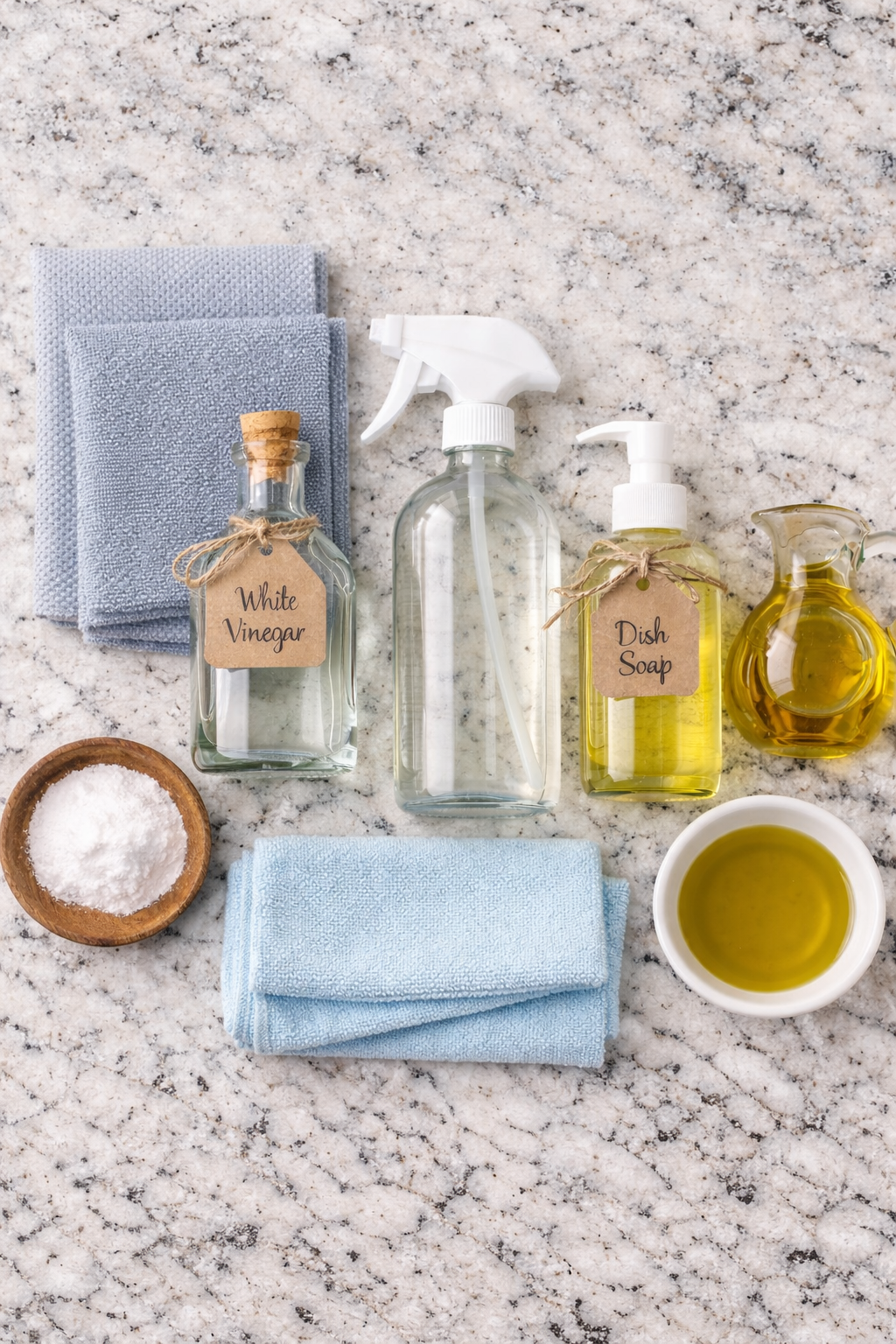
You don’t need anything fancy. Most of what works best is already in your kitchen.
Supplies:
- Microfiber cloths (at least two)
- Warm water
- Mild dish soap
- White vinegar (for streaks or hard water spots)
- Olive oil or mineral oil (optional, for polishing)
Avoid paper towels, steel wool, or abrasive scrubbers — they can scratch the surface permanently.
Step-By-Step: How to Clean Stainless Steel Appliances
1. Find the Grain
Look closely at your appliance. Stainless steel has a visible grain pattern (either horizontal or vertical). Always clean in the direction of the grain, never against it.

2. Start With Warm Soapy Water
Mix a few drops of mild dish soap into warm water.
- Dip a microfiber cloth into the solution.
- Wring it out well (you don’t want it dripping).
- Wipe the appliance in the direction of the grain.
This removes grease, food splatter, and everyday buildup.
3. Rinse and Dry Immediately
Use a clean damp cloth (just water) to wipe away any soap residue.
Then dry completely with a second microfiber cloth.
Drying is the secret to preventing streaks and water spots.
4. Remove Streaks and Water Spots (If Needed)
If streaks remain:
- Lightly spray white vinegar onto a cloth (not directly onto the appliance).
- Wipe with the grain.
- Buff dry immediately.
Vinegar cuts through mineral deposits and restores shine.
5. Polish for Extra Shine (Optional)
For a deeper shine and fingerprint resistance:
- Add a tiny drop of olive oil or mineral oil to a clean cloth.
- Buff lightly in the direction of the grain.
- Use a dry cloth to remove any excess.
A little goes a long way — too much oil can look greasy.
How to Clean Stainless Steel Sinks
Sinks need a little more attention because they handle food and water daily.
- Rinse out debris.
- Sprinkle baking soda over the surface.
- Scrub gently with a damp sponge (with the grain).
- Rinse thoroughly.
- Spray vinegar to fizz away buildup.
- Dry completely.
This method removes odors, stains, and dullness.
What NOT to Use on Stainless Steel
To avoid damage, never use:
- Steel wool
- Abrasive scrub pads
- Chlorine bleach
- Oven cleaner
- Ammonia
- Glass cleaner with ammonia
These can scratch, dull, or discolor stainless steel permanently.
How Often Should You Clean Stainless Steel?
For best results:
- Daily: Quick wipe with a dry microfiber cloth
- Weekly: Full clean with soap and water
- Monthly: Polish to maintain shine
Regular maintenance prevents heavy buildup and keeps your kitchen looking fresh.
Final Thoughts
Cleaning stainless steel appliances doesn’t have to be frustrating. With the right technique — cleaning with the grain, drying thoroughly, and avoiding harsh products — you can keep your kitchen looking polished and streak-free all year long.
A simple routine makes all the difference.