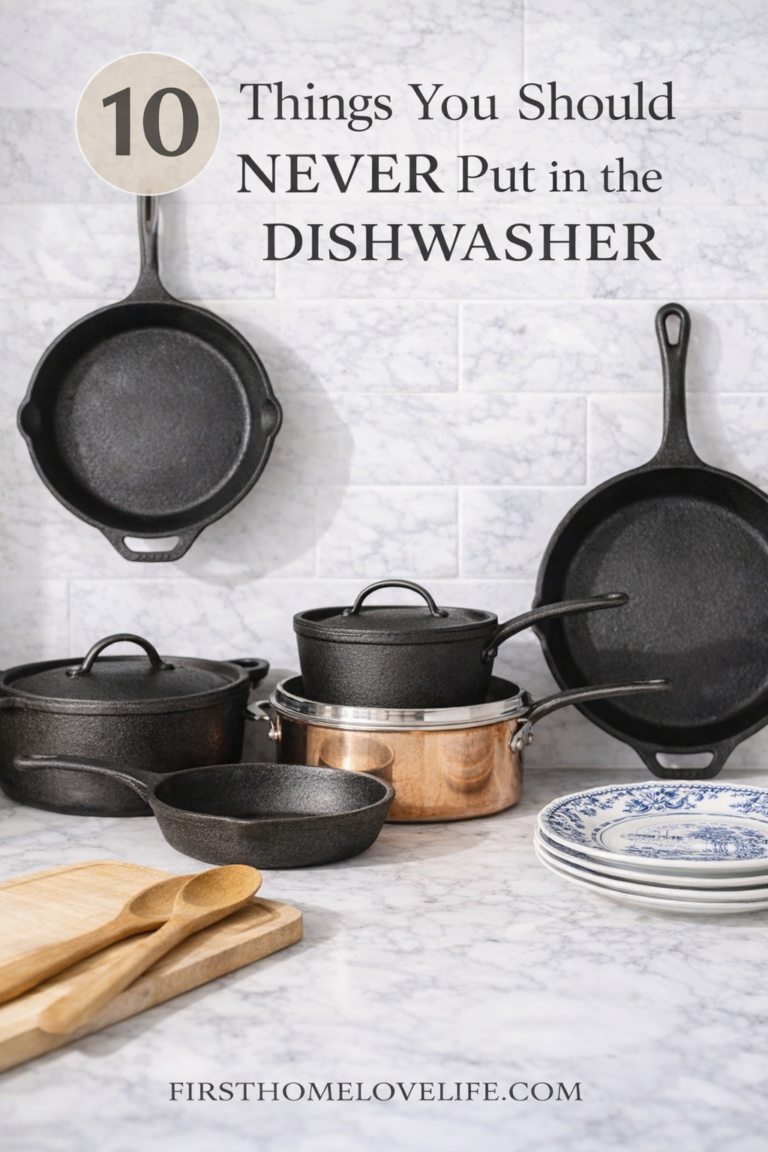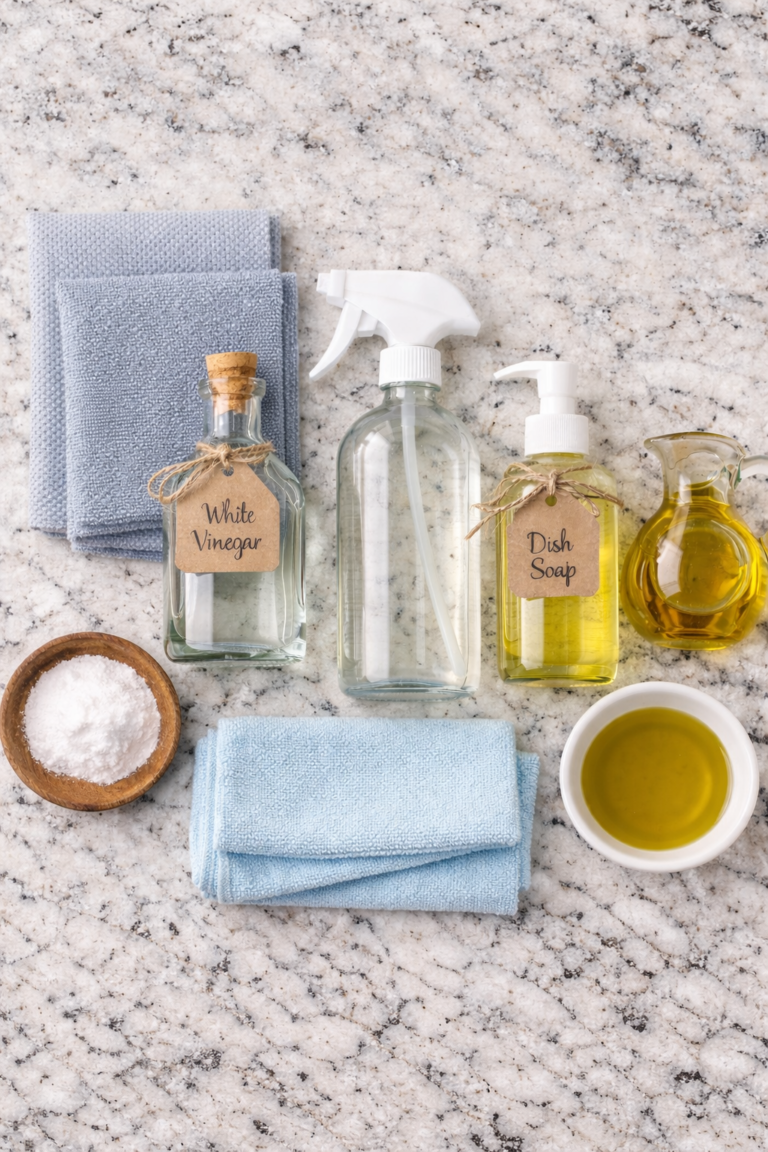
Cast iron cookware is one of the most durable, versatile tools you can own in the kitchen. With proper care, a cast iron skillet can last generations — and actually get better with time.
If you’ve ever wondered:
- How do I clean cast iron?
- Can you use soap on cast iron?
- What is seasoning?
- How do I fix a rusty cast iron pan?
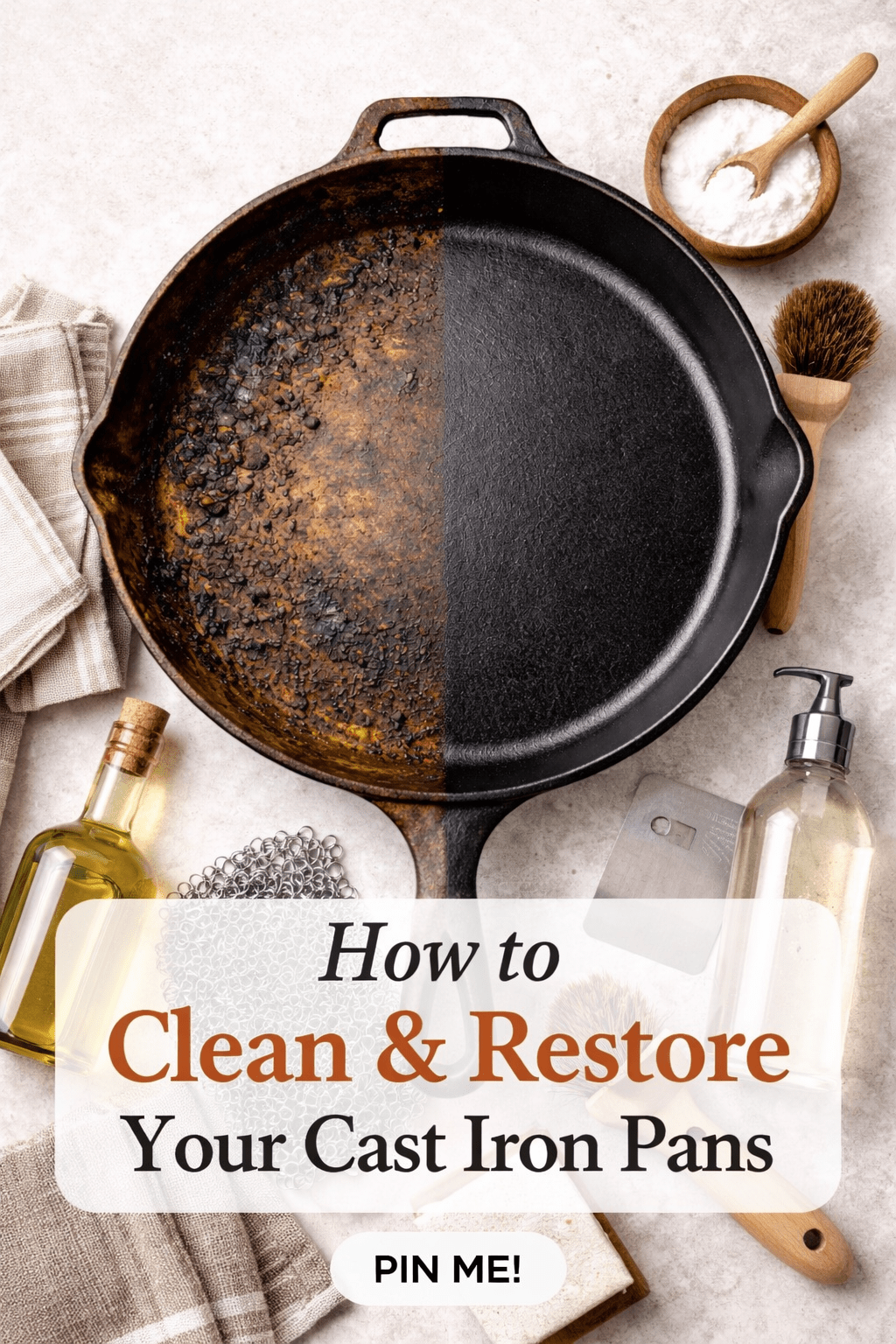
This complete guide will walk you through everything you need to know about cleaning, seasoning, storing, and restoring cast iron cookware the right way.
Why Cast Iron Is Worth the Effort
Cast iron holds heat beautifully, creates an incredible sear, and moves seamlessly from stovetop to oven. Unlike nonstick pans that wear out, properly seasoned cast iron builds a natural nonstick surface over time.
The secret? Proper maintenance.
The Golden Rules of Cast Iron Care
1. Use It Often
The more you cook with cast iron, the better it performs. Regular use helps strengthen the seasoning layer and keeps rust from forming.
Best foods for building seasoning:
- Bacon
- Fried potatoes
- Cornbread
- Steak
- Roasted vegetables
2. Clean It Properly (After Every Use)
Contrary to old myths, you can use a small amount of mild soap if needed — just don’t soak the pan.
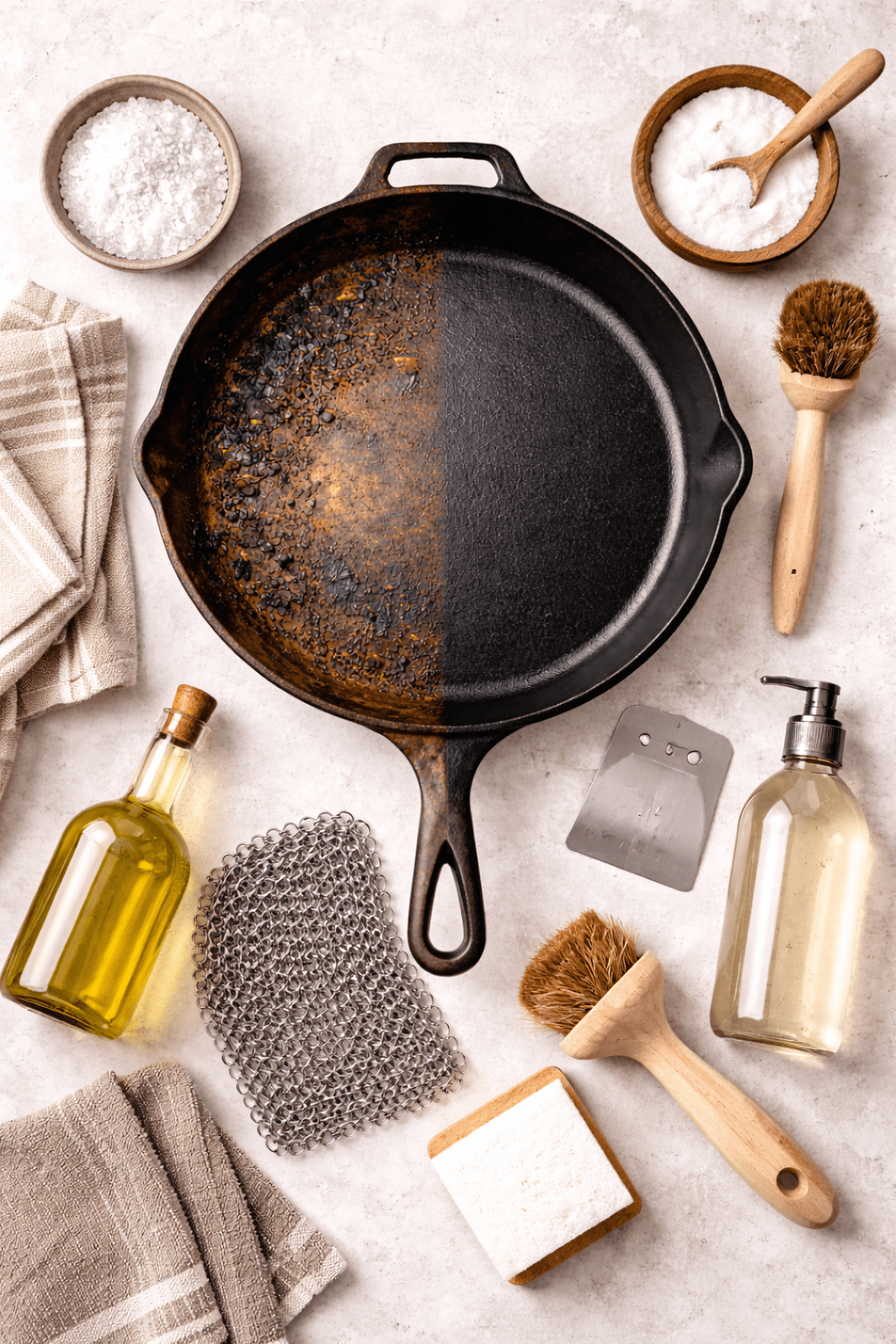
How to Clean Cast Iron:
- Let the pan cool slightly (but not completely).
- Rinse with warm water.
- Scrub gently with:
- A stiff brush
- A chainmail scrubber
- Coarse salt for stuck-on food
- Avoid steel wool unless removing rust.
Do NOT:
- Soak in water
- Put in the dishwasher
- Let it air dry
3. Dry It Immediately
Water is the enemy of cast iron.
After washing:
- Dry thoroughly with a towel.
- Place the pan on the stovetop over low heat for 1–2 minutes to evaporate any remaining moisture.
This step prevents rust.
4. Oil It Lightly After Cleaning
Once dry, apply a thin layer of oil:
- Vegetable oil
- Canola oil
- Grapeseed oil
- Avocado oil
Use a paper towel to wipe the inside, then buff off excess. The pan should look satiny — not greasy.
This protects the surface and maintains seasoning.
What Is Cast Iron Seasoning?
Seasoning is a baked-on layer of polymerized oil that bonds to the iron. It creates:
- A natural nonstick surface
- Rust protection
- Better cooking performance
Seasoning builds gradually over time — but you can also restore it intentionally.
How to Season a Cast Iron Skillet
If your skillet looks dull, sticky, or rusty, it’s time to re-season.
Step-by-Step Cast Iron Seasoning Method
- Wash the pan with warm water and soap (if stripping old seasoning).
- Dry completely.
- Apply a very thin layer of oil over the entire pan (inside, outside, handle).
- Wipe off excess oil thoroughly.
- Place upside down in a 400–450°F oven.
- Bake for 1 hour.
- Let cool inside the oven.
Repeat 1–3 times for best results.
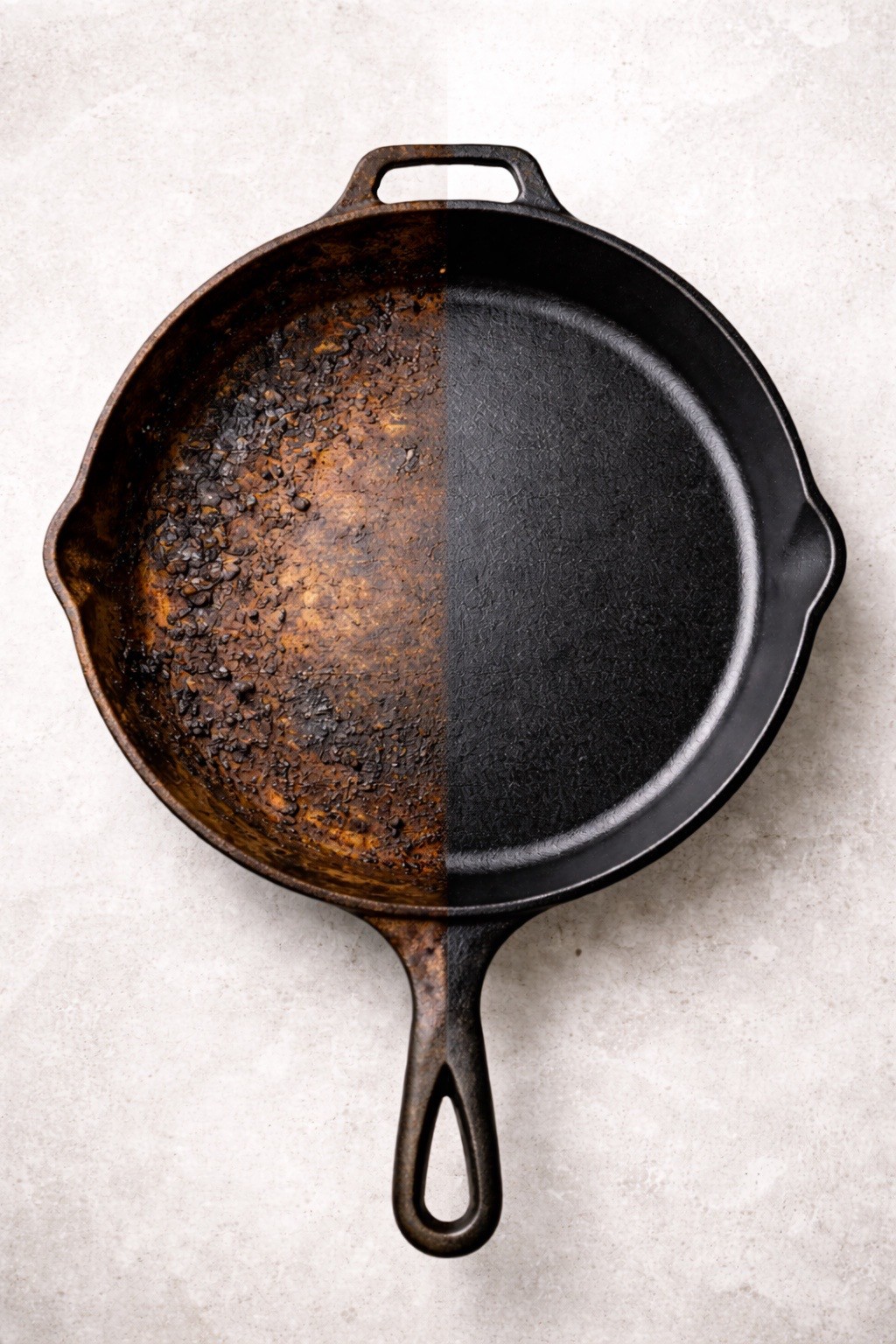
How to Remove Rust from Cast Iron
If you spot rust — don’t panic. It’s fixable.
To Remove Rust:
- Scrub rusted areas with steel wool.
- Wash and dry thoroughly.
- Immediately re-season the pan.
Rust does not mean your pan is ruined. Cast iron is incredibly forgiving.
Common Cast Iron Mistakes to Avoid
- ❌ Soaking in water
- ❌ Putting it in the dishwasher
- ❌ Storing while damp
- ❌ Using too much oil when seasoning
- ❌ Cooking acidic foods too long in new seasoning (like tomato sauce)
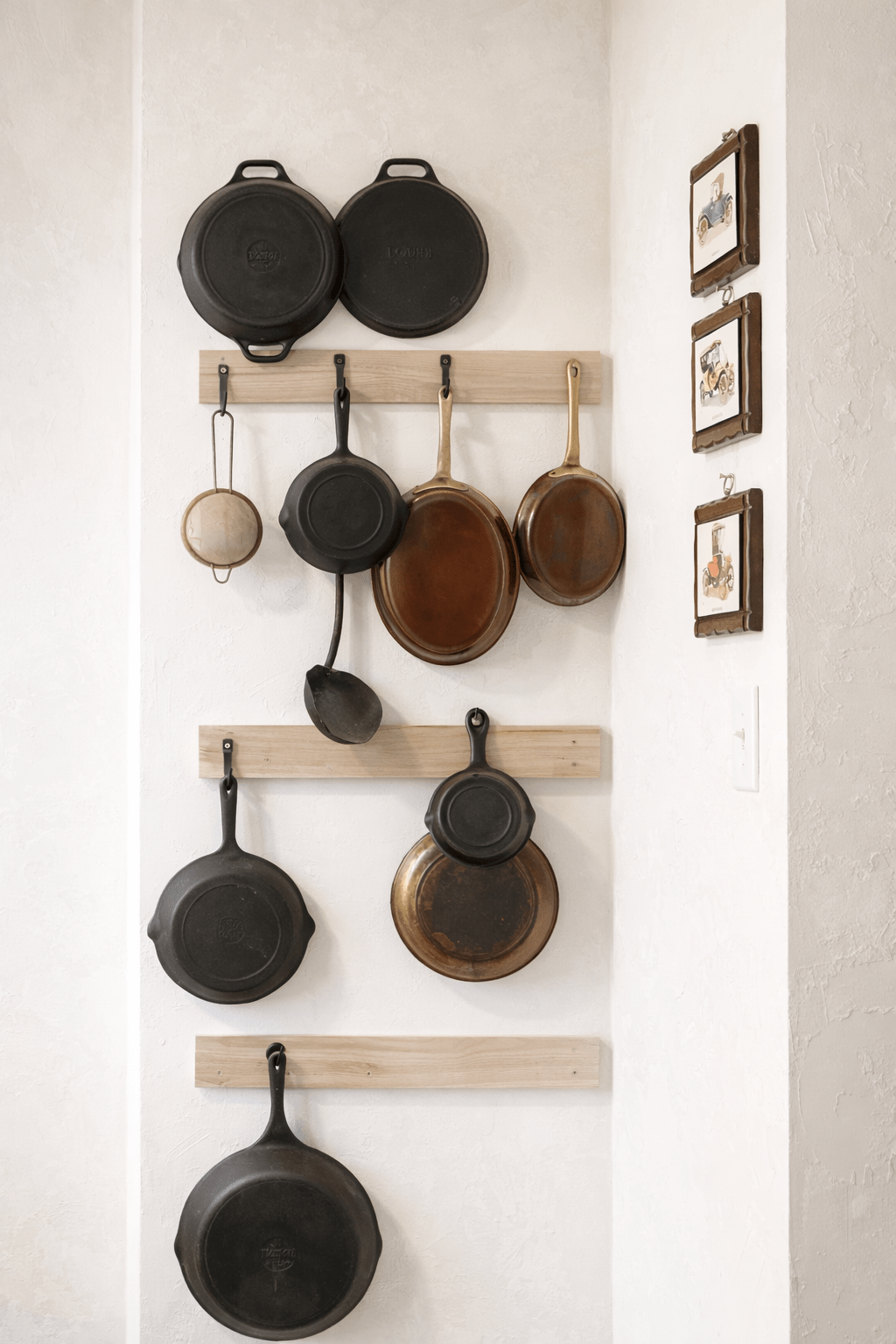
How to Store Cast Iron
- Store in a cool, dry place.
- Place a paper towel inside to absorb moisture.
- If stacking pans, add a paper towel between them.
Frequently Asked Questions About Cast Iron
Can you use soap on cast iron?
Yes — mild soap is fine occasionally. Just don’t soak and always dry thoroughly.
Why is my cast iron sticky?
Too much oil during seasoning. Bake it again upside down to correct.
Why is food sticking?
Seasoning needs to build up. Cook with oil and use the pan more often.
Final Thoughts: Cast Iron Gets Better With Time
Cast iron isn’t high maintenance — it just needs consistent, simple care. Use it, clean it properly, dry it well, and oil it lightly. That’s it.
With the right routine, your cast iron skillet won’t just last your lifetime — it may become a treasured kitchen heirloom.